防詐3要訣:不聽信、不操作、掛斷電話


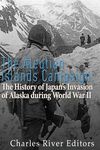
The Aleutian Islands Campaign: The History of Japan's Invasion of Alaska during World War II
ALEUTIAN ISLANDS CAMPAIGN
內容簡介
*Includes pictures *Includes accounts of the campaign written by soldiers on both sides *Includes online resources and a bibliography for further reading *Includes a table of contents "It was United States territory. That's something you don't do. You don't come over and grab some of our land. So we had to take it back regardless of strategy. We couldn't just let them sit there. " - Admiral Robert L. Dennison, USN (Perras, 2003, 189) Fought over bitterly cold flecks of rock and tundra scattered across the remote waters marking the boundary between the Bering Sea and the Pacific Ocean, the Aleutian Islands campaign represented one of the strangest encounters of World War II. Curving southwestward from the southwest coast of Alaska like the tail of a stingray, the rugged, volcanic Aleutians belong to both the United States and Russia. The westernmost island, Attu, lies much closer to Russia's Kamchatka Peninsula than to Alaska; the distance to Anchorage, Alaska measures approximately 2,000 miles. The moral impact of the Doolittle Raid in response to Pearl Harbor far outweighed the relatively minor material damage it inflicted; Japan lost face and the faith of its people in ultimate victory declined sharply. Americans responded with delight and a fresh upsurge of hope. Despite interrogating the eight American aircrew they captured (and butchering tens of thousands of Chinese civilians in reprisal for assisting the rest in their escape), the Japanese leadership remained divided in their opinions about the bombers' origin. Many believed that the Americans had indeed devised a method of launching such large aircraft from an ordinary aircraft carrier. Many others, however, insisted the B-25s came from a land base, and only the Aleutians lay within a medium bomber's operational range. In any case, Admiral Yamamoto Isoroku planned a move against Midway. Attacking the Aleutians provided an excellent diversion, in his opinion, permitting him time to take Midway and organize land-based strike aircraft there. He could then take his carriers to annihilate America's Pacific Fleet, caught between the Aleutian Islands and Midway. Due to the belief that the Aleutian Islands might support the airfields from which the Doolittle bombers launched, Navy Order Eighteen from Imperial general HQ included a section decreeing "the invasion and occupation of the western Aleutians... in order to prevent enemy forces from attacking the homeland" (Garfield, 1978, 7). In the event, the secondary operation to the Aleutian Islands proved more successful than the main thrust at Midway Island. In a triumph of cryptanalytic skill and poker-player daring, codebreaker Joseph Rochefort and his team at "Hypo" cracked Japanese messages proving the main effort aimed at Midway. The U.S. Navy intercepted Yamamoto's fleet at Midway and smashed its carriers in one of the most decisive actions of the Pacific Theater on June 3rd to 7th, 1942. The Aleutians invasion, on the other hand, gave Japan a foothold on American territory that required almost a year to dislodge. In the end, however, by one of the ironies of war, the Japanese attempt to prevent land-based bombers from striking at Japan from the Aleutians backfired. Once the U.S. Army finally evicted the IJA from the islands, the Americans built considerably larger airfields there, from which regular sorties struck the Japanese-held Kurile Islands and shipping along the northern Japanese coast. The Aleutian Islands Campaign: The History of Japan's Invasion of Alaska during World War II chronicles one of the most famous and unique campaigns in the Pacific. Along with pictures of important people, places, and events, you will learn about the Japanese invasion of the Aleutian Islands like never before, in no time at all.
規格
退貨說明
退貨須知:
- 依照消費者保護法的規定,您享有商品貨到次日起七天猶豫期(含例假日)的權益(請注意!猶豫期非試用期),辦理退貨之商品必須是全新狀態(不得有刮傷、破損、受潮)且需完整(包含全部商品、配件、原廠內外包裝、贈品及所有附隨文件或資料的完整性等)。
- 請您以送貨廠商使用之包裝紙箱將退貨商品包裝妥當,若原紙箱已遺失,請另使用其他紙箱包覆於商品原廠包裝之外,切勿直接於原廠包裝上黏貼紙張或書寫文字。若原廠包裝損毀將可能被認定為已逾越檢查商品之必要程度,本公司得依毀損程度扣除回復原狀必要費用(整新費)後退費;請您先確認商品正確、外觀可接受,再行拆封,以免影響您的權利;若為產品瑕疵,本公司接受退貨。
依「通訊交易解除權合理例外情事適用準則」,下列商品不適用七日猶豫期,除產品本身有瑕疵外,不接受退貨:
- 易於腐敗、保存期限較短或解約時即將逾期。(如:生鮮蔬果、乳製品、冷凍冷藏食材、蛋糕)
- 依消費者要求所為之客製化給付。(如:客製印章、鋼筆刻字)
- 報紙、期刊或雜誌。
- 經消費者拆封之影音商品或電腦軟體。
- 非以有形媒介提供之數位內容或一經提供即為完成之線上服務,經消費者事先同意始提供。(如:電子書)
- 已拆封之個人衛生用品。(如:內衣褲、襪類、褲襪、刮鬍刀、除毛刀等貼身用品)
- 國際航空客運服務。
若您退貨時有下列情形,可能被認定已逾越檢查商品之必要程度而須負擔為回復原狀必要費用(整新費),或影響您的退貨權利,請您在拆封前決定是否要退貨:
- 以數位或電磁紀錄形式儲存或著作權相關之商品(包含但不限於CD、VCD、DVD、電腦軟體等) 包裝已拆封者(除運送用之包裝以外)。
- 耗材(包含但不限於墨水匣、碳粉匣、紙張、筆類墨水、清潔劑補充包等)之商品包裝已拆封者(除運送用之包裝以外)。
- 衣飾鞋類/寢具/織品(包含但不限於衣褲、鞋子、襪子、泳裝、床單、被套、填充玩具)或之商品缺件(含購買商品、附件、內外包裝、贈品等)或經剪標或下水或商品有不可回復之髒污或磨損痕跡。
- 食品、美容/保養用品、內衣褲等消耗性或個人衛生用品、商品銷售頁面上特別載明之商品已拆封者(除運送用之包裝外一切包裝、包括但不限於瓶蓋、封口、封膜等接觸商品內容之包裝部分)或已非全新狀態(外觀有刮傷、破損、受潮等)與包裝不完整(缺少商品、附件、原廠外盒、保護袋、配件紙箱、保麗龍、隨貨文件、贈品等)。
- 家電、3C、畫作、電子閱讀器等商品,除商品本身有瑕疵外,退回之商品已拆封(除運送用之包裝外一切包裝、包括但不限於封膜等接觸商品內容之包裝部分、移除封條、拆除吊牌、拆除貼膠或標籤等情形)或已非全新狀態(外觀有刮傷、破損、受潮等)與包裝不完整(缺少商品、附件、原廠外盒、保護袋、配件紙箱、保麗龍、隨貨文件、贈品等)。
- 退貨程序請參閱【客服專區→常見問題→誠品線上退貨退款】之說明。