防詐3要訣:不聽信、不操作、掛斷電話



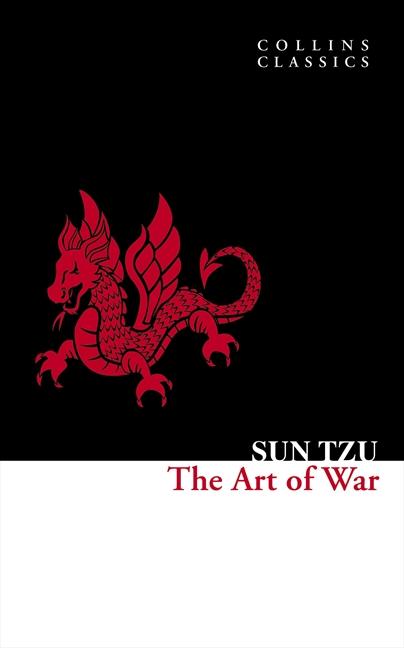
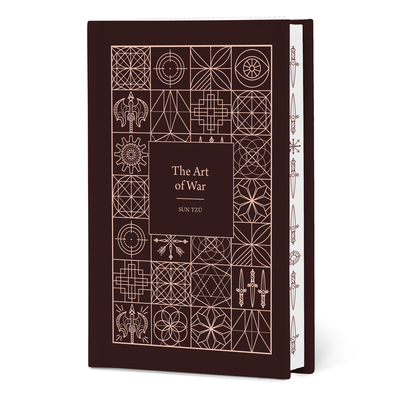
The Art of War (annotated)
ART OF WAR (ANNOTATED)
250
訂單自國外空運,約14-21個工作天(不含例假日)到貨後依序出貨。為縮短等待,建議將此商品和其他商品分開下單。
查詢門市庫存
內容簡介
The Art of War is an ancient Chinese military treatise attributed to Sun Tzu, a high-ranking military general, strategist and tactician, and kindred to the Realpolitik of his time, termed in China as Legalism. The text is composed of 13 chapters, each of which is devoted to one aspect of warfare. It is commonly thought of as a definitive work on military strategy and tactics. It has been the most famous and influential of China's Seven Military Classics, and "for the last two thousand years it remained the most important military treatise in Asia, where even the common people knew it by name." It has had an influence on Eastern and Western military thinking, business tactics, legal strategy and beyond. The book was first translated and published into French in 1772 (re-published in 1782) by the French Jesuit Jean Joseph Marie Amiot and a partial translation into English was attempted by British officer Everard Ferguson Calthrop in 1905 under the title The Book of War. The first annotated English translation was completed and published by Lionel Giles in 1910. Numerous military and political leaders such as the Chinese communist revolutionary Mao Zedong, Japanese daimyo Takeda Shingen, and American military general Norman Schwarzkopf, Jr. have drawn inspiration from the book. The Art of War is traditionally attributed to a military general from the late 6th century BC known as Master Sun (Sunzi or Sun Tzu), though its earliest parts probably date to at least 100 years later. Sima Qian's 1st century BC work Records of the Grand Historian (Shiji), the first of China's 24 dynastic histories, records an early Chinese tradition stating that a text on military matters was written by a "Sun Wu" from the State of Qi, and that this text had been read and studied by King Hel of Wu (514-495 BC). This text was traditionally identified with the received Master Sun's Art of War. The conventional view, which is still widely held in China, was that Sun Wu was a military theorist from the end of the Spring and Autumn period (776-471 BC) who fled his home state of Qi to the southeastern kingdom of Wu, where he is said to have impressed the king with his ability to train even dainty palace ladies in warfare and to have made Wu's armies powerful enough to challenge their western rivals in the state of Chu. The prominent strategist, poet, and warlord Cao Cao in the early 3rd century AD authored the earliest known commentary to the Art of War. Cao's preface makes clear that he edited the text and removed certain passages, but the extent of his changes were unclear historically. The Art of War appears throughout the bibliographical catalogs of the Chinese dynastic histories, but listings of its divisions and size varied widely. In the early 20th century, the Chinese writer and reformer Liang Qichao, theorized that the text was actually written in the 4th century BC by Sunzi's purported descendant Sun Bin, as a number of historical sources mention a military treatise he wrote. Around the 12th century, some scholars began to doubt the historical existence of Sun Tzu, primarily on the grounds that Sun Tzu is not mentioned in the historical classic The Commentary of Zuo, which mentions most of the notable figures from the Spring and Autumn period. The name "Sun Wu" does not appear in any text prior to the Records of the Grand Historian, and has been suspected to be a made-up descriptive cognomen meaning "the fugitive warrior": the surname "Sun" is glossed as the related term "fugitive", while "Wu" is the ancient Chinese virtue of "martial, valiant", which corresponds to Sun Tzu's role as the hero's doppelganger in the story of Wu Zixu. Unlike Sun Wu, Sun Bin appears to have been an actual person who was a genuine authority on military matters, and may have been the inspiration for the creation of the historical figure Sun Tzu through a form of euhemerism.
規格
誠品貨碼 /
ISBN13 / 9781518830792
ISBN10 /
EAN貨碼 / 9781518830792
裝訂 / P:平裝
頁數 / 112
重量(g) / 158.8
語言 / 3:英文
級別 / N:無
尺寸 / 22.9X15.2X0.6CM
退貨說明
退貨須知:
- 依照消費者保護法的規定,您享有商品貨到次日起七天猶豫期(含例假日)的權益(請注意!猶豫期非試用期),辦理退貨之商品必須是全新狀態(不得有刮傷、破損、受潮)且需完整(包含全部商品、配件、原廠內外包裝、贈品及所有附隨文件或資料的完整性等)。
- 請您以送貨廠商使用之包裝紙箱將退貨商品包裝妥當,若原紙箱已遺失,請另使用其他紙箱包覆於商品原廠包裝之外,切勿直接於原廠包裝上黏貼紙張或書寫文字。若原廠包裝損毀將可能被認定為已逾越檢查商品之必要程度,本公司得依毀損程度扣除回復原狀必要費用(整新費)後退費;請您先確認商品正確、外觀可接受,再行拆封,以免影響您的權利;若為產品瑕疵,本公司接受退貨。
依「通訊交易解除權合理例外情事適用準則」,下列商品不適用七日猶豫期,除產品本身有瑕疵外,不接受退貨:
- 易於腐敗、保存期限較短或解約時即將逾期。(如:生鮮蔬果、乳製品、冷凍冷藏食材、蛋糕)
- 依消費者要求所為之客製化給付。(如:客製印章、鋼筆刻字)
- 報紙、期刊或雜誌。
- 經消費者拆封之影音商品或電腦軟體。
- 非以有形媒介提供之數位內容或一經提供即為完成之線上服務,經消費者事先同意始提供。(如:電子書)
- 已拆封之個人衛生用品。(如:內衣褲、襪類、褲襪、刮鬍刀、除毛刀等貼身用品)
- 國際航空客運服務。
若您退貨時有下列情形,可能被認定已逾越檢查商品之必要程度而須負擔為回復原狀必要費用(整新費),或影響您的退貨權利,請您在拆封前決定是否要退貨:
- 以數位或電磁紀錄形式儲存或著作權相關之商品(包含但不限於CD、VCD、DVD、電腦軟體等) 包裝已拆封者(除運送用之包裝以外)。
- 耗材(包含但不限於墨水匣、碳粉匣、紙張、筆類墨水、清潔劑補充包等)之商品包裝已拆封者(除運送用之包裝以外)。
- 衣飾鞋類/寢具/織品(包含但不限於衣褲、鞋子、襪子、泳裝、床單、被套、填充玩具)或之商品缺件(含購買商品、附件、內外包裝、贈品等)或經剪標或下水或商品有不可回復之髒污或磨損痕跡。
- 食品、美容/保養用品、內衣褲等消耗性或個人衛生用品、商品銷售頁面上特別載明之商品已拆封者(除運送用之包裝外一切包裝、包括但不限於瓶蓋、封口、封膜等接觸商品內容之包裝部分)或已非全新狀態(外觀有刮傷、破損、受潮等)與包裝不完整(缺少商品、附件、原廠外盒、保護袋、配件紙箱、保麗龍、隨貨文件、贈品等)。
- 家電、3C、畫作、電子閱讀器等商品,除商品本身有瑕疵外,退回之商品已拆封(除運送用之包裝外一切包裝、包括但不限於封膜等接觸商品內容之包裝部分、移除封條、拆除吊牌、拆除貼膠或標籤等情形)或已非全新狀態(外觀有刮傷、破損、受潮等)與包裝不完整(缺少商品、附件、原廠外盒、保護袋、配件紙箱、保麗龍、隨貨文件、贈品等)。
- 退貨程序請參閱【客服專區→常見問題→誠品線上退貨退款】之說明。
付款/配送