防詐3要訣:不聽信、不操作、掛斷電話





9
380342
查詢門市庫存
內容簡介
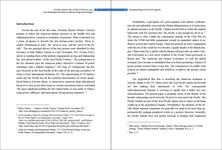
Introduction
Toward the end of his first term, President Barack Obama's election promise to reduce the American military presence in the Middle East and Afghanistan led to a general re-evaluation of priorities. What eventuated was a series of phrases to describe the new foreign policy posture. These included "rebalancing to Asia", the "pivot to Asia" and the "pivot to the Pacific".
The two principal drivers of the new posture were identified by then Secretary of State Hillary Clinton in a key November 2011 Foreign Policy article as winding down of the military engagements in Iraq and Afghanistan the "new global realities" of the Asia-Pacific Century. The juxtaposition of the two elements gave the American policy objectives a balance of power orientation with a military emphasis. The logic of "rebalancing" the balance of power in the Asia-Pacific in the wake of the growing ascendency of China is basic International Relations 101. The repositioning of US military assets into the Pacific has all the essential characteristics of classic geopolitical balance of power theory. A conservative American think tank phrased the pivot to Asia in just these terms in a recent assessment when it concluded, "the most significant problem for the United States in Asia today is China's
rising power, influence, and expectations of regional pre-eminence."
產品目錄
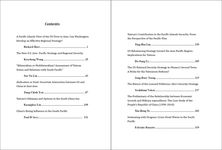
Content
A Pacific Islands View of the US Pivot to Asia: Can Washington
Develop an Effective Regional Strategy?
Richard Herr ................................................................... 1
The New U.S. Asia- Pacific Strategy and Regional Security
Kaocheng Wang ............................................................ 29
"Bilateralism or Multilateralism? Assessment of Taiwan
Status and Relations with South Pacific"
Juo-Yu Lin ..................................................................... 43
Abdication or Duel: Uncertain Interaction between US and
China in East Asia
Tung-Chieh Tsai ............................................................ 87
Taiwan’s Dilemma and Options in the South China Sea
Kuanghua Liu ............................................................. 109
China’s Rising Influence in the South Pacific
Paul D’Arcy ............................................................... 131
Taiwan’s Contribution to the Pacific Islands Security: From
the Perspective of the Pacific Plan
Ting‐Hui Lin ............................................................... 159
US Rebalancing Strategy toward the Asia-Pacific Region:
Implications for Taiwan
Li, Da-Jung .................................................................. 185
The US National Security Strategy in Obama’s Second Term:
A Niche for the Taiwanese Defense?
Jang-ruey Tzeng ......................................................... 215
The Return of the Learned Politician: Abe’s Security Strategy
Yoshifumi Nakai .......................................................... 237
The Preliminary of the Relationship between Economic
Growth and Military expenditure: The Case Study of the
People’s Republic of China (1990-2010)
Xiu-Heng Ye ................................................................ 263
Swimming with Dragons: Cross-Strait Waves in the South Pacific
Fabrizio Bozzato ......................................................... 319
A Pacific Islands View of the US Pivot to Asia: Can Washington
Develop an Effective Regional Strategy?
Richard Herr ................................................................... 1
The New U.S. Asia- Pacific Strategy and Regional Security
Kaocheng Wang ............................................................ 29
"Bilateralism or Multilateralism? Assessment of Taiwan
Status and Relations with South Pacific"
Juo-Yu Lin ..................................................................... 43
Abdication or Duel: Uncertain Interaction between US and
China in East Asia
Tung-Chieh Tsai ............................................................ 87
Taiwan’s Dilemma and Options in the South China Sea
Kuanghua Liu ............................................................. 109
China’s Rising Influence in the South Pacific
Paul D’Arcy ............................................................... 131
Taiwan’s Contribution to the Pacific Islands Security: From
the Perspective of the Pacific Plan
Ting‐Hui Lin ............................................................... 159
US Rebalancing Strategy toward the Asia-Pacific Region:
Implications for Taiwan
Li, Da-Jung .................................................................. 185
The US National Security Strategy in Obama’s Second Term:
A Niche for the Taiwanese Defense?
Jang-ruey Tzeng ......................................................... 215
The Return of the Learned Politician: Abe’s Security Strategy
Yoshifumi Nakai .......................................................... 237
The Preliminary of the Relationship between Economic
Growth and Military expenditure: The Case Study of the
People’s Republic of China (1990-2010)
Xiu-Heng Ye ................................................................ 263
Swimming with Dragons: Cross-Strait Waves in the South Pacific
Fabrizio Bozzato ......................................................... 319
作者介紹
■作者簡介
翁明賢
翁明賢教授為德國科隆大學大學政治學系博士。經歷如下:淡江大學國際事務與戰略研究所所長、國家安全會議諮詢委員、台灣戰略研究學會理事長、國家安全會議張建邦諮詢委員辦公室專任研究員、美國國務院Fulbright Scholarship訪問學者。
專書篇章有<戰略研究的回顧與前瞻:再論淡江戰略學派之建構>,翁明賢主編,《當代戰略理論與實際:淡江戰略學派觀點》。台北:秀威資訊科技股份有限公司,2011年6月。<從敵手共生模式解析東亞戰略情勢>,翁明賢主編,《變遷中的東亞戰略情勢:淡江戰略學派觀點》。台北:秀威資訊科技股份有限公司,2011年6月。
規格
誠品貨碼 / 2680901954008
ISBN13 / 9789865982379
ISBN10 / 9865982374
EAN貨碼 / 9789865982379
頁數 / 367
開數 / 18K
注音版 / 否
裝訂 / P:平裝
語言 / 3:英文
級別 / N:無
退貨說明
退貨須知:
- 依照消費者保護法的規定,您享有商品貨到次日起七天猶豫期(含例假日)的權益(請注意!猶豫期非試用期),辦理退貨之商品必須是全新狀態(不得有刮傷、破損、受潮)且需完整(包含全部商品、配件、原廠內外包裝、贈品及所有附隨文件或資料的完整性等)。
- 請您以送貨廠商使用之包裝紙箱將退貨商品包裝妥當,若原紙箱已遺失,請另使用其他紙箱包覆於商品原廠包裝之外,切勿直接於原廠包裝上黏貼紙張或書寫文字。若原廠包裝損毀將可能被認定為已逾越檢查商品之必要程度,本公司得依毀損程度扣除回復原狀必要費用(整新費)後退費;請您先確認商品正確、外觀可接受,再行拆封,以免影響您的權利;若為產品瑕疵,本公司接受退貨。
依「通訊交易解除權合理例外情事適用準則」,下列商品不適用七日猶豫期,除產品本身有瑕疵外,不接受退貨:
- 易於腐敗、保存期限較短或解約時即將逾期。(如:生鮮蔬果、乳製品、冷凍冷藏食材、蛋糕)
- 依消費者要求所為之客製化給付。(如:客製印章、鋼筆刻字)
- 報紙、期刊或雜誌。
- 經消費者拆封之影音商品或電腦軟體。
- 非以有形媒介提供之數位內容或一經提供即為完成之線上服務,經消費者事先同意始提供。(如:電子書)
- 已拆封之個人衛生用品。(如:內衣褲、襪類、褲襪、刮鬍刀、除毛刀等貼身用品)
- 國際航空客運服務。
若您退貨時有下列情形,可能被認定已逾越檢查商品之必要程度而須負擔為回復原狀必要費用(整新費),或影響您的退貨權利,請您在拆封前決定是否要退貨:
- 以數位或電磁紀錄形式儲存或著作權相關之商品(包含但不限於CD、VCD、DVD、電腦軟體等) 包裝已拆封者(除運送用之包裝以外)。
- 耗材(包含但不限於墨水匣、碳粉匣、紙張、筆類墨水、清潔劑補充包等)之商品包裝已拆封者(除運送用之包裝以外)。
- 衣飾鞋類/寢具/織品(包含但不限於衣褲、鞋子、襪子、泳裝、床單、被套、填充玩具)或之商品缺件(含購買商品、附件、內外包裝、贈品等)或經剪標或下水或商品有不可回復之髒污或磨損痕跡。
- 食品、美容/保養用品、內衣褲等消耗性或個人衛生用品、商品銷售頁面上特別載明之商品已拆封者(除運送用之包裝外一切包裝、包括但不限於瓶蓋、封口、封膜等接觸商品內容之包裝部分)或已非全新狀態(外觀有刮傷、破損、受潮等)與包裝不完整(缺少商品、附件、原廠外盒、保護袋、配件紙箱、保麗龍、隨貨文件、贈品等)。
- 家電、3C、畫作、電子閱讀器等商品,除商品本身有瑕疵外,退回之商品已拆封(除運送用之包裝外一切包裝、包括但不限於封膜等接觸商品內容之包裝部分、移除封條、拆除吊牌、拆除貼膠或標籤等情形)或已非全新狀態(外觀有刮傷、破損、受潮等)與包裝不完整(缺少商品、附件、原廠外盒、保護袋、配件紙箱、保麗龍、隨貨文件、贈品等)。
- 退貨程序請參閱【客服專區→常見問題→誠品線上退貨退款】之說明。
付款/配送