防詐3要訣:不聽信、不操作、掛斷電話



79
630497
查詢門市庫存
內容簡介
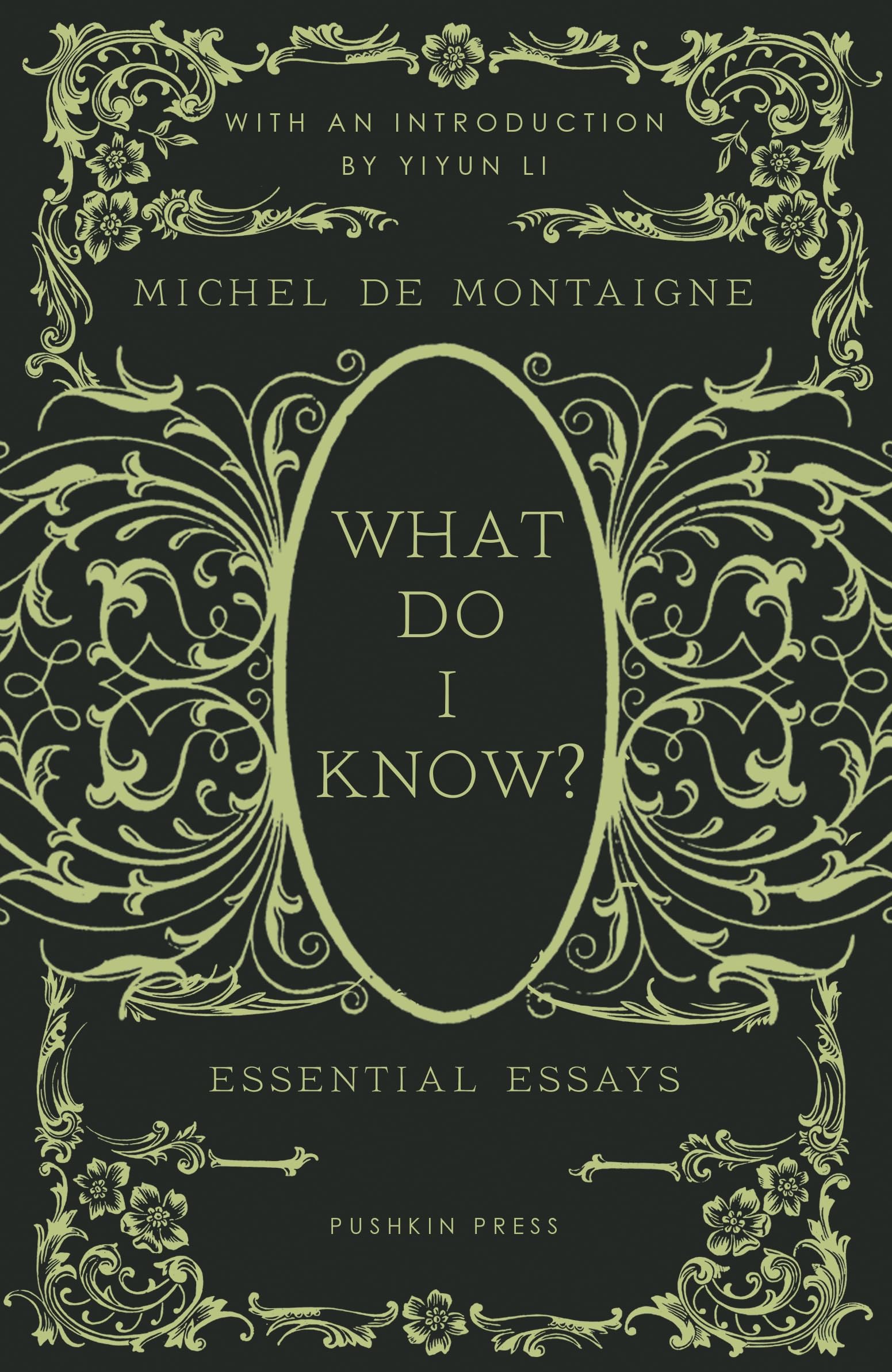
An NYRB Classics Original
Shakespeare, Nietzsche wrote, was Montaigne’s best reader—a typically brilliant Nietzschean insight, capturing the intimate relationship between Montaigne’s ever-changing record of the self and Shakespeare’s kaleidoscopic register of human character. And there is no doubt that Shakespeare read Montaigne—though how extensively remains a matter of debate—and that the translation he read him in was that of John Florio, a fascinating polymath, man-about-town, and dazzlingly inventive writer himself.
Florio’s Montaigne is in fact one of the masterpieces of English prose, with a stylistic range and felicity and passages of deep lingering music that make it comparable to Sir Robert Burton’s Anatomy of Melancholy and the works of Sir Thomas Browne. This new edition of this seminal work, edited by Stephen Greenblatt and Peter G. Platt, features an adroitly modernized text, an essay in which Greenblatt discusses both the resemblances and real tensions between Montaigne’s and Shakespeare’s visions of the world, and Platt’s introduction to the life and times of the extraordinary Florio. Altogether, this book provides a remarkable new experience of not just two but three great writers who ushered in the modern world.
作者介紹
Michel de Montaigne (1533–1592) was born in Aquitaine, not far from Bordeaux, in the château of his wealthy aristocratic family. Educated by his father in Latin and Greek from an early age, Montaigne attended boarding school in Bordeaux before studying law in Toulouse. He then embarked on a distinguished public career, serving as a counselor of court in Périgueux and Bordeaux, becoming a courtier to Charles the IX, and receiving the collar of the Order of Saint Michael. After the death of his father in 1568, Montaigne succeeded to the title of Lord of Montaigne, and in 1571 he retired from public life in order to devote himself to reading and writing, publishing the first two volumes of his essays in 1580 and a third in 1588. From 1581 to 1585, he was the elected mayor of Bordeaux, confronting ongoing strife between Catholics and Protestants as well as an outbreak of the plague. Married to Françoise de Cassaigne, Montaigne was the father of six daughters, only one of whom survived into adulthood. He continued to write new essays and to add new material to the existing ones until the end of his life. The
complete essays appeared posthumously in 1595.
John Florio (1553–1625) was born in London, the son of Michelangelo Florio, a Tuscan convert to Protestantism who had moved to England because of his religious beliefs and who served as a language tutor to several highborn English families. Raised in Italian-speaking Switzerland and Germany, where his father fled after the Catholic Queen Mary I came to the English throne, John Florio returned to England during the reign of Queen Elizabeth I and followed in his father’s footsteps as an instructor of languages, teaching French and Italian at Magdalen College, Oxford, and, under King James I, working as a private tutor to the Crown Prince and the Queen Consort. Florio’s works include First Fruits, which yield Familiar Speech, Merry Proverbs, Witty Sentences, and Golden Sayings; A Perfect Induction to the Italian and English Tongues; Second Fruits, to be gathered of Twelve Trees, of divers but delightsome Tastes to the Tongues of Italian and English men; Garden of Recreation, yielding six thousand Italian Proverbs; an Italian–English dictionary, A World of Words (the second edition of which was entitled Queen Anna’s New World of Words); and his celebrated translation of Montaigne’s Essays.
Stephen Greenblatt is the author of, among other books, Will in the World: How Shakespeare Became Shakespeare and The Swerve: How the World Became Modern (winner of the National Book Award, the James Russell Lowell Award, and the Pulitzer Prize). He is the John Cogan University Professor of the Humanities at Harvard.
Peter G. Platt is a professor and chair of English at Barnard College. He is the author of Shakespeare and the Culture of Paradox (2009) and Reason Diminished: Shakespeare and the Marvelous (1997), and the editor of Wonders, Marvels, and Monsters in Early Modern Culture (1999). He has written articles about Shakespeare, Renaissance poetics and rhetoric, and John Florio. He is currently writing a book about Shakespeare and Montaigne.
complete essays appeared posthumously in 1595.
John Florio (1553–1625) was born in London, the son of Michelangelo Florio, a Tuscan convert to Protestantism who had moved to England because of his religious beliefs and who served as a language tutor to several highborn English families. Raised in Italian-speaking Switzerland and Germany, where his father fled after the Catholic Queen Mary I came to the English throne, John Florio returned to England during the reign of Queen Elizabeth I and followed in his father’s footsteps as an instructor of languages, teaching French and Italian at Magdalen College, Oxford, and, under King James I, working as a private tutor to the Crown Prince and the Queen Consort. Florio’s works include First Fruits, which yield Familiar Speech, Merry Proverbs, Witty Sentences, and Golden Sayings; A Perfect Induction to the Italian and English Tongues; Second Fruits, to be gathered of Twelve Trees, of divers but delightsome Tastes to the Tongues of Italian and English men; Garden of Recreation, yielding six thousand Italian Proverbs; an Italian–English dictionary, A World of Words (the second edition of which was entitled Queen Anna’s New World of Words); and his celebrated translation of Montaigne’s Essays.
Stephen Greenblatt is the author of, among other books, Will in the World: How Shakespeare Became Shakespeare and The Swerve: How the World Became Modern (winner of the National Book Award, the James Russell Lowell Award, and the Pulitzer Prize). He is the John Cogan University Professor of the Humanities at Harvard.
Peter G. Platt is a professor and chair of English at Barnard College. He is the author of Shakespeare and the Culture of Paradox (2009) and Reason Diminished: Shakespeare and the Marvelous (1997), and the editor of Wonders, Marvels, and Monsters in Early Modern Culture (1999). He has written articles about Shakespeare, Renaissance poetics and rhetoric, and John Florio. He is currently writing a book about Shakespeare and Montaigne.
規格
誠品貨碼 / 2681283241007
ISBN13 / 9781590177228
ISBN10 / 1590177223
EAN貨碼 / 9781590177228
頁數 / 480
注音版 / 否
裝訂 / P:平裝
語言 / 3:英文
尺寸 / 20X12.4X2.5CM
級別 / N:無
退貨說明
退貨須知:
- 依照消費者保護法的規定,您享有商品貨到次日起七天猶豫期(含例假日)的權益(請注意!猶豫期非試用期),辦理退貨之商品必須是全新狀態(不得有刮傷、破損、受潮)且需完整(包含全部商品、配件、原廠內外包裝、贈品及所有附隨文件或資料的完整性等)。
- 請您以送貨廠商使用之包裝紙箱將退貨商品包裝妥當,若原紙箱已遺失,請另使用其他紙箱包覆於商品原廠包裝之外,切勿直接於原廠包裝上黏貼紙張或書寫文字。若原廠包裝損毀將可能被認定為已逾越檢查商品之必要程度,本公司得依毀損程度扣除回復原狀必要費用(整新費)後退費;請您先確認商品正確、外觀可接受,再行拆封,以免影響您的權利;若為產品瑕疵,本公司接受退貨。
依「通訊交易解除權合理例外情事適用準則」,下列商品不適用七日猶豫期,除產品本身有瑕疵外,不接受退貨:
- 易於腐敗、保存期限較短或解約時即將逾期。(如:生鮮蔬果、乳製品、冷凍冷藏食材、蛋糕)
- 依消費者要求所為之客製化給付。(如:客製印章、鋼筆刻字)
- 報紙、期刊或雜誌。
- 經消費者拆封之影音商品或電腦軟體。
- 非以有形媒介提供之數位內容或一經提供即為完成之線上服務,經消費者事先同意始提供。(如:電子書)
- 已拆封之個人衛生用品。(如:內衣褲、襪類、褲襪、刮鬍刀、除毛刀等貼身用品)
- 國際航空客運服務。
若您退貨時有下列情形,可能被認定已逾越檢查商品之必要程度而須負擔為回復原狀必要費用(整新費),或影響您的退貨權利,請您在拆封前決定是否要退貨:
- 以數位或電磁紀錄形式儲存或著作權相關之商品(包含但不限於CD、VCD、DVD、電腦軟體等) 包裝已拆封者(除運送用之包裝以外)。
- 耗材(包含但不限於墨水匣、碳粉匣、紙張、筆類墨水、清潔劑補充包等)之商品包裝已拆封者(除運送用之包裝以外)。
- 衣飾鞋類/寢具/織品(包含但不限於衣褲、鞋子、襪子、泳裝、床單、被套、填充玩具)或之商品缺件(含購買商品、附件、內外包裝、贈品等)或經剪標或下水或商品有不可回復之髒污或磨損痕跡。
- 食品、美容/保養用品、內衣褲等消耗性或個人衛生用品、商品銷售頁面上特別載明之商品已拆封者(除運送用之包裝外一切包裝、包括但不限於瓶蓋、封口、封膜等接觸商品內容之包裝部分)或已非全新狀態(外觀有刮傷、破損、受潮等)與包裝不完整(缺少商品、附件、原廠外盒、保護袋、配件紙箱、保麗龍、隨貨文件、贈品等)。
- 家電、3C、畫作、電子閱讀器等商品,除商品本身有瑕疵外,退回之商品已拆封(除運送用之包裝外一切包裝、包括但不限於封膜等接觸商品內容之包裝部分、移除封條、拆除吊牌、拆除貼膠或標籤等情形)或已非全新狀態(外觀有刮傷、破損、受潮等)與包裝不完整(缺少商品、附件、原廠外盒、保護袋、配件紙箱、保麗龍、隨貨文件、贈品等)。
- 退貨程序請參閱【客服專區→常見問題→誠品線上退貨退款】之說明。
付款/配送