防詐3要訣:不聽信、不操作、掛斷電話



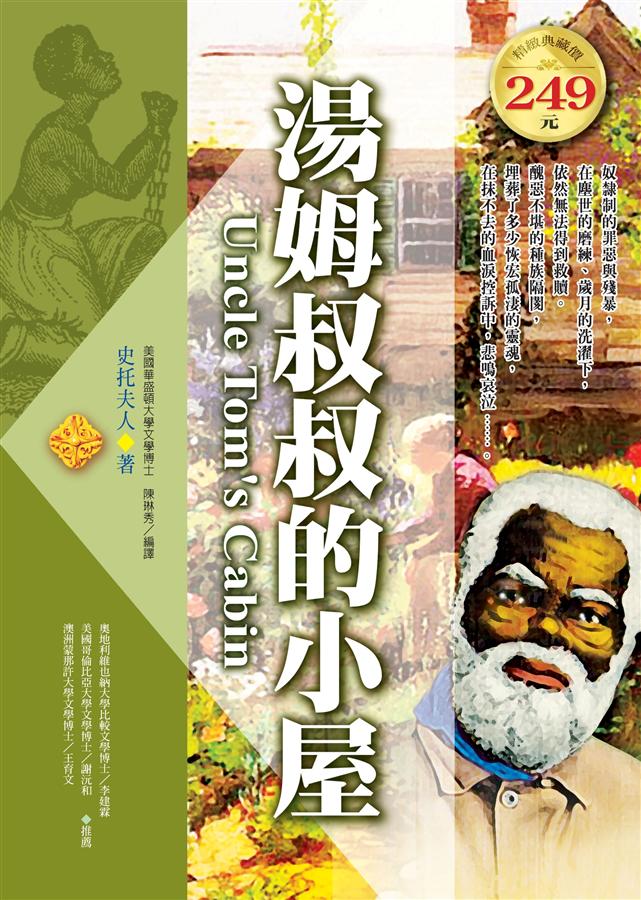
Uncle Tom's Cabin
Or Life among the Lowly
79
350276
查詢門市庫存
作者介紹
Harriet Beecher Stowe, a prolific writer best remembered today for Uncle Tom's Cabin, was born in Litchfield, Connecticut, on June 14, 1811, into a prominent New England family. Her father, Lyman Beecher, was a well-known Congregational minister, and her brother Henry Ward Beecher became a distinguished preacher, orator, and lecturer. Like all the Beechers she grew up with a strong sense of wanting to improve humanity. At the age of thirteen Harriet Beecher enrolled in the Hartford Female Seminary and subsequently taught there until 1832, when the family moved to Cincinnati. In Ohio she was an instructor at a school founded by her elder sister Catharine, and she soon began publishing short stories in the Western Monthly Magazine.
Four years later, in 1836, Harriet Beecher married Calvin Stowe, a respected biblical scholar and theologian by whom she had seven children. In order to supplement the family's meager income she continued writing. The Mayflower, her first collection of stories and sketches, appeared in 1843. During this period abolitionist conflicts rocked Cincinnati, and Mrs. Stowe witnessed firsthand the misery of slaves living just across the Ohio River in Kentucky. But not until the passage of the Fugitive Slave Act of 1850 was she inspired to write about their plight. After the family resettled in Brunswick, Maine, when Mr. Stowe was hired as a professor at Bowdoin College, she began working on a novel that would expose the evils of slavery.
First serialized in the National Era, an abolitionist paper, in forty weekly installments between June 5, 1851, and April 1, 1852, and published as a book on March 20, 1852, Uncle Tom's Cabin was an enormous success. Tolstoy deemed it a great work of literature 'flowing from love of God and man,' and within a year the book had sold more than 300,000 copies. When Uncle Tom's Cabin appeared in Great Britain Queen Victoria sent Mrs. Stowe a note of gratitude, and enthusiastic crowds greeted the author in London on her first trip abroad in 1853. In an attempt to silence the many critics at home who denounced the work as vicious propaganda, Mrs. Stowe brought out A Key to Uncle Tom's Cabin in 1853, which contained documentary evidence substantiating the graphic picture of slavery she had drawn. Dred (1856), a second antislavery novel, did not enjoy the acclaim of Uncle Tom's Cabin, yet the author had already stirred the conscience of the nation and the world, fueling sentiments that would ignite the Civil War. When Abraham Lincoln met her at the White House in 1862 he allegedly remarked: 'So you're the little woman who wrote the book that started this great war!'
In subsequent novels Stowe shifted her attention away from the issue of slavery. Beginning with The Minister's Wooing (1859), and continuing with The Pearl of Orr's Island (1862), Oldtown Folks (1869), and Poganuc People (1878), she presented a perceptive and realistic chronicle of colonial New England, focusing especially on the theological warfare that underscored Puritan life. In a second and less popular series of novels—My Wife and I (1871), Pink and White Tyranny (1871), and We and Our Neighbors (1875)—she depicted the mores of post-Civil War America. Mrs. Stowe did enjoy success, however, with the controversial Lady Byron Vindicated (1870), a bold defense of her friend Anne, Lady Byron, that scandalously revealed Lord Byron's moral delinquency. In addition she became a regular contributor to the Atlantic Monthly, which published many of the memorable short stories later collected in Oldtown Fireside Stories (1872) and Sam Lawson's Oldtown Fireside Stories (1881).
Har
Four years later, in 1836, Harriet Beecher married Calvin Stowe, a respected biblical scholar and theologian by whom she had seven children. In order to supplement the family's meager income she continued writing. The Mayflower, her first collection of stories and sketches, appeared in 1843. During this period abolitionist conflicts rocked Cincinnati, and Mrs. Stowe witnessed firsthand the misery of slaves living just across the Ohio River in Kentucky. But not until the passage of the Fugitive Slave Act of 1850 was she inspired to write about their plight. After the family resettled in Brunswick, Maine, when Mr. Stowe was hired as a professor at Bowdoin College, she began working on a novel that would expose the evils of slavery.
First serialized in the National Era, an abolitionist paper, in forty weekly installments between June 5, 1851, and April 1, 1852, and published as a book on March 20, 1852, Uncle Tom's Cabin was an enormous success. Tolstoy deemed it a great work of literature 'flowing from love of God and man,' and within a year the book had sold more than 300,000 copies. When Uncle Tom's Cabin appeared in Great Britain Queen Victoria sent Mrs. Stowe a note of gratitude, and enthusiastic crowds greeted the author in London on her first trip abroad in 1853. In an attempt to silence the many critics at home who denounced the work as vicious propaganda, Mrs. Stowe brought out A Key to Uncle Tom's Cabin in 1853, which contained documentary evidence substantiating the graphic picture of slavery she had drawn. Dred (1856), a second antislavery novel, did not enjoy the acclaim of Uncle Tom's Cabin, yet the author had already stirred the conscience of the nation and the world, fueling sentiments that would ignite the Civil War. When Abraham Lincoln met her at the White House in 1862 he allegedly remarked: 'So you're the little woman who wrote the book that started this great war!'
In subsequent novels Stowe shifted her attention away from the issue of slavery. Beginning with The Minister's Wooing (1859), and continuing with The Pearl of Orr's Island (1862), Oldtown Folks (1869), and Poganuc People (1878), she presented a perceptive and realistic chronicle of colonial New England, focusing especially on the theological warfare that underscored Puritan life. In a second and less popular series of novels—My Wife and I (1871), Pink and White Tyranny (1871), and We and Our Neighbors (1875)—she depicted the mores of post-Civil War America. Mrs. Stowe did enjoy success, however, with the controversial Lady Byron Vindicated (1870), a bold defense of her friend Anne, Lady Byron, that scandalously revealed Lord Byron's moral delinquency. In addition she became a regular contributor to the Atlantic Monthly, which published many of the memorable short stories later collected in Oldtown Fireside Stories (1872) and Sam Lawson's Oldtown Fireside Stories (1881).
Har
規格
誠品貨碼 / 2680058427004
ISBN13 / 9780375756931
ISBN10 / 0375756930
EAN貨碼 / 9780375756931
頁數 / 688
注音版 / 否
裝訂 / P:平裝
語言 / 3:英文
級別 / N:無
退貨說明
退貨須知:
- 依照消費者保護法的規定,您享有商品貨到次日起七天猶豫期(含例假日)的權益(請注意!猶豫期非試用期),辦理退貨之商品必須是全新狀態(不得有刮傷、破損、受潮)且需完整(包含全部商品、配件、原廠內外包裝、贈品及所有附隨文件或資料的完整性等)。
- 請您以送貨廠商使用之包裝紙箱將退貨商品包裝妥當,若原紙箱已遺失,請另使用其他紙箱包覆於商品原廠包裝之外,切勿直接於原廠包裝上黏貼紙張或書寫文字。若原廠包裝損毀將可能被認定為已逾越檢查商品之必要程度,本公司得依毀損程度扣除回復原狀必要費用(整新費)後退費;請您先確認商品正確、外觀可接受,再行拆封,以免影響您的權利;若為產品瑕疵,本公司接受退貨。
依「通訊交易解除權合理例外情事適用準則」,下列商品不適用七日猶豫期,除產品本身有瑕疵外,不接受退貨:
- 易於腐敗、保存期限較短或解約時即將逾期。(如:生鮮蔬果、乳製品、冷凍冷藏食材、蛋糕)
- 依消費者要求所為之客製化給付。(如:客製印章、鋼筆刻字)
- 報紙、期刊或雜誌。
- 經消費者拆封之影音商品或電腦軟體。
- 非以有形媒介提供之數位內容或一經提供即為完成之線上服務,經消費者事先同意始提供。(如:電子書)
- 已拆封之個人衛生用品。(如:內衣褲、襪類、褲襪、刮鬍刀、除毛刀等貼身用品)
- 國際航空客運服務。
若您退貨時有下列情形,可能被認定已逾越檢查商品之必要程度而須負擔為回復原狀必要費用(整新費),或影響您的退貨權利,請您在拆封前決定是否要退貨:
- 以數位或電磁紀錄形式儲存或著作權相關之商品(包含但不限於CD、VCD、DVD、電腦軟體等) 包裝已拆封者(除運送用之包裝以外)。
- 耗材(包含但不限於墨水匣、碳粉匣、紙張、筆類墨水、清潔劑補充包等)之商品包裝已拆封者(除運送用之包裝以外)。
- 衣飾鞋類/寢具/織品(包含但不限於衣褲、鞋子、襪子、泳裝、床單、被套、填充玩具)或之商品缺件(含購買商品、附件、內外包裝、贈品等)或經剪標或下水或商品有不可回復之髒污或磨損痕跡。
- 食品、美容/保養用品、內衣褲等消耗性或個人衛生用品、商品銷售頁面上特別載明之商品已拆封者(除運送用之包裝外一切包裝、包括但不限於瓶蓋、封口、封膜等接觸商品內容之包裝部分)或已非全新狀態(外觀有刮傷、破損、受潮等)與包裝不完整(缺少商品、附件、原廠外盒、保護袋、配件紙箱、保麗龍、隨貨文件、贈品等)。
- 家電、3C、畫作、電子閱讀器等商品,除商品本身有瑕疵外,退回之商品已拆封(除運送用之包裝外一切包裝、包括但不限於封膜等接觸商品內容之包裝部分、移除封條、拆除吊牌、拆除貼膠或標籤等情形)或已非全新狀態(外觀有刮傷、破損、受潮等)與包裝不完整(缺少商品、附件、原廠外盒、保護袋、配件紙箱、保麗龍、隨貨文件、贈品等)。
- 退貨程序請參閱【客服專區→常見問題→誠品線上退貨退款】之說明。
付款/配送