防詐3要訣:不聽信、不操作、掛斷電話

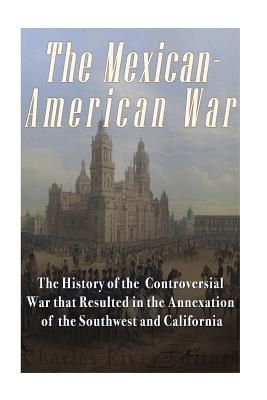

The Mexican-American War: The History of the Controversial War that Resulted in the Annexation of the Southwest and California
MEXICAN-AMER WAR
內容簡介
*Includes pictures *Includes accounts of the war written by generals *Includes footnotes, online resources and a bibliography for further reading *Includes a table of contents "Generally, the officers of the army were indifferent whether the annexation was consummated or not; but not so all of them. For myself, I was bitterly opposed to the measure, and to this day regard the war, which resulted, as one of the most unjust ever waged by a stronger against a weaker nation. It was an instance of a republic following the bad example of European monarchies, in not considering justice in their desire to acquire additional territory." - Ulysses S. Grant The policy of manifest destiny increased tensions with Mexico in the 1840s. Mexico's northern half formed the western border of the territory bought in the Louisiana Purchase. Naturally, notions of the United States expanding to the Pacific Ocean alarmed Mexico, which held what is today the west coast of the United States. However, Mexico first came to regard American expansion as a serious problem with the immigration of Americans into its northeastern territory. These Americans declared independence from Mexico and created a nation in the Mexican province of Texas. After winning independence in 1836, Texas became an independent republic. Texas formally asked to be annexed by the United States in 1845. This annexation angered the Mexican government, which still considered Texas to be part of its territory. Mexico had previously warned that the annexation of Texas would cause Mexico to declare war on the United States. When the annexation bill was passed by Congress, it included an additional provocation to Mexico: it claimed that the southern border of Texas was the Rio Grande. The actual territory controlled by the Republic of Texas did not extend nearly to the Rio Grande, and this border would represent a further loss of territory to the United States. When a Mexican patrol attacked American cavalry in the disputed area north of the Rio Grande, President Polk went to Congress for a declaration of war. The declaration passed on May 13, 1846. The war against Mexico was unpopular with the opposition Whig party, especially in the North. Opponents of the war denounced it as a war of aggression, and denied that there had been a valid reason for war. Small American military units were quickly able to occupy key points in California, including San Francisco and Los Angeles. Although California was sparsely populated, some Mexican inhabitants formed an effective resistance which was eventually put down in 1847 by American reinforcements. Subsequently, a larger American army was sent to invade central Mexico, and managed to capture the Mexican capital, Mexico City, on September 13, 1847. Although a large Mexican army was still fighting American forces in northeast Mexico and Texas, news of the capital falling caused it to retreat to try to retake the capital. After the defeat of the last Mexican army, major hostilities ended. The Treaty of Guadalupe Hidalgo ended the Mexican-American War in February 1848. Mexico agreed to sell over half its territory for less than half of the money the United States had offered only two years earlier. As the Army occupied most of Mexico's major cities, Mexico had no choice but to accept the American terms. The new territory acquired in the treaty included all or part of the present day states of California, Nevada, New Mexico, Arizona, Texas, Colorado, Utah, and Wyoming. The Mexican-American War: The History of the Controversial War that Resulted in the Annexation of the Southwest and California looks at the controversial war. Along with pictures of important people, places, and events, you will learn about the Mexican-American War like never before, in no time at all.
規格
退貨說明
退貨須知:
- 依照消費者保護法的規定,您享有商品貨到次日起七天猶豫期(含例假日)的權益(請注意!猶豫期非試用期),辦理退貨之商品必須是全新狀態(不得有刮傷、破損、受潮)且需完整(包含全部商品、配件、原廠內外包裝、贈品及所有附隨文件或資料的完整性等)。
- 請您以送貨廠商使用之包裝紙箱將退貨商品包裝妥當,若原紙箱已遺失,請另使用其他紙箱包覆於商品原廠包裝之外,切勿直接於原廠包裝上黏貼紙張或書寫文字。若原廠包裝損毀將可能被認定為已逾越檢查商品之必要程度,本公司得依毀損程度扣除回復原狀必要費用(整新費)後退費;請您先確認商品正確、外觀可接受,再行拆封,以免影響您的權利;若為產品瑕疵,本公司接受退貨。
依「通訊交易解除權合理例外情事適用準則」,下列商品不適用七日猶豫期,除產品本身有瑕疵外,不接受退貨:
- 易於腐敗、保存期限較短或解約時即將逾期。(如:生鮮蔬果、乳製品、冷凍冷藏食材、蛋糕)
- 依消費者要求所為之客製化給付。(如:客製印章、鋼筆刻字)
- 報紙、期刊或雜誌。
- 經消費者拆封之影音商品或電腦軟體。
- 非以有形媒介提供之數位內容或一經提供即為完成之線上服務,經消費者事先同意始提供。(如:電子書)
- 已拆封之個人衛生用品。(如:內衣褲、襪類、褲襪、刮鬍刀、除毛刀等貼身用品)
- 國際航空客運服務。
若您退貨時有下列情形,可能被認定已逾越檢查商品之必要程度而須負擔為回復原狀必要費用(整新費),或影響您的退貨權利,請您在拆封前決定是否要退貨:
- 以數位或電磁紀錄形式儲存或著作權相關之商品(包含但不限於CD、VCD、DVD、電腦軟體等) 包裝已拆封者(除運送用之包裝以外)。
- 耗材(包含但不限於墨水匣、碳粉匣、紙張、筆類墨水、清潔劑補充包等)之商品包裝已拆封者(除運送用之包裝以外)。
- 衣飾鞋類/寢具/織品(包含但不限於衣褲、鞋子、襪子、泳裝、床單、被套、填充玩具)或之商品缺件(含購買商品、附件、內外包裝、贈品等)或經剪標或下水或商品有不可回復之髒污或磨損痕跡。
- 食品、美容/保養用品、內衣褲等消耗性或個人衛生用品、商品銷售頁面上特別載明之商品已拆封者(除運送用之包裝外一切包裝、包括但不限於瓶蓋、封口、封膜等接觸商品內容之包裝部分)或已非全新狀態(外觀有刮傷、破損、受潮等)與包裝不完整(缺少商品、附件、原廠外盒、保護袋、配件紙箱、保麗龍、隨貨文件、贈品等)。
- 家電、3C、畫作、電子閱讀器等商品,除商品本身有瑕疵外,退回之商品已拆封(除運送用之包裝外一切包裝、包括但不限於封膜等接觸商品內容之包裝部分、移除封條、拆除吊牌、拆除貼膠或標籤等情形)或已非全新狀態(外觀有刮傷、破損、受潮等)與包裝不完整(缺少商品、附件、原廠外盒、保護袋、配件紙箱、保麗龍、隨貨文件、贈品等)。
- 退貨程序請參閱【客服專區→常見問題→誠品線上退貨退款】之說明。