防詐3要訣:不聽信、不操作、掛斷電話



內容簡介
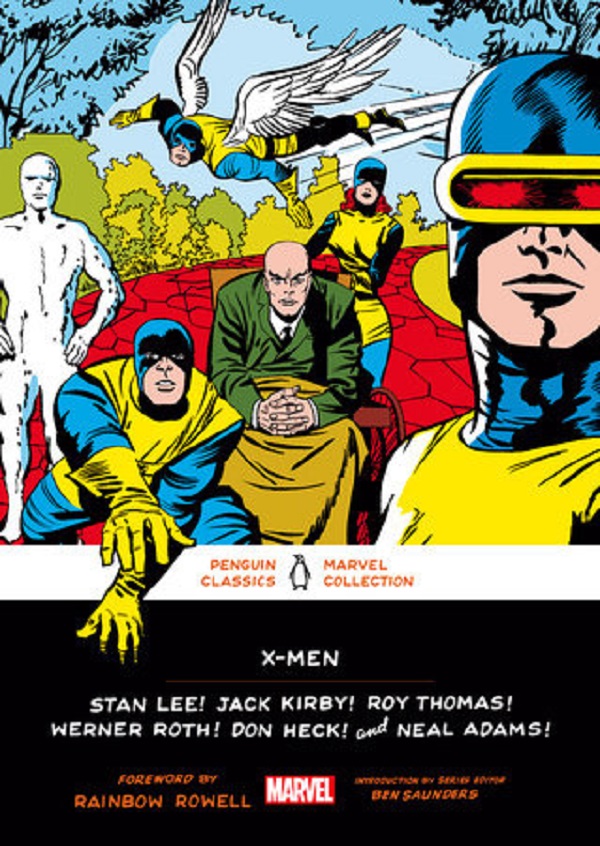
The Penguin Classics Marvel Collection presents the origin stories, seminal tales, and characters of the Marvel Universe to explore Marvel’s transformative and timeless influence on an entire genre of fantasy
Collects X-Men #1, 3, 4, 5, 7, 8, 14, 15, 16, 38, 41, 42, 44, 45, and 46. It is impossible to imagine American popular culture without Marvel Comics. For decades, Marvel has published groundbreaking visual narratives that sustain attention on multiple levels: as metaphors for the experience of difference and otherness; as meditations on the fluid nature of identity; and as high-water marks in the artistic tradition of American cartooning, to name a few.
The seeds of a pop-cultural phenomenon were sown with the launch of the first X-Men comic in 1963, at the height of “the Marvel Revolution,” under the creative team of Stan Lee and Jack Kirby. The title was bookended by some of the best Super Hero comics of that era; the first issue established a creative formula that continues to inspire contemporary creators, while the final issues remain acclaimed for the groundbreaking artwork of Neal Adams. This collection gathers several key tales from the original run of the classic X-Men series.
A foreword by Rainbow Rowell and scholarly introductions and apparatus by Ben Saunders offer further insight into the enduring significance of the X-Men and classic Marvel comics.
作者介紹
Born Jacob Kurtzberg in 1917 to Jewish-Austrian parents on New York’s Lower East Side, Jack Kirby came of age at the birth of the American comic book industry. Horrified by the rise of Nazism, Kirby co‑created the patriotic hero Captain America with Joe Simon in 1940. Cap’s exploits on the comic book page entertained millions of American readers at home and inspired US troops fighting the enemy abroad. Kirby’s partnership with Simon continued throughout the 1940s and early ’50s; together, they produced comics in every popular genre, from Western to romance. In 1958, Kirby began his equally fruitful collaboration with writer- editor Stan Lee, and in 1961 the two men co‑created the foundational text of the modern Marvel Universe: The Fantastic Four. Over the next decade, Kirby and Lee would introduce a mind- boggling array of new characters— including the Avengers, the Hulk, Thor, Iron Man, the Silver Surfer, and the X‑Men. Kirby’s groundbreaking work with Lee formed the foundation of the Marvel Universe. In the early 1970s, Kirby moved to DC Comics, where he created his interconnected Fourth World series, as well as freestanding titles such as The Demon. He returned to Marvel in 1975, writing and illustrating The Black Panther and Captain America, and introducing series such as Devil Dinosaur, and The Eternals. Kirby died in 1994. Today, he is generally regarded as one of the most important and influential creators in the history of American comics. His work has inspired multiple generations of writers, artists, designers, and filmmakers, who continue to explore his vast universe of concepts and characters. He was an inaugural inductee into the Eisner Hall of Fame in 1987.
Roy Thomas joined the Marvel Bullpen as a writer and editor under Stan Lee, scripting key runs of nearly every title of the time: Amazing Spider-Man, Avengers, Daredevil, Doctor Strange, Sub-Mariner, Thor, X-Men and more. He wrote the first 10 years of Marvel’s Conan the Barbarian and Savage Sword of Conan; and launched such series as Defenders, Iron Fist, Invaders and Warlock. At DC, he developed All-Star Squadron, Infinity Inc. and related titles, proving instrumental in reviving the Golden Age Justice Society of America. Thomas later became editor of Alter Ego, a magazine devoted to comic-book history, and co-scripted the sword-and-sorcery films Fire and Ice and Conan the Destroyer.
Werner Roth may not be remembered as widely as Marvel Age giants like Kirby, Ditko or Buscema, but that cannot change the fact that he was a key contributor during the early years when Marvel’s Silver Age legacy was still an unknown quantity. In fact, unlike those other artists, Werner Roth was an active participant in the earliest years of Marvel’s Atlas Era: the beyond beautiful heroine, Venus; Matt Slade, Western gunfighter; the horror/suspense stories of Strange Tales, Menace and World of Fantasy…Werner did it all! His two titles of longest creative standing were the Native American Western title Apache Kid and Lorna, the Jungle Queen, for which he turned in consistently lovely artwork. After several years away from comics, he reemerged at Marvel drawing X-Men, the first permanent artist installed to fill the big shoes of Jack Kirby. Werner’s X-Men work has charm to burn, with freewheeling renderings of such frozen-in-time characters like The Locust, Kukulcan/El Tigre, and Factor Three. He also created the visual look of The Banshee, certainly one of his most memorable contributions to the X-Men legacy. After his run on the X-Men ended, Werner dabbled in comics for a bit in the ’70s before retiring.
Don Heck (1929-1995) worked for Harvey, Quality, Hillman and other publishers before arriving at Atlas Comics, later Marvel, where he penciled and inked stories for virtually every genre: crime, horror, jungle, romance, war, Western and more. With Stan Lee and others, he launched Iron Man, his supporting cast and his early rogues’ gallery — including the Black Widow, Hawkeye and the Mandarin. He also succeeded Jack Kirby on Avengers. At DC, his artwork appeared in Justice League of America, Flash, Wonder Woman and other titles.
Neal Adams took the industry by storm with groundbreaking artwork on X-Men and Avengers. At DC, he and Dennis O’Neil collaborated on Batman and converted Green Lantern to Green Lantern/Green Arrow, a title famed for its combination of social commentary and comic-book action. He later founded Continuity Associates, home of Bucky O’Hare, Ms. Mystic and other fan favorites. After years of political activism, Adams returned to comics to write and draw Batman: Odyssey for DC, and provide art for Marvel’s New Avengers.
Arnold Drake (1924-2007) helped shape the Silver Age both at Marvel with Captain Marvel and X-Men; and at DC with Batman, Doom Patrol and “Stanley and His Monster.” His media tie-in work ranged from Star Trek to Bob Hope and Jerry Lewis. He wrote, produced and directed the 1964 horror film The Flesh Eaters, and wrote lyrics for several musicals. He won 1967 Alley Awards for Best Full-Length Story and Best New Strip (both for Deadman in Strange Adventures), as well as the Bill Finger Award for Excellence in Comics Writing.
Guaranteed immortality for introducing Johnny Blaze, the Ghost Rider, Gary Friedrich also played a pivotal role in Marvel’s 1970s Western and war comics, penning memorable tales of Sgt. Fury and launching the Marine series Captain Savage. In addition, Friedrich wrote issues of Incredible Hulk, Captain America, Captain Marvel, Daredevil, X-Men and more. With Steve Ditko, he co-created Charlton’s Blue Beetle, now a DC character. With Len Brown, he wrote a series of books on popular music.
One of the Golden Age’s earliest talents, George Tuska (1916-2009) created characters for Fiction House, Harvey Comics and Fawcett Comics’ Captain Marvel Adventures, among many others. He helped launch one of the most popular post-war genres in Lev Gleason’s Crime Does Not Pay. He eventually provided multi-genre art for Atlas Comics, to which he returned following its transformation into Marvel. Tuska penciled Ghost Rider, Luke Cage: Power Man and Sub-Mariner, as well as a 10-year Iron Man stint. At DC, he illustrated Challengers of the Unknown and Superman, among others. As a comic-strip artist, Tuska drew Buck Rogers, Scorchy Smith and DC’s World’s Greatest Superheroes. His final industry work was cover art for Masquerade, part of Dynamite’s Golden Age character revival, bringing him full circle.
Ben Saunders is a professor of English at the University of Oregon. He is the author of Desiring Donne: Poetry, Sexuality, Interpretation and Do the Gods Wear Capes?: Spirituality, Fantasy, and Superheroes, as well as numerous critical essays on subjects ranging from the writings of Shakespeare to the recordings of Little Richard. He has also curated several museum exhibitions of comics art, including the record- breaking, multimedia touring show Marvel: Universe of Super Heroes— a retrospective exploring the artistic and cultural impact of Marvel Comics from 1939 to the present.
Rainbow Rowell is the award- winning, #1 New York Times bestselling author of Eleanor & Park, Fangirl, Landline, Attachments, and the Simon Snow Trilogy. She has written monthly Runaways and She-Hulk comics for Marvel.
規格
退貨說明
退貨須知:
- 依照消費者保護法的規定,您享有商品貨到次日起七天猶豫期(含例假日)的權益(請注意!猶豫期非試用期),辦理退貨之商品必須是全新狀態(不得有刮傷、破損、受潮)且需完整(包含全部商品、配件、原廠內外包裝、贈品及所有附隨文件或資料的完整性等)。
- 請您以送貨廠商使用之包裝紙箱將退貨商品包裝妥當,若原紙箱已遺失,請另使用其他紙箱包覆於商品原廠包裝之外,切勿直接於原廠包裝上黏貼紙張或書寫文字。若原廠包裝損毀將可能被認定為已逾越檢查商品之必要程度,本公司得依毀損程度扣除回復原狀必要費用(整新費)後退費;請您先確認商品正確、外觀可接受,再行拆封,以免影響您的權利;若為產品瑕疵,本公司接受退貨。
依「通訊交易解除權合理例外情事適用準則」,下列商品不適用七日猶豫期,除產品本身有瑕疵外,不接受退貨:
- 易於腐敗、保存期限較短或解約時即將逾期。(如:生鮮蔬果、乳製品、冷凍冷藏食材、蛋糕)
- 依消費者要求所為之客製化給付。(如:客製印章、鋼筆刻字)
- 報紙、期刊或雜誌。
- 經消費者拆封之影音商品或電腦軟體。
- 非以有形媒介提供之數位內容或一經提供即為完成之線上服務,經消費者事先同意始提供。(如:電子書)
- 已拆封之個人衛生用品。(如:內衣褲、襪類、褲襪、刮鬍刀、除毛刀等貼身用品)
- 國際航空客運服務。
若您退貨時有下列情形,可能被認定已逾越檢查商品之必要程度而須負擔為回復原狀必要費用(整新費),或影響您的退貨權利,請您在拆封前決定是否要退貨:
- 以數位或電磁紀錄形式儲存或著作權相關之商品(包含但不限於CD、VCD、DVD、電腦軟體等) 包裝已拆封者(除運送用之包裝以外)。
- 耗材(包含但不限於墨水匣、碳粉匣、紙張、筆類墨水、清潔劑補充包等)之商品包裝已拆封者(除運送用之包裝以外)。
- 衣飾鞋類/寢具/織品(包含但不限於衣褲、鞋子、襪子、泳裝、床單、被套、填充玩具)或之商品缺件(含購買商品、附件、內外包裝、贈品等)或經剪標或下水或商品有不可回復之髒污或磨損痕跡。
- 食品、美容/保養用品、內衣褲等消耗性或個人衛生用品、商品銷售頁面上特別載明之商品已拆封者(除運送用之包裝外一切包裝、包括但不限於瓶蓋、封口、封膜等接觸商品內容之包裝部分)或已非全新狀態(外觀有刮傷、破損、受潮等)與包裝不完整(缺少商品、附件、原廠外盒、保護袋、配件紙箱、保麗龍、隨貨文件、贈品等)。
- 家電、3C、畫作、電子閱讀器等商品,除商品本身有瑕疵外,退回之商品已拆封(除運送用之包裝外一切包裝、包括但不限於封膜等接觸商品內容之包裝部分、移除封條、拆除吊牌、拆除貼膠或標籤等情形)或已非全新狀態(外觀有刮傷、破損、受潮等)與包裝不完整(缺少商品、附件、原廠外盒、保護袋、配件紙箱、保麗龍、隨貨文件、贈品等)。
- 退貨程序請參閱【客服專區→常見問題→誠品線上退貨退款】之說明。