防詐3要訣:不聽信、不操作、掛斷電話




Carmilla, the title character, is the original prototype for a legion of female and lesbian vampires. Although Le Fanu portrays his vampire's sexuality with the circumspection that one would expect for his time, lesbian attraction evidently is the main dynamic between Carmilla and the narrator of the story:
Sometimes after an hour of apathy, my strange and beautiful companion would take my hand and hold it with a fond pressure, renewed again and again; blushing softly, gazing in my face with languid and burning eyes, and breathing so fast that her dress rose and fell with the tumultuous respiration. It was like the ardour of a lover; it embarrassed me; it was hateful and yet overpowering; and with gloating eyes she drew me to her, and her hot lips travelled along my cheek in kisses; and she would whisper, almost in sobs, "You are mine, you shall be mine, and you and I are one for ever." (Carmilla, Chapter 4).
When compared to other literary vampires of the 19th century, Carmilla is a similar product of a culture with strict sexual mores and tangible religious fear. While Carmilla selected exclusively female victims, she only becomes emotionally involved with a few. Carmilla had nocturnal habits, but was not confined to the darkness. She had unearthly beauty, and was able to change her form and to pass through solid walls. Her animal alter ego was a monstrous black cat, not a large dog as in Dracula. She did, however, sleep in a coffin. Carmilla works as a Gothic horror story because her victims are portrayed as succumbing to a perverse and unholy temptation that has severe metaphysical consequences for them.
Some critics, among them William Veeder, suggest that Carmilla, notably in its outlandish use of narrative frames, was an important influence on Henry James' The Turn of the Screw (1898).
Le Fanu's work has been noted as an influence on Bram Stoker's masterwork of the genre, Dracula:
Both stories are told in the first person. Dracula expands on the idea of a first person account by creating a series of journal entries and logs of different persons and creating a plausible background story for their having been compiled.
Both authors indulge the air of mystery, though Stoker takes it further than Le Fanu by allowing the characters to solve the enigma of the vampire along with the reader.
The descriptions of the title character in Carmilla and of Lucy in Dracula are similar. Additionally, both women sleepwalk.
Stoker's Dr. Abraham Van Helsing is similar to Le Fanu's vampire expert Baron Vordenburg: both characters investigate and catalyze actions in opposition to the vampire.
The symptoms described in Carmilla and Dracula are highly comparable. ... (wikipedia.org)
內容簡介
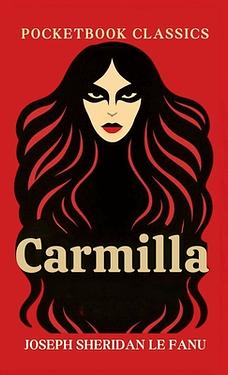
Carmilla is an 1872 Gothic novella by Irish author Sheridan Le Fanu and one of the early works of vampire fiction, predating Bram Stoker's Dracula (1897) by 26 years. First published as a serial in The Dark Blue (1871-72), the story is narrated by a young woman preyed upon by a female vampire named Carmilla, later revealed to be Mircalla, Countess Karnstein (Carmilla is an anagram of Mircalla). The character is a prototypical example of the lesbian vampire, expressing romantic desires toward the protagonist. The novella notably never acknowledges homosexuality as an antagonistic trait, leaving it subtle and morally ambiguous. The story is often anthologised, and has been adapted many times in film and other media.
Carmilla, the title character, is the original prototype for a legion of female and lesbian vampires. Although Le Fanu portrays his vampire's sexuality with the circumspection that one would expect for his time, lesbian attraction evidently is the main dynamic between Carmilla and the narrator of the story:
Sometimes after an hour of apathy, my strange and beautiful companion would take my hand and hold it with a fond pressure, renewed again and again; blushing softly, gazing in my face with languid and burning eyes, and breathing so fast that her dress rose and fell with the tumultuous respiration. It was like the ardour of a lover; it embarrassed me; it was hateful and yet overpowering; and with gloating eyes she drew me to her, and her hot lips travelled along my cheek in kisses; and she would whisper, almost in sobs, "You are mine, you shall be mine, and you and I are one for ever." (Carmilla, Chapter 4).
When compared to other literary vampires of the 19th century, Carmilla is a similar product of a culture with strict sexual mores and tangible religious fear. While Carmilla selected exclusively female victims, she only becomes emotionally involved with a few. Carmilla had nocturnal habits, but was not confined to the darkness. She had unearthly beauty, and was able to change her form and to pass through solid walls. Her animal alter ego was a monstrous black cat, not a large dog as in Dracula. She did, however, sleep in a coffin. Carmilla works as a Gothic horror story because her victims are portrayed as succumbing to a perverse and unholy temptation that has severe metaphysical consequences for them.
Some critics, among them William Veeder, suggest that Carmilla, notably in its outlandish use of narrative frames, was an important influence on Henry James' The Turn of the Screw (1898).
Le Fanu's work has been noted as an influence on Bram Stoker's masterwork of the genre, Dracula:
Both stories are told in the first person. Dracula expands on the idea of a first person account by creating a series of journal entries and logs of different persons and creating a plausible background story for their having been compiled.
Both authors indulge the air of mystery, though Stoker takes it further than Le Fanu by allowing the characters to solve the enigma of the vampire along with the reader.
The descriptions of the title character in Carmilla and of Lucy in Dracula are similar. Additionally, both women sleepwalk.
Stoker's Dr. Abraham Van Helsing is similar to Le Fanu's vampire expert Baron Vordenburg: both characters investigate and catalyze actions in opposition to the vampire.
The symptoms described in Carmilla and Dracula are highly comparable. ... (wikipedia.org)
規格
退貨說明
退貨須知:
- 依照消費者保護法的規定,您享有商品貨到次日起七天猶豫期(含例假日)的權益(請注意!猶豫期非試用期),辦理退貨之商品必須是全新狀態(不得有刮傷、破損、受潮)且需完整(包含全部商品、配件、原廠內外包裝、贈品及所有附隨文件或資料的完整性等)。
- 請您以送貨廠商使用之包裝紙箱將退貨商品包裝妥當,若原紙箱已遺失,請另使用其他紙箱包覆於商品原廠包裝之外,切勿直接於原廠包裝上黏貼紙張或書寫文字。若原廠包裝損毀將可能被認定為已逾越檢查商品之必要程度,本公司得依毀損程度扣除回復原狀必要費用(整新費)後退費;請您先確認商品正確、外觀可接受,再行拆封,以免影響您的權利;若為產品瑕疵,本公司接受退貨。
依「通訊交易解除權合理例外情事適用準則」,下列商品不適用七日猶豫期,除產品本身有瑕疵外,不接受退貨:
- 易於腐敗、保存期限較短或解約時即將逾期。(如:生鮮蔬果、乳製品、冷凍冷藏食材、蛋糕)
- 依消費者要求所為之客製化給付。(如:客製印章、鋼筆刻字)
- 報紙、期刊或雜誌。
- 經消費者拆封之影音商品或電腦軟體。
- 非以有形媒介提供之數位內容或一經提供即為完成之線上服務,經消費者事先同意始提供。(如:電子書)
- 已拆封之個人衛生用品。(如:內衣褲、襪類、褲襪、刮鬍刀、除毛刀等貼身用品)
- 國際航空客運服務。
若您退貨時有下列情形,可能被認定已逾越檢查商品之必要程度而須負擔為回復原狀必要費用(整新費),或影響您的退貨權利,請您在拆封前決定是否要退貨:
- 以數位或電磁紀錄形式儲存或著作權相關之商品(包含但不限於CD、VCD、DVD、電腦軟體等) 包裝已拆封者(除運送用之包裝以外)。
- 耗材(包含但不限於墨水匣、碳粉匣、紙張、筆類墨水、清潔劑補充包等)之商品包裝已拆封者(除運送用之包裝以外)。
- 衣飾鞋類/寢具/織品(包含但不限於衣褲、鞋子、襪子、泳裝、床單、被套、填充玩具)或之商品缺件(含購買商品、附件、內外包裝、贈品等)或經剪標或下水或商品有不可回復之髒污或磨損痕跡。
- 食品、美容/保養用品、內衣褲等消耗性或個人衛生用品、商品銷售頁面上特別載明之商品已拆封者(除運送用之包裝外一切包裝、包括但不限於瓶蓋、封口、封膜等接觸商品內容之包裝部分)或已非全新狀態(外觀有刮傷、破損、受潮等)與包裝不完整(缺少商品、附件、原廠外盒、保護袋、配件紙箱、保麗龍、隨貨文件、贈品等)。
- 家電、3C、畫作、電子閱讀器等商品,除商品本身有瑕疵外,退回之商品已拆封(除運送用之包裝外一切包裝、包括但不限於封膜等接觸商品內容之包裝部分、移除封條、拆除吊牌、拆除貼膠或標籤等情形)或已非全新狀態(外觀有刮傷、破損、受潮等)與包裝不完整(缺少商品、附件、原廠外盒、保護袋、配件紙箱、保麗龍、隨貨文件、贈品等)。
- 退貨程序請參閱【客服專區→常見問題→誠品線上退貨退款】之說明。