防詐3要訣:不聽信、不操作、掛斷電話



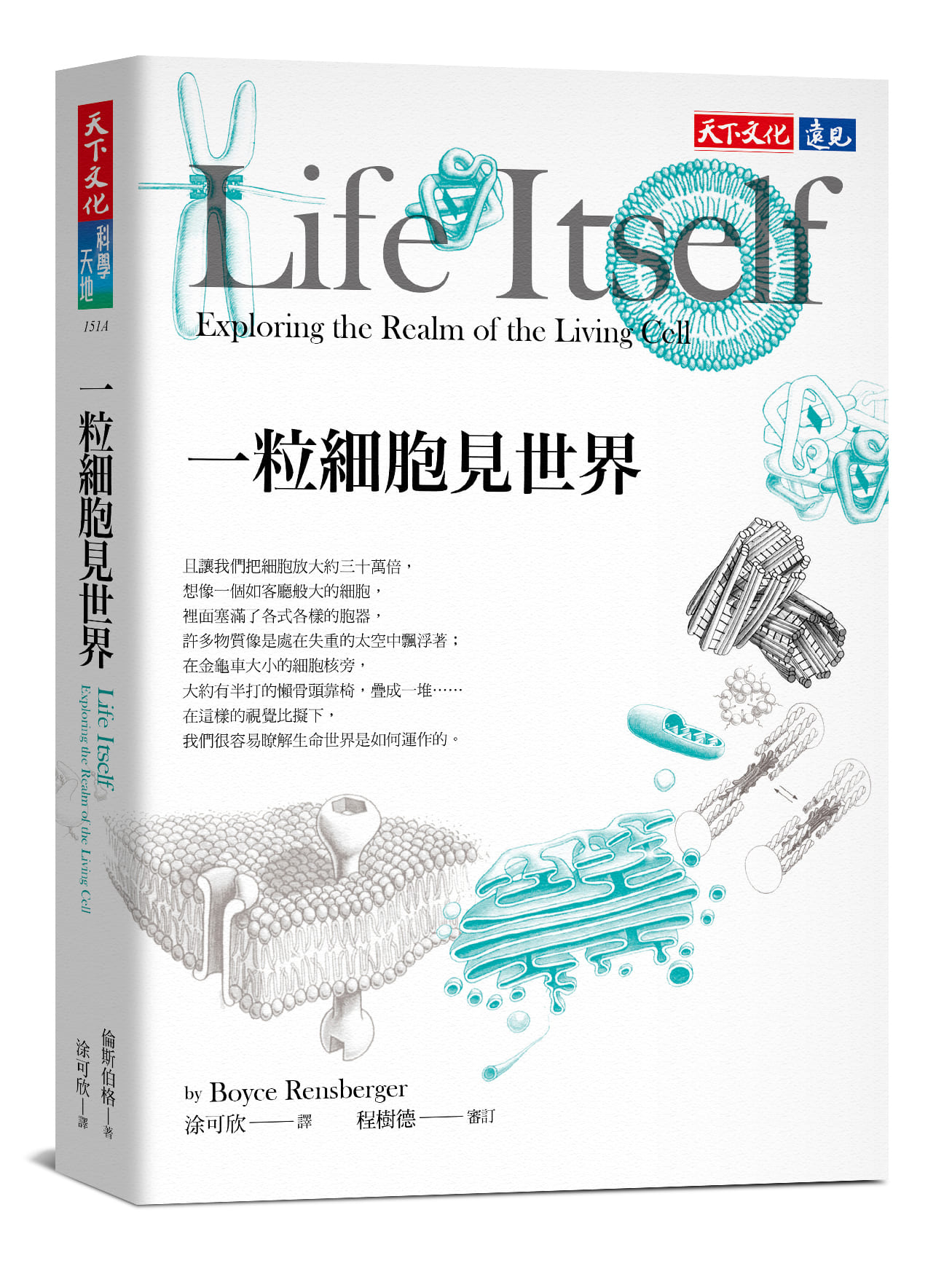
Life Itself: Exploring the Realm of the Living Cell
LIFE ITSELF REV/E
出版日期:
1998/12/16
1,125
訂單自國外空運,約14-21個工作天(不含例假日)到貨後依序出貨。為縮短等待,建議將此商品和其他商品分開下單。
查詢門市庫存
Veteran science writer Boyce Rensberger takes readers to the front lines of cell research with some of the brightest investigators in molecular, cellular, and developmental biology. He maintains that the solutions to the most pressing challenges facing scientists today will be found in the innermost workings of the cell. 52 illustrations.
內容簡介
Hidden in a nondescript red-brick building in Rockville, Maryland, is the most unusual warehouse in the world, a bank of living cells called the American Type Culture Collection. Here, at 321 degrees below zero--a temperature at which life abandons its vital dance and enters limbo, but without dying--are some 30,000 vials holding 60 billion living forms in suspended animation, including mouse kidney cells, turkey blood cells, armadillo spleen cells, and some 40 billion human cells. These cultured cells are essential to modern biological research--in fact, cells today are the most intimately studied life forms in all of science, for both practical and philosophical reasons. For one, all disease--from cancer and the common cold, to arthritis and AIDS--stems from cells gone awry. And cell research not only promises a cure for a wide variety of disease--it also holds the key to the mystery of life itself. In Life Itself, Boyce Rensberger, science writer for The Washington Post, takes readers to the frontlines of cell research with some of the brightest investigators in molecular, cellular, and developmental biology. Virtually all the hottest topics in biomedical research are covered here, such as how do cells and their minute components move? How do the body's cells heal wounds? What is cancer? Why do cells die? And what is the nature of life? Readers discover that--contrary to what we may have concluded from pictures in our high school textbooks--cells teem with activity and that, inside, they are more crowded with components than the inside of a computer. We learn that scientists now know of at least ten molecular motors that move things about inside the cell--in most cells, this motion is short because the cell is tiny, but in the single-celled nerve fibers that run from the base of the spinal cord to the toes (measuring three or four feet in an adult human), molecular motors can take several days to make the trip. Rensberger describes the many fascinating kinds of cells found in the body, from neural crest cells (early in embryonic development, these cells crawl all over the embryo to the sites where they will pursue their fate--as nerve cells, or cartilage, or skin), to dust cells (nomadic cells in the lung that swallow and store indigestible particles, then migrate to the gullet where they themselves are swallowed and digested), to natural killer cells (millions of which roam the body looking for cancerous cells). We meet many of the scientists who have pioneered cell research, such as Rita Levi-Montalcini--an Italian who, shut out of her lab during World War II, continued to experiment in her bedroom at home, making the discovery (nerve growth factor) for which she won the Nobel Prize--and American Leonard Hayflick, who proved that all human cells (except cancer cells) invariably die after about fifty divisions. Rensberger also provides an illuminating discussion of AIDS--revealing exactly why this virus is so difficult to defeat--and of cancer, explaining that before cancer can start, a whole series of rare events must occur, events so unlikely that it seems a wonder that anyone gets cancer at all. The solutions to the most pressing challenges facing scientists today--from the efforts to conquer disease to the quest to understand life itself--will be found in the innermost workings of the cell. In Life Itself, Boyce Rensberger paints a colorful and fascinating portrait of modern research in this vital area, an account which will enthrall anyone interested in state-of-the-art science or the incredible workings of the human body.
作者介紹
Boyce Rensberger has been a science writer and science editor for more than 30 years, including long stints at the New York Times and the Washington Post. He now directs the Knight Science Journalism Fellowship Program at the Massachusetts Institute of Technology.
規格
誠品貨碼 /
ISBN13 / 9780195125009
ISBN10 /
EAN貨碼 / 9780195125009
裝訂 / P:平裝
頁數 / 304
重量(g) / 476.3
語言 / 3:英文
級別 / N:無
尺寸 / 23.5X15.7X2.2CM
退貨說明
退貨須知:
- 依照消費者保護法的規定,您享有商品貨到次日起七天猶豫期(含例假日)的權益(請注意!猶豫期非試用期),辦理退貨之商品必須是全新狀態(不得有刮傷、破損、受潮)且需完整(包含全部商品、配件、原廠內外包裝、贈品及所有附隨文件或資料的完整性等)。
- 請您以送貨廠商使用之包裝紙箱將退貨商品包裝妥當,若原紙箱已遺失,請另使用其他紙箱包覆於商品原廠包裝之外,切勿直接於原廠包裝上黏貼紙張或書寫文字。若原廠包裝損毀將可能被認定為已逾越檢查商品之必要程度,本公司得依毀損程度扣除回復原狀必要費用(整新費)後退費;請您先確認商品正確、外觀可接受,再行拆封,以免影響您的權利;若為產品瑕疵,本公司接受退貨。
依「通訊交易解除權合理例外情事適用準則」,下列商品不適用七日猶豫期,除產品本身有瑕疵外,不接受退貨:
- 易於腐敗、保存期限較短或解約時即將逾期。(如:生鮮蔬果、乳製品、冷凍冷藏食材、蛋糕)
- 依消費者要求所為之客製化給付。(如:客製印章、鋼筆刻字)
- 報紙、期刊或雜誌。
- 經消費者拆封之影音商品或電腦軟體。
- 非以有形媒介提供之數位內容或一經提供即為完成之線上服務,經消費者事先同意始提供。(如:電子書)
- 已拆封之個人衛生用品。(如:內衣褲、襪類、褲襪、刮鬍刀、除毛刀等貼身用品)
- 國際航空客運服務。
若您退貨時有下列情形,可能被認定已逾越檢查商品之必要程度而須負擔為回復原狀必要費用(整新費),或影響您的退貨權利,請您在拆封前決定是否要退貨:
- 以數位或電磁紀錄形式儲存或著作權相關之商品(包含但不限於CD、VCD、DVD、電腦軟體等) 包裝已拆封者(除運送用之包裝以外)。
- 耗材(包含但不限於墨水匣、碳粉匣、紙張、筆類墨水、清潔劑補充包等)之商品包裝已拆封者(除運送用之包裝以外)。
- 衣飾鞋類/寢具/織品(包含但不限於衣褲、鞋子、襪子、泳裝、床單、被套、填充玩具)或之商品缺件(含購買商品、附件、內外包裝、贈品等)或經剪標或下水或商品有不可回復之髒污或磨損痕跡。
- 食品、美容/保養用品、內衣褲等消耗性或個人衛生用品、商品銷售頁面上特別載明之商品已拆封者(除運送用之包裝外一切包裝、包括但不限於瓶蓋、封口、封膜等接觸商品內容之包裝部分)或已非全新狀態(外觀有刮傷、破損、受潮等)與包裝不完整(缺少商品、附件、原廠外盒、保護袋、配件紙箱、保麗龍、隨貨文件、贈品等)。
- 家電、3C、畫作、電子閱讀器等商品,除商品本身有瑕疵外,退回之商品已拆封(除運送用之包裝外一切包裝、包括但不限於封膜等接觸商品內容之包裝部分、移除封條、拆除吊牌、拆除貼膠或標籤等情形)或已非全新狀態(外觀有刮傷、破損、受潮等)與包裝不完整(缺少商品、附件、原廠外盒、保護袋、配件紙箱、保麗龍、隨貨文件、贈品等)。
- 退貨程序請參閱【客服專區→常見問題→誠品線上退貨退款】之說明。
付款/配送