防詐3要訣:不聽信、不操作、掛斷電話




Up from Slavery: An Autobiography
UP FROM SLAVERY
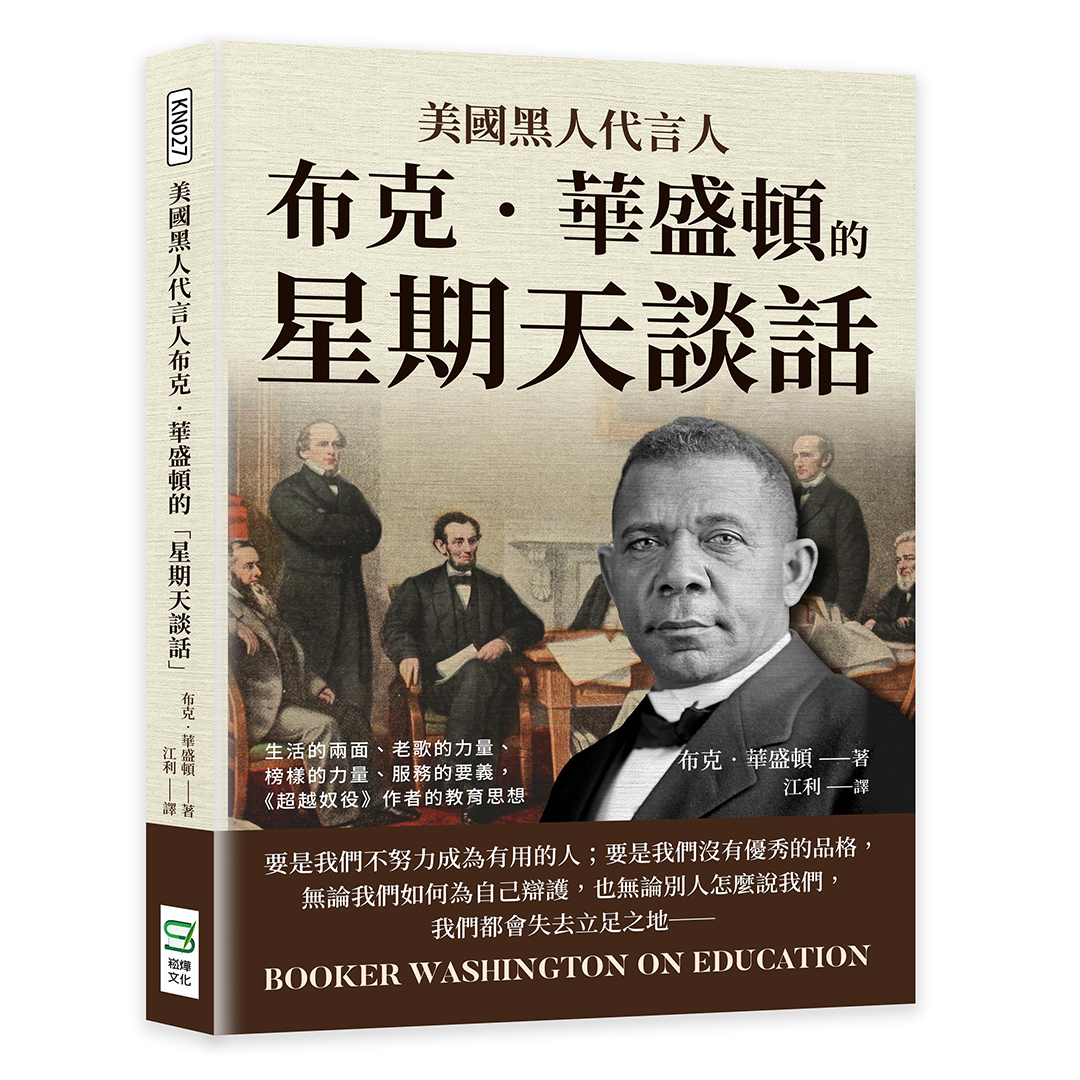
內容簡介
Selected by the Modern Library as one of the 100 best nonfiction books of all time In Up from Slavery, Washington recounts the story of his life--from slave to educator. The early sections deal with his upbringing as a slave and his efforts to get an education. Washington details his transition from student to teacher, and outlines his own development as an educator and founder of the Tuskegee Institute in Alabama. In the final chapters of Up From Slavery, Washington describes his career as a public speaker and civil rights activist.
作者介紹
Booker Taliaferro Washington, the educator and racial spokesman who remains one of the most controversial figures in African-American history, was born into slavery on a tobacco farm in Franklin County, Virginia, on April 5, 1856. His mother was the plantation's cook; his father was an unknown white man. At the close of the Civil War, Washington moved with his mother and stepfather to the river town of Malden, West Virginia, where he toiled in coal mines and salt furnaces, securing a basic education in his spare time. Later he worked as a houseboy for Mrs. Viola Ruffner, a New England woman who recognized his eagerness to advance himself. In 1872 Washington returned to Virginia to enroll in the Hampton Normal and Agricultural Institute, a vocational school for blacks founded by Samuel Chapman Armstrong, a former Union general. Washington graduated with honors in 1875. Afterward, he taught school in Malden and briefly attended the Wayland Seminary in Washington, D.C., before accepting an invitation from General Armstrong to join the faculty at Hampton.
In 1881 Washington left Virginia for Alabama, to establish the Tuskegee Normal and Industrial Institute. The school opened on July 4, 1881, with one teacher and thirty pupils. Through skillful management, tireless fund-raising, and shrewd diplomacy with whites, he built Tuskegee, literally brick by brick, into the top black trade school in the country. Like his mentor, General Armstrong, Washington made sure that all skills and academic courses taught at Tuskegee had practical application in the economy of the postwar South. A pragmatist, not an idealist, he endorsed the Puritan virtue of self-help, maintaining, "the individual who can do something that the world wants done will, in the end, make his way regardless of his race." Washington's well-known success as an educator led to his being asked to speak on racial issues. In 1895 he delivered opening remarks at the Cotton States and International Exposition in Atlanta. In the now-famous Atlanta Compromise Address, Washington urged blacks to postpone their demands for equal rights and focus instead on improving themselves through education, industriousness, and racial solidarity. "In all things that are purely social we can be as separate as the fingers, yet one as the hand in all things essential to mutual progress," he stated. The following year Washington became the first black to receive an honorary Master of Arts degree from Harvard University. By 1900 Washington, the so-called "Wizard of Tuskegee," had emerged as America's most influential black leader. He launched the National Negro Business League in Boston and, in rapid succession, published two volumes of autobiography: The Story of My Life and Work (1900) and Up from Slavery (1901). William Dean Howells praised Up from Slavery in the North American Review, and Langston Hughes later deemed it "one of America's most revealing books." Washington created a storm of controversy, however, when he dined at the White House with President Theodore Roosevelt to discuss political appointments in the South. In 1903 Washington's accommodationist position came under attack by W. E. B. Du Bois. In The Souls of Black Folk Du Bois wrote: "His doctrine has tended to make the whites, North and South, shift the burden of the Negro problem to the Negro's shoulders and stand aside as critical and rather pessimistic spectators; when in fact the burden belongs to the nation, and the hands of none of us are clean if we bend not our energies to righting these great wrongs." Soon Washington's leadership was challenged by the militant Niagara Movement, founded in 1905, and the National Association for the Advancement of Colored People, which succeeded it in 1910. Washington maintained a grueling work schedule during his final years. He also toured Europe and brought out two last books, My Larger Education (1911) and The Man Farthest Down (1912). In November 1915, while visiting New York City on business, Washington was hospitalized. Realizing the gravity of his condition, he insisted on returning home. "I was born in the South, have lived all my life in the South, and expect to die and be buried in the South," he often said. Booker T. Washington arrived in Alabama by train only hours before his death on November 14, 1915. He was buried two days later in the small cemetery on the campus of the Tuskegee Institute.規格
退貨說明
退貨須知:
- 依照消費者保護法的規定,您享有商品貨到次日起七天猶豫期(含例假日)的權益(請注意!猶豫期非試用期),辦理退貨之商品必須是全新狀態(不得有刮傷、破損、受潮)且需完整(包含全部商品、配件、原廠內外包裝、贈品及所有附隨文件或資料的完整性等)。
- 請您以送貨廠商使用之包裝紙箱將退貨商品包裝妥當,若原紙箱已遺失,請另使用其他紙箱包覆於商品原廠包裝之外,切勿直接於原廠包裝上黏貼紙張或書寫文字。若原廠包裝損毀將可能被認定為已逾越檢查商品之必要程度,本公司得依毀損程度扣除回復原狀必要費用(整新費)後退費;請您先確認商品正確、外觀可接受,再行拆封,以免影響您的權利;若為產品瑕疵,本公司接受退貨。
依「通訊交易解除權合理例外情事適用準則」,下列商品不適用七日猶豫期,除產品本身有瑕疵外,不接受退貨:
- 易於腐敗、保存期限較短或解約時即將逾期。(如:生鮮蔬果、乳製品、冷凍冷藏食材、蛋糕)
- 依消費者要求所為之客製化給付。(如:客製印章、鋼筆刻字)
- 報紙、期刊或雜誌。
- 經消費者拆封之影音商品或電腦軟體。
- 非以有形媒介提供之數位內容或一經提供即為完成之線上服務,經消費者事先同意始提供。(如:電子書)
- 已拆封之個人衛生用品。(如:內衣褲、襪類、褲襪、刮鬍刀、除毛刀等貼身用品)
- 國際航空客運服務。
若您退貨時有下列情形,可能被認定已逾越檢查商品之必要程度而須負擔為回復原狀必要費用(整新費),或影響您的退貨權利,請您在拆封前決定是否要退貨:
- 以數位或電磁紀錄形式儲存或著作權相關之商品(包含但不限於CD、VCD、DVD、電腦軟體等) 包裝已拆封者(除運送用之包裝以外)。
- 耗材(包含但不限於墨水匣、碳粉匣、紙張、筆類墨水、清潔劑補充包等)之商品包裝已拆封者(除運送用之包裝以外)。
- 衣飾鞋類/寢具/織品(包含但不限於衣褲、鞋子、襪子、泳裝、床單、被套、填充玩具)或之商品缺件(含購買商品、附件、內外包裝、贈品等)或經剪標或下水或商品有不可回復之髒污或磨損痕跡。
- 食品、美容/保養用品、內衣褲等消耗性或個人衛生用品、商品銷售頁面上特別載明之商品已拆封者(除運送用之包裝外一切包裝、包括但不限於瓶蓋、封口、封膜等接觸商品內容之包裝部分)或已非全新狀態(外觀有刮傷、破損、受潮等)與包裝不完整(缺少商品、附件、原廠外盒、保護袋、配件紙箱、保麗龍、隨貨文件、贈品等)。
- 家電、3C、畫作、電子閱讀器等商品,除商品本身有瑕疵外,退回之商品已拆封(除運送用之包裝外一切包裝、包括但不限於封膜等接觸商品內容之包裝部分、移除封條、拆除吊牌、拆除貼膠或標籤等情形)或已非全新狀態(外觀有刮傷、破損、受潮等)與包裝不完整(缺少商品、附件、原廠外盒、保護袋、配件紙箱、保麗龍、隨貨文件、贈品等)。
- 退貨程序請參閱【客服專區→常見問題→誠品線上退貨退款】之說明。