防詐3要訣:不聽信、不操作、掛斷電話



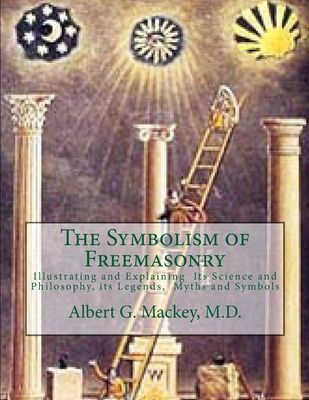
The Symbolism of Freemasonry: Illustrating and Explaining Its Science and Philosophy, its Legends, Myths and Symbols
SYMBOLISM OF FREEMASONRY
出版日期:
2017/05/18
405
此為POD隨需印刷,是出版社高階列印輸出作品後逐本裝訂成冊,印刷及裝訂與傳統印刷品質不同,版權合法不影響閱讀。需等待21個工作天(不含例假日),建議和其他商品分開下單。
查詢門市庫存
內容簡介
Of the various modes of communicating instruction to the uninformed, the Masonic student is particularly interested in two; namely, the instruction by legends and that by symbols. It is to these two, almost exclusively, that he is indebted for all that he knows, and for all that he can know, of the philosophic system which is taught in the institution. All its mysteries and its dogmas, which constitute its philosophy, are entrusted for communication to the neophyte, sometimes to one, sometimes to the other of these two methods of instruction, and sometimes to both of them combined. The Freemason has no way of reaching any of the esoteric teachings of the Order except through the medium of a legend or a symbol. A legend differs from an historical narrative only in this-that it is without documentary evidence of authenticity. It is the offspring solely of tradition. Its details may be true in part or in whole. There may be no internal evidence to the contrary, or there may be internal evidence that they are altogether false. But neither the possibility of truth in the one case, nor the certainty of falsehood in the other, can remove the traditional narrative from the class of legends. It is a legend simply because it rests on no written foundation. It is oral, and therefore legendary. In grave problems of history, such as the establishment of empires, the discovery and settlement of countries, or the rise and fall of dynasties, the knowledge of the truth or falsity of the legendary narrative will be of importance, because the value of history is impaired by the imputation of doubt. But it is not so in Freemasonry. Here there need be no absolute question of the truth or falsity of the legend. The object of the Masonic legends is not to establish historical facts, but to convey philosophical doctrines. They are a method by which esoteric instruction is communicated, and the student accepts them with reference to nothing else except their positive use and meaning as developing Masonic dogmas. Take, for instance, the Hiramic legend of the third degree. Of what importance is it to the disciple of Masonry whether it be true or false? All that he wants to know is its internal signification; and when he learns that it is intended to illustrate the doctrine of the immortality of the soul, he is content with that interpretation, and he does not deem it necessary, except as a matter of curious or antiquarian inquiry, to investigate its historical accuracy, or to reconcile any of its apparent contradictions. So of the lost keystone; so of the second temple; so of the hidden ark: these are to him legendary narratives, which, like the casket, would be of no value were it not for the precious jewel contained within. Each of these legends is the expression of a philosophical idea. But there is another method of Masonic instruction, and that is by symbols. No science is more ancient than that of symbolism. At one time, nearly all the learning of the world was conveyed in symbols. And although modern philosophy now deals only in abstract propositions, Freemasonry still cleaves to the ancient method, and has preserved it in its primitive importance as a means of communicating knowledge. According to the derivation of the word from the Greek, "to symbolize" signifies "to compare one thing with another." Hence a symbol is the expression of an idea that has been derived from the comparison or contrast of some object with a moral conception or attribute. Thus we say that the plumb is a symbol of rectitude of conduct. The physical qualities of the plumb are here compared or contrasted with the moral conception of virtue, or rectitude. Then to the Speculative Mason it becomes, after he has been taught its symbolic meaning, the visible expression of the idea of moral uprightness. Albert G. mackey
規格
誠品貨碼 /
ISBN13 / 9781546783664
ISBN10 /
EAN貨碼 / 9781546783664
裝訂 / P:平裝
頁數 / 172
語言 / 3:英文
級別 / N:無
尺寸 / 27.9X21.6X0.9CM
退貨說明
退貨須知:
- 依照消費者保護法的規定,您享有商品貨到次日起七天猶豫期(含例假日)的權益(請注意!猶豫期非試用期),辦理退貨之商品必須是全新狀態(不得有刮傷、破損、受潮)且需完整(包含全部商品、配件、原廠內外包裝、贈品及所有附隨文件或資料的完整性等)。
- 請您以送貨廠商使用之包裝紙箱將退貨商品包裝妥當,若原紙箱已遺失,請另使用其他紙箱包覆於商品原廠包裝之外,切勿直接於原廠包裝上黏貼紙張或書寫文字。若原廠包裝損毀將可能被認定為已逾越檢查商品之必要程度,本公司得依毀損程度扣除回復原狀必要費用(整新費)後退費;請您先確認商品正確、外觀可接受,再行拆封,以免影響您的權利;若為產品瑕疵,本公司接受退貨。
依「通訊交易解除權合理例外情事適用準則」,下列商品不適用七日猶豫期,除產品本身有瑕疵外,不接受退貨:
- 易於腐敗、保存期限較短或解約時即將逾期。(如:生鮮蔬果、乳製品、冷凍冷藏食材、蛋糕)
- 依消費者要求所為之客製化給付。(如:客製印章、鋼筆刻字)
- 報紙、期刊或雜誌。
- 經消費者拆封之影音商品或電腦軟體。
- 非以有形媒介提供之數位內容或一經提供即為完成之線上服務,經消費者事先同意始提供。(如:電子書)
- 已拆封之個人衛生用品。(如:內衣褲、襪類、褲襪、刮鬍刀、除毛刀等貼身用品)
- 國際航空客運服務。
若您退貨時有下列情形,可能被認定已逾越檢查商品之必要程度而須負擔為回復原狀必要費用(整新費),或影響您的退貨權利,請您在拆封前決定是否要退貨:
- 以數位或電磁紀錄形式儲存或著作權相關之商品(包含但不限於CD、VCD、DVD、電腦軟體等) 包裝已拆封者(除運送用之包裝以外)。
- 耗材(包含但不限於墨水匣、碳粉匣、紙張、筆類墨水、清潔劑補充包等)之商品包裝已拆封者(除運送用之包裝以外)。
- 衣飾鞋類/寢具/織品(包含但不限於衣褲、鞋子、襪子、泳裝、床單、被套、填充玩具)或之商品缺件(含購買商品、附件、內外包裝、贈品等)或經剪標或下水或商品有不可回復之髒污或磨損痕跡。
- 食品、美容/保養用品、內衣褲等消耗性或個人衛生用品、商品銷售頁面上特別載明之商品已拆封者(除運送用之包裝外一切包裝、包括但不限於瓶蓋、封口、封膜等接觸商品內容之包裝部分)或已非全新狀態(外觀有刮傷、破損、受潮等)與包裝不完整(缺少商品、附件、原廠外盒、保護袋、配件紙箱、保麗龍、隨貨文件、贈品等)。
- 家電、3C、畫作、電子閱讀器等商品,除商品本身有瑕疵外,退回之商品已拆封(除運送用之包裝外一切包裝、包括但不限於封膜等接觸商品內容之包裝部分、移除封條、拆除吊牌、拆除貼膠或標籤等情形)或已非全新狀態(外觀有刮傷、破損、受潮等)與包裝不完整(缺少商品、附件、原廠外盒、保護袋、配件紙箱、保麗龍、隨貨文件、贈品等)。
- 退貨程序請參閱【客服專區→常見問題→誠品線上退貨退款】之說明。
付款/配送