防詐3要訣:不聽信、不操作、掛斷電話


內容簡介
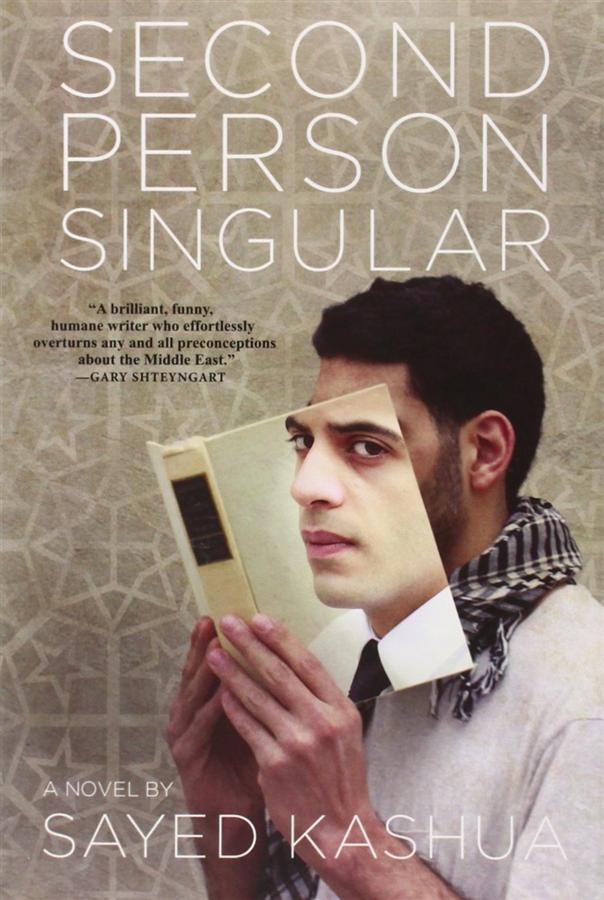
A bildüngsroman suffused with humor and irony, Dancing Arabs centers on a young boy from a poor Arab village, his haphazard receipt of a scholarship to a Jewish boarding school, and the dislocation and alienation that ensues when he finds himself faced with the impossible: the imperative to straddle two famously incompatible worlds.
As a child, our nameless narrator/antihero lives with his family in his grandmother's house. His grandmother and father constantly impress upon him the significance of their land: when so many people fled or sold theirs away, they held strong. "Better to die fighting for your land than to give it away."
Every night after his brothers fall asleep, he climbs into bed with his grandmother, his main source of comfort and protection. One night she tells him where the key to her secret cupboard are, and if she should die, he must find all the death equipment in the blue bag. Paranoid from then on, he races home every day at recess to see if she's died. One day he gets there and she is not there, so he unlocks the cupboard and pulls out the box. All he finds are towels and some soaps from Mecca, but then he notices his father's photo in the old newspaper lining the suitcase, and some postcards in his father's handwriting. At his urging, his grandmother tells him about the newspaper clippings: his father was always "the handsomest and the smartest" in Tira, until he was thrown in jail for his political activity (eg: bombing a school cafeteria). The grandmother visited her son every week, wrote letters to the mayor, anyone who might be able to help her son. When he was released years later, he remained politically active, revering the Egyptian president Nasser, and for a time, joined the communist party.
The young narrator is nothing like his father, who "doesn't understand how my brothers and I came out the way we did. We can't even draw a flag. He says kids smaller than us walk through the streets singing 'P-L-O----Israel NO!' and he shouts at us for not even knowing what PLO stands for." Not at all politically motivated, the boy knows nothing of national identity; he simply wants to get through the school day without getting smacked by his teacher.
He excels at school and his family dreams that by the time he graduates, they will have their own state and he will become a pilot, or a judge. One day the principal tells him the Jews are opening a school for gifted students and they will be admitting a few Arab kids too. He is accepted and his father whoops with joy-this will mean a better life for his son and his whole family.
His transition at school is very rough. The other students make fun of how he speaks and eats. On a bus home to Tira during his first school break, he is singled out and pulled off the bus by some soldiers. Humiliated, he proceeds on his journey home, but gets off of two more buses fearing that he will be questioned again. He winds up at Ben Gurion airport where his father has to come get him. He cries the whole way home and says he is never going back. His father mocks his tears and his weakness and tells him he has no choice-this is his only chance to escape the limitations of life in Tira. (The tug of war between father and son continues throughout the novel, the father putting his hopes and aspirations onto his son, as well as his defeats and disappointments.)
He goes back to school, but only after deciding that he will never be identified as an Arab again. He becomes an expert at assuming false identities: he shaves off his moustache, learns how to pronounce Hebrew like the Jews, buys new clothes, starts listening to only Hebrew music. Soon he falls in love with Naomi, one of his Jewish classmates. On Memorial Day for the Fallen Soldiers, the narrator does not stand up during the moment of silence, and Naomi, whose father had died in action, refuses to speak to him. Eventually, Naomi admits that she loves him too, and for a while, they are together in spite of their differences. She initiates him into a new world of movie theatres and restaurants, and for the first time he learns that Zionism is an ideology, not a swear word; that his aunt is called a refugee; that Arabs in Israel are called a minority; he learns the meaning of both national homeland, and anti-semitism.
As the end of his final term draws near, he is constantly tired and dizzy, cannot sleep or eat. He knows that he and Naomi will have to break up when school ends. He takes a bottle of pills the night before a big exam, and winds up in the hospital. His father comes and blames it on "that Jewish whore." After a short convalescence, he finds himself at Hebrew University. He trails Naomi at school, but she avoids him. He stops going to class-he uses his unlimited bus pass to travel the streets of Jerusalem for hours listening to his walkman. This is how he meets Samia, an Arab student who asks him the way to Hadassah hospital one day; he takes her there himself and they areeeeee a couple from then on. Four years later he decides it is time for them to marry. He and his wife are both Israeli citizens and know Hebrew well, but the narrator, a lost son, has no place to go back to after having been exposed to the tempting Israeli experience from which he is barred. He and his wife move to Beit Tsefafa, an Arab neighborhood where they don't know anyone. Soon the second intifada begins to rage-the narrator refers to it as "the war." He begins drinking heavily. He blames his father for his optimism, his faith that it will all turn out well for them, that his going to the boarding school would make a difference.
His aimlessness and self-loathing deepen and spiral: he grows apart from his wife, he drinks, fantasizes about taking a lover, and is preoccupied with all his failures. Through his self-destructive haze, he decides he will make everything right-he and his wife will sleep together peacefully, like spoons, he'll give up drinking,
作者介紹
Sayed Kashua was born in 1975 in Tira, and went on to study in a boarding school in Jerusalem and at Hebrew University. He lives in an Arab village near Jerusalem with his wife and daughter and works as a journalist. Until recently he had a column in Kol Ha'ir, Jerusalem's most important cultural magazine. An Arab who writes in Hebrew, he has a complicated relationship to his family and history and this project has not endeared him to his village or his people. Like the narrator/anti-hero he has alienated most people in his life, is largely barred from Israel's dominant society, and yet he remains bound to this volatile land.
Translated from the Hebrew by Miriam Shlesinger
規格
退貨說明
退貨須知:
- 依照消費者保護法的規定,您享有商品貨到次日起七天猶豫期(含例假日)的權益(請注意!猶豫期非試用期),辦理退貨之商品必須是全新狀態(不得有刮傷、破損、受潮)且需完整(包含全部商品、配件、原廠內外包裝、贈品及所有附隨文件或資料的完整性等)。
- 請您以送貨廠商使用之包裝紙箱將退貨商品包裝妥當,若原紙箱已遺失,請另使用其他紙箱包覆於商品原廠包裝之外,切勿直接於原廠包裝上黏貼紙張或書寫文字。若原廠包裝損毀將可能被認定為已逾越檢查商品之必要程度,本公司得依毀損程度扣除回復原狀必要費用(整新費)後退費;請您先確認商品正確、外觀可接受,再行拆封,以免影響您的權利;若為產品瑕疵,本公司接受退貨。
依「通訊交易解除權合理例外情事適用準則」,下列商品不適用七日猶豫期,除產品本身有瑕疵外,不接受退貨:
- 易於腐敗、保存期限較短或解約時即將逾期。(如:生鮮蔬果、乳製品、冷凍冷藏食材、蛋糕)
- 依消費者要求所為之客製化給付。(如:客製印章、鋼筆刻字)
- 報紙、期刊或雜誌。
- 經消費者拆封之影音商品或電腦軟體。
- 非以有形媒介提供之數位內容或一經提供即為完成之線上服務,經消費者事先同意始提供。(如:電子書)
- 已拆封之個人衛生用品。(如:內衣褲、襪類、褲襪、刮鬍刀、除毛刀等貼身用品)
- 國際航空客運服務。
若您退貨時有下列情形,可能被認定已逾越檢查商品之必要程度而須負擔為回復原狀必要費用(整新費),或影響您的退貨權利,請您在拆封前決定是否要退貨:
- 以數位或電磁紀錄形式儲存或著作權相關之商品(包含但不限於CD、VCD、DVD、電腦軟體等) 包裝已拆封者(除運送用之包裝以外)。
- 耗材(包含但不限於墨水匣、碳粉匣、紙張、筆類墨水、清潔劑補充包等)之商品包裝已拆封者(除運送用之包裝以外)。
- 衣飾鞋類/寢具/織品(包含但不限於衣褲、鞋子、襪子、泳裝、床單、被套、填充玩具)或之商品缺件(含購買商品、附件、內外包裝、贈品等)或經剪標或下水或商品有不可回復之髒污或磨損痕跡。
- 食品、美容/保養用品、內衣褲等消耗性或個人衛生用品、商品銷售頁面上特別載明之商品已拆封者(除運送用之包裝外一切包裝、包括但不限於瓶蓋、封口、封膜等接觸商品內容之包裝部分)或已非全新狀態(外觀有刮傷、破損、受潮等)與包裝不完整(缺少商品、附件、原廠外盒、保護袋、配件紙箱、保麗龍、隨貨文件、贈品等)。
- 家電、3C、畫作、電子閱讀器等商品,除商品本身有瑕疵外,退回之商品已拆封(除運送用之包裝外一切包裝、包括但不限於封膜等接觸商品內容之包裝部分、移除封條、拆除吊牌、拆除貼膠或標籤等情形)或已非全新狀態(外觀有刮傷、破損、受潮等)與包裝不完整(缺少商品、附件、原廠外盒、保護袋、配件紙箱、保麗龍、隨貨文件、贈品等)。
- 退貨程序請參閱【客服專區→常見問題→誠品線上退貨退款】之說明。