防詐3要訣:不聽信、不操作、掛斷電話



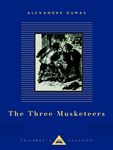
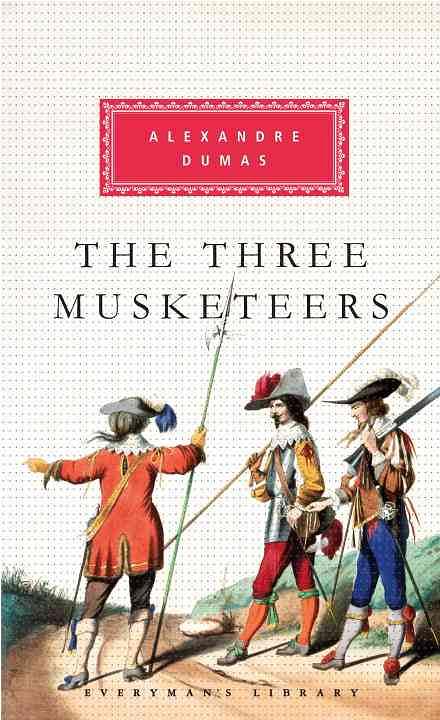
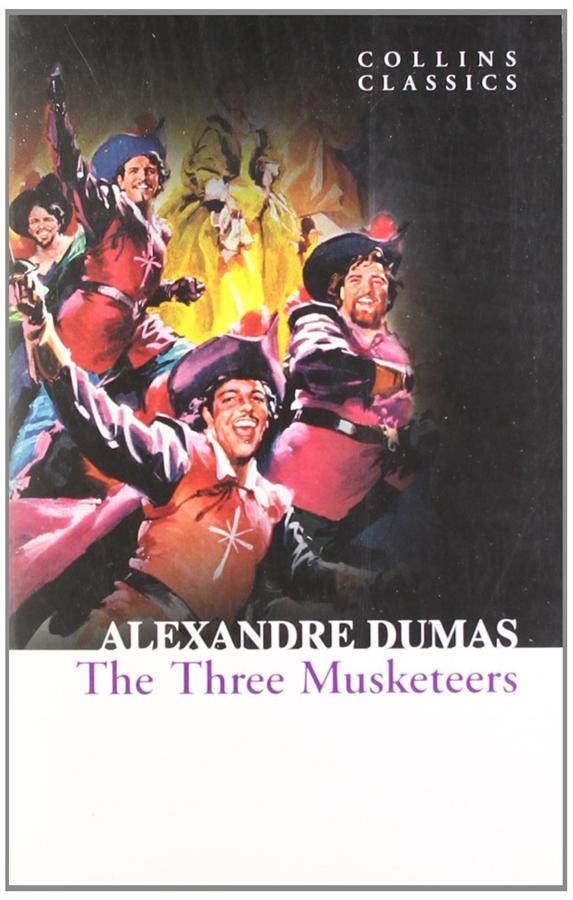
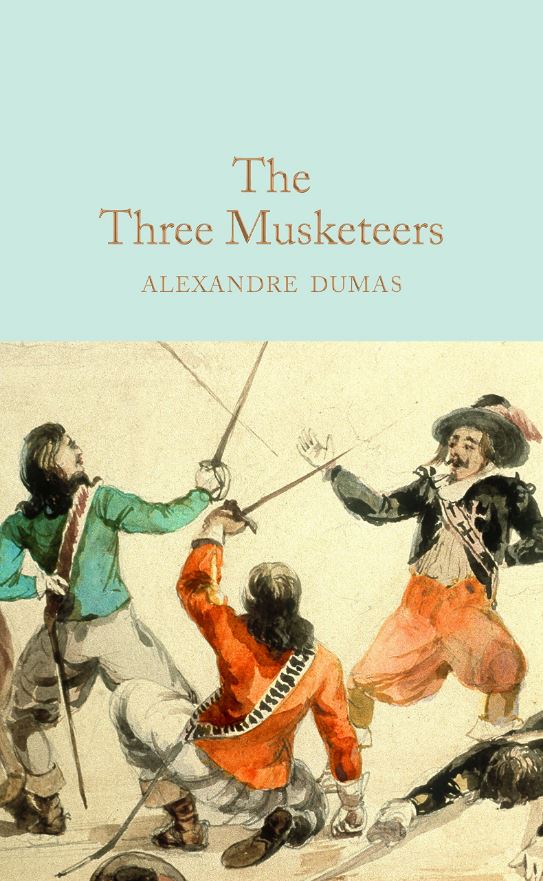
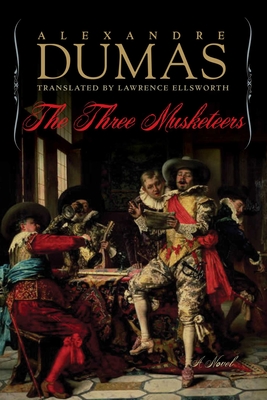
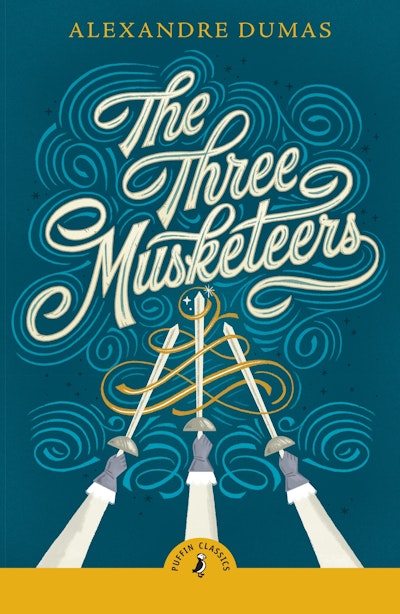
The Three Musketeers
3 MUSKETEERS
1,065
訂單自國外空運,約14-21個工作天(不含例假日)到貨後依序出貨。為縮短等待,建議將此商品和其他商品分開下單。
查詢門市庫存
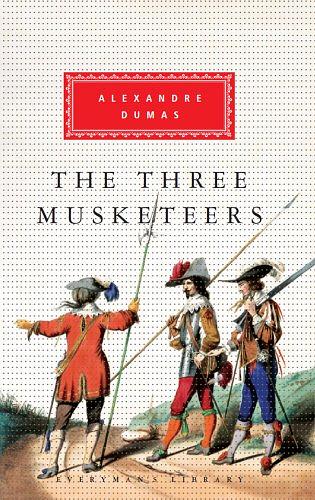
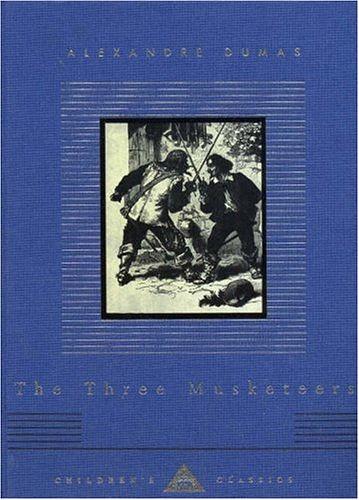
Dumas' most popular novel has long been a favorite with children. Everyman's Library reprints the first, and the best English translation by William Barrow. Illustrations.
內容簡介
Dumas's most popular novel has long been a favorite with children, and its swashbuckling heroes are well known from many a film and TV adaptation. Set in 17th-century France, this tale of the adventures of D'Artagnan and the three musketeers is the finest example of its author's brilliantly inventive storytelling genius.
作者介紹
Alexandre Dumas, who lived a life as dramatic as any depicted in his more than three hundred volumes of plays, novels, travel books, and memoirs, was born on July 24, 1802, in the town of Villers-Cotterêts, some fifty miles from Paris. He was the third child of Thomas-Alexandre Davy de la Pailleterie (who took the name of Dumas), a nobleman who distinguished himself as one of Napoleon's most brilliant generals, and Marie-Louise-Elisabeth Labouret. Following General Dumas's death in 1806 the family faced precarious financial circumstances, yet Mme. Dumas scrimped to pay for her son's private schooling. Unfortunately he proved an indifferent student who excelled in but one subject: penmanship. In 1816, at the age of fourteen, Dumas found employment as a clerk with a local notary to help support the family. A growing interest in theater brought him to Paris in 1822, where he met François-Joseph Talma, the great French tragedian, and resolved to become a playwright. Meanwhile the passionate Dumas fell in love with Catherine Labay, a seamstress by whom he had a son. (Though he had numerous mistresses in his lifetime Dumas married only once, but the union did not last.) While working as a scribe for the duc d'Orléans (later King Louis-Philippe) Dumas collaborated on a one-act vaudeville, La Chasse et l'amour ( The Chase and Love, 1825). But it was not until 1827, after attending a British performance of Hamlet, that Dumas discovered a direction for his dramas. 'For the first time in the theater I was seeing true passions motivating men and women of flesh and blood, ' he recalled. 'From this time on, but only then, did I have an idea of what the theater could be.' Dumas achieved instant fame on February 11, 1829, with the triumphant opening of Henri III et sa cour (Henry III and His Court). An innovative and influential play generally regarded as the first French drama of the Romantic movement, it broke with the staid precepts of Neoclassicism that had been imposed on the Paris stage for more than a century. Briefly involved as a republican partisan in the July Revolution of 1830, Dumas soon resumed playwriting and over the next decade turned out a number of historical melodramas that electrified audiences. Two of these works--Antony (1831) and La Tour de Nesle (The Tower of Nesle, 1832)--stand out as milestones in the history of nineteenth-century French theater. In disfavor with the new monarch, Louis-Philippe, because of his republican sympathies, Dumas left France for a time. In 1832 he set out on a tour of Switzerland, chronicling his adventures in Impressions de voyage: En Suisse ( Travels in Switzerland, 1834-1837); over the years he produced many travelogues about subsequent journeys through France, Italy, Russia, and other countries. Around 1840 Dumas embarked upon a series of historical romances inspired by both his love of French history and the novels of Sir Walter Scott. In collaboration with Auguste Maquet, he serialized Le Chevalier d'Harmental in the newspaper Le Siècle in 1842. Part history, intrigue, adventure, and romance, it is widely regarded as the first of Dumas's great novels. The two subsequently worked together on a steady stream of books, most of which were published serially in Parisian tabloids and eagerly read by the public. He is best known for the celebrated d'Artagnan trilogy--Les trois mousquetaires ( The Three Musketeers, 1844), Vingt ans après (Twenty Years After, 1845) and Dix ans plus tarde ou le Vicomte de Bragelonne ( Ten Years Later; or The Viscount of Bragelonne, 1848-1850)--and the so-called Valois romances--La Reine Margot (Queen Margot, 1845), La Dame de Monsoreau ( The Lady of Monsoreau, 1846), and Les Quarante-cinc ( The Forty-Five Guardsmen, 1848). Yet perhaps his greatest success was Le Comte de Monte Cristo ( The Count of Monte Cristo), which appeared in installments in Le Journal des debats from 1844 to 1845. A final tetralogy marked the end of their partnership: Mmoires d'un medecin: Joseph Balsamo ( Memoirs of a Physician, 1846-1848), Le Collier de la reine ( The Queen's Necklace, 1849-1850), Ange Pitou ( Taking the Bastille, 1853), and La Comtesse de Charny ( The Countess de Charny, 1852-1855). In 1847, at the height of his fame, Dumas assumed the role of impresario. Hoping to reap huge profits, he inaugurated the new Theatre Historique as a vehicle for staging dramatizations of his historical novels. The same year he completed construction of a lavish residence in the quiet hamlet of Marly-le-Roi. Called Le Château de Monte Cristo, it was home to a menagerie of exotic pets and a parade of freeloaders until 1850, when Dumas's theater failed and he faced bankruptcy. Fleeing temporarily to Belgium in order to avoid creditors, Dumas returned to Paris in 1853, shortly after the appearance of the initial volumes of Mes Memoires ( My Memoirs, 1852). Over the next years he founded the newspaper Le Mousquetaire, for which he wrote much of the copy, as well as the literary weekly Le Monte Cristo, but his finances never recovered. In 1858 he traveled to Russia, eventually publishing two new episodes of Impressions de voyage: Le Caucase (Adventures in the Caucasus, 1859) and En Russie (Travels in Russia, 1865). The final decade of Dumas's life began with customary high adventure. In 1860 he met Garibaldi and was swept up into the cause of Italian independence. After four years in Naples publishing the bilingual paper L'Independant/L'Indipendente, Dumas returned to Paris in 1864. In 1867 he began a flamboyant liaison with Ada Menken, a young American actress who dubbed him 'the king of romance.' The same year marked the appearance of a last novel, La Terreur Prussiene (The Prussian Terror). Dumas's final play, Les Blancs et les Bleus (The Whites and the Blues), opened in Paris in 1869. Alexandre Dumas died penniless but cheerful on December 5, 1870, saying of death: 'I shall tell her a story, and she will be kind to me.' One hundred years later his biographer Andre Maurois paid him this tribute: 'Dumas was a hero out of Dumas. As strong as Porthos, as adroit as d'Artagnan, as generous as Edmond Dantes, this superb giant strode across the nineteenth century breaking down doors with his shoulder, sweeping women away in his arms, and earning fortunes only to squander them promptly in dissipation. For forty years he filled the newspapers with his prose, the stage with his dramas, the world with his clamor. Never did he know a moment of doubt or an instant of despair. He turned his own existence into the finest of his novels.'
規格
誠品貨碼 /
ISBN13 / 9780375406577
ISBN10 /
EAN貨碼 / 9780375406577
裝訂 / H:精裝
語言 / 3:英文
級別 / N:無
尺寸 / 21.0X16.2X4.0CM
頁數 / 752
重量(g) / 907.2
退貨說明
退貨須知:
- 依照消費者保護法的規定,您享有商品貨到次日起七天猶豫期(含例假日)的權益(請注意!猶豫期非試用期),辦理退貨之商品必須是全新狀態(不得有刮傷、破損、受潮)且需完整(包含全部商品、配件、原廠內外包裝、贈品及所有附隨文件或資料的完整性等)。
- 請您以送貨廠商使用之包裝紙箱將退貨商品包裝妥當,若原紙箱已遺失,請另使用其他紙箱包覆於商品原廠包裝之外,切勿直接於原廠包裝上黏貼紙張或書寫文字。若原廠包裝損毀將可能被認定為已逾越檢查商品之必要程度,本公司得依毀損程度扣除回復原狀必要費用(整新費)後退費;請您先確認商品正確、外觀可接受,再行拆封,以免影響您的權利;若為產品瑕疵,本公司接受退貨。
依「通訊交易解除權合理例外情事適用準則」,下列商品不適用七日猶豫期,除產品本身有瑕疵外,不接受退貨:
- 易於腐敗、保存期限較短或解約時即將逾期。(如:生鮮蔬果、乳製品、冷凍冷藏食材、蛋糕)
- 依消費者要求所為之客製化給付。(如:客製印章、鋼筆刻字)
- 報紙、期刊或雜誌。
- 經消費者拆封之影音商品或電腦軟體。
- 非以有形媒介提供之數位內容或一經提供即為完成之線上服務,經消費者事先同意始提供。(如:電子書)
- 已拆封之個人衛生用品。(如:內衣褲、襪類、褲襪、刮鬍刀、除毛刀等貼身用品)
- 國際航空客運服務。
若您退貨時有下列情形,可能被認定已逾越檢查商品之必要程度而須負擔為回復原狀必要費用(整新費),或影響您的退貨權利,請您在拆封前決定是否要退貨:
- 以數位或電磁紀錄形式儲存或著作權相關之商品(包含但不限於CD、VCD、DVD、電腦軟體等) 包裝已拆封者(除運送用之包裝以外)。
- 耗材(包含但不限於墨水匣、碳粉匣、紙張、筆類墨水、清潔劑補充包等)之商品包裝已拆封者(除運送用之包裝以外)。
- 衣飾鞋類/寢具/織品(包含但不限於衣褲、鞋子、襪子、泳裝、床單、被套、填充玩具)或之商品缺件(含購買商品、附件、內外包裝、贈品等)或經剪標或下水或商品有不可回復之髒污或磨損痕跡。
- 食品、美容/保養用品、內衣褲等消耗性或個人衛生用品、商品銷售頁面上特別載明之商品已拆封者(除運送用之包裝外一切包裝、包括但不限於瓶蓋、封口、封膜等接觸商品內容之包裝部分)或已非全新狀態(外觀有刮傷、破損、受潮等)與包裝不完整(缺少商品、附件、原廠外盒、保護袋、配件紙箱、保麗龍、隨貨文件、贈品等)。
- 家電、3C、畫作、電子閱讀器等商品,除商品本身有瑕疵外,退回之商品已拆封(除運送用之包裝外一切包裝、包括但不限於封膜等接觸商品內容之包裝部分、移除封條、拆除吊牌、拆除貼膠或標籤等情形)或已非全新狀態(外觀有刮傷、破損、受潮等)與包裝不完整(缺少商品、附件、原廠外盒、保護袋、配件紙箱、保麗龍、隨貨文件、贈品等)。
- 退貨程序請參閱【客服專區→常見問題→誠品線上退貨退款】之說明。
付款/配送