防詐3要訣:不聽信、不操作、掛斷電話


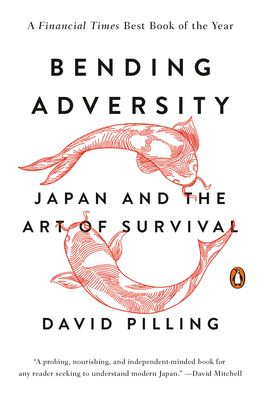
Bending Adversity: Japan and the Art of Survival
BENDING ADVERSITY
出版社:
出版日期:
2015/02/23
760
訂單自國外空運,約14-21個工作天(不含例假日)到貨後依序出貨。為縮短等待,建議將此商品和其他商品分開下單。
查詢門市庫存
內容簡介
"[A]n excellent book..." --The Economist Financial Times Asia editor David Pilling presents a fresh vision of Japan, drawing on his own deep experience, as well as observations from a cross section of Japanese citizenry, including novelist Haruki Murakami, former prime minister Junichiro Koizumi, industrialists and bankers, activists and artists, teenagers and octogenarians. Through their voices, Pilling's Bending Adversity captures the dynamism and diversity of contemporary Japan. Pilling's exploration begins with the 2011 triple disaster of earthquake, tsunami, and nuclear meltdown. His deep reporting reveals both Japan's vulnerabilities and its resilience and pushes him to understand the country's past through cycles of crisis and reconstruction. Japan's survivalist mentality has carried it through tremendous hardship, but is also the source of great destruction: It was the nineteenth-century struggle to ward off colonial intent that resulted in Japan's own imperial endeavor, culminating in the devastation of World War II. Even the postwar economic miracle--the manufacturing and commerce explosion that brought unprecedented economic growth and earned Japan international clout might have been a less pure victory than it seemed. In Bending Adversity Pilling questions what was lost in the country's blind, aborted climb to #1. With the same rigor, he revisits 1990--the year the economic bubble burst, and the beginning of Japan's "lost decades"--to ask if the turning point might be viewed differently. While financial struggle and national debt are a reality, post-growth Japan has also successfully maintained a stable standard of living and social cohesion. And while life has become less certain, opportunities--in particular for the young and for women--have diversified. Still, Japan is in many ways a country in recovery, working to find a way forward after the events of 2011 and decades of slow growth. Bending Adversity closes with a reflection on what the 2012 reelection of Prime Minister Shinzo Abe, and his radical antideflation policy, might mean for Japan and its future. Informed throughout by the insights shared by Pilling's many interview subjects, Bending Adversity rigorously engages with the social, spiritual, financial, and political life of Japan to create a more nuanced representation of the oft-misunderstood island nation and its people. The Financial Times"David Pilling quotes a visiting MP from northern England, dazzled by Tokyo's lights and awed by its bustling prosperity: 'If this is a recession, I want one.' Not the least of the merits of Pilling's hugely enjoyable and perceptive book on Japan is that he places the denunciations of two allegedly "lost decades" in the context of what the country is really like and its actual achievements." The Telegraph (UK)"Pilling, the Asia editor of the Financial Times, is perfectly placed to be our guide, and his insights are a real rarity when very few Western journalists communicate the essence of the world's third-largest economy in anything but the most superficial ways. Here, there is a terrific selection of interview subjects mixed with great reportage and fact selection... he does get people to say wonderful things. The novelist Haruki Murakami tells him: "When we were rich, I hated this country"... well-written... valuable." Publishers Weekly (starred): "A probing and insightful portrait of contemporary Japan."
作者介紹
David Pilling is the former Asia editor of the Financial Times. He was previously the paper's Tokyo bureau chief from January 2002 to August 2008. Pilling's report from Japan and his weekly column on Asia have won several prizes, including the Society of Publishers in Asia Award and the UK's Editorial Intelligence Comment Award. He is currently the Africa editor of the Financial Times based in London.
規格
誠品貨碼 /
ISBN13 / 9780143126959
ISBN10 /
EAN貨碼 / 9780143126959
裝訂 / P:平裝
語言 / 3:英文
級別 / N:無
尺寸 / 21.1X13.7X2.5CM
重量(g) / 362.9
頁數 / 432
退貨說明
退貨須知:
- 依照消費者保護法的規定,您享有商品貨到次日起七天猶豫期(含例假日)的權益(請注意!猶豫期非試用期),辦理退貨之商品必須是全新狀態(不得有刮傷、破損、受潮)且需完整(包含全部商品、配件、原廠內外包裝、贈品及所有附隨文件或資料的完整性等)。
- 請您以送貨廠商使用之包裝紙箱將退貨商品包裝妥當,若原紙箱已遺失,請另使用其他紙箱包覆於商品原廠包裝之外,切勿直接於原廠包裝上黏貼紙張或書寫文字。若原廠包裝損毀將可能被認定為已逾越檢查商品之必要程度,本公司得依毀損程度扣除回復原狀必要費用(整新費)後退費;請您先確認商品正確、外觀可接受,再行拆封,以免影響您的權利;若為產品瑕疵,本公司接受退貨。
依「通訊交易解除權合理例外情事適用準則」,下列商品不適用七日猶豫期,除產品本身有瑕疵外,不接受退貨:
- 易於腐敗、保存期限較短或解約時即將逾期。(如:生鮮蔬果、乳製品、冷凍冷藏食材、蛋糕)
- 依消費者要求所為之客製化給付。(如:客製印章、鋼筆刻字)
- 報紙、期刊或雜誌。
- 經消費者拆封之影音商品或電腦軟體。
- 非以有形媒介提供之數位內容或一經提供即為完成之線上服務,經消費者事先同意始提供。(如:電子書)
- 已拆封之個人衛生用品。(如:內衣褲、襪類、褲襪、刮鬍刀、除毛刀等貼身用品)
- 國際航空客運服務。
若您退貨時有下列情形,可能被認定已逾越檢查商品之必要程度而須負擔為回復原狀必要費用(整新費),或影響您的退貨權利,請您在拆封前決定是否要退貨:
- 以數位或電磁紀錄形式儲存或著作權相關之商品(包含但不限於CD、VCD、DVD、電腦軟體等) 包裝已拆封者(除運送用之包裝以外)。
- 耗材(包含但不限於墨水匣、碳粉匣、紙張、筆類墨水、清潔劑補充包等)之商品包裝已拆封者(除運送用之包裝以外)。
- 衣飾鞋類/寢具/織品(包含但不限於衣褲、鞋子、襪子、泳裝、床單、被套、填充玩具)或之商品缺件(含購買商品、附件、內外包裝、贈品等)或經剪標或下水或商品有不可回復之髒污或磨損痕跡。
- 食品、美容/保養用品、內衣褲等消耗性或個人衛生用品、商品銷售頁面上特別載明之商品已拆封者(除運送用之包裝外一切包裝、包括但不限於瓶蓋、封口、封膜等接觸商品內容之包裝部分)或已非全新狀態(外觀有刮傷、破損、受潮等)與包裝不完整(缺少商品、附件、原廠外盒、保護袋、配件紙箱、保麗龍、隨貨文件、贈品等)。
- 家電、3C、畫作、電子閱讀器等商品,除商品本身有瑕疵外,退回之商品已拆封(除運送用之包裝外一切包裝、包括但不限於封膜等接觸商品內容之包裝部分、移除封條、拆除吊牌、拆除貼膠或標籤等情形)或已非全新狀態(外觀有刮傷、破損、受潮等)與包裝不完整(缺少商品、附件、原廠外盒、保護袋、配件紙箱、保麗龍、隨貨文件、贈品等)。
- 退貨程序請參閱【客服專區→常見問題→誠品線上退貨退款】之說明。
付款/配送