防詐3要訣:不聽信、不操作、掛斷電話



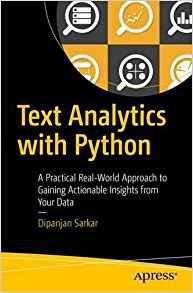
Text Analytics with Python: A Practitioner's Guide to Natural Language Processing (2 Ed.)
出版日期:
2019/05/21
5
1,445722
查詢門市庫存
內容簡介
Chapter 1: Natural Language BasicsChapter Goal: Introduces the readers to the basics of NLP and Text processingNo of pages: 40 - 50 Sub -Topics1. Language Syntax and Structure2. Text formats and grammars3. Lexical and Text Corpora resources4. Deep dive into the Wordnet corpus5. Parts of speech, Stemming and lemmatizationChapter 2: Python for Natural Language ProcessingChapter Goal: A useful chapter for people focusing on how to setup your own python environment for NLP and also some basics on handling text data with python and coverage of popular open source frameworks for NLPNo of pages: 20 - 30Sub - Topics 1. Setup Python for NLP2. Handling strings with Python3. Regular Expressions with Python4. Quick glance into nltk, gensim, spacy, scikit-learn, keras Chapter 3: Processing and Understanding TextChapter Goal: This chapter covers all the techniques and capabilities needed for processing and parsing text into easy to understand formats. We also look at how to segment and normalize text. No of pages: 35 - 40Sub - Topics: 1. Sentence and word tokenization2. Text tagging and chunking3. Text Parse Trees3. Text normalization4. Text spell checks and removal of redundant characters5. Synonyms and SynsetsChapter 4: Feature Engineering for Text DataChapter Goal: This chapter covers important strategies to extract meaningful features from unstructured text data. This includes traditional techniques as well as newer deep learning based methods. No of pages: 40 - 50Sub - Topics: 1. Feature engineering strategies for text data2. Bag of words model3. TF-IDF model3. Bag of N-grams model4. Topic Models5. Word Embedding based models (word2vec, glove)Chapter 5: Text ClassificationChapter Goal: Introduces readers to the concept of classification as a supervised machine learning problem and looks at a real world example for classifying text documentsNo of pages: 30 - 40Sub - Topics: 1. Classification basics2. Types of classifiers3. Feature generation of text documents4. Binary and multi-class classification models5. Building a text classifier on real world data with machine learning6. Some coverage of deep learning based classifiers7. Evaluating ClassifiersChapter 6: Text summarization and topic modelingChapter Goal: Introduces the concepts of text summarization, n-gram tagging analysis and topic models to the readers and looks at some real world datasets and hands-on implementations on the sameNo of pages: 40 - 45Sub - Topics: 1. Text summarization concepts2. Dimensionality reduction3. N-gram tagging models4. Topic modeling using LDA and LSA5. Generate topics from real world data6. N-gram analysis to generate patterns from app reviews (only if it performs well)7. Basics on deep learning for summarization Chapter 7: Text Clustering and Similarity analysisChapter Goal: We look at unsupervised machine learning concepts here like text clustering and similarity measuresNo of pages: 35 - 40Sub - Topics: 1. Clustering concepts2. Analyzing text similarity3. Implementing text similarity with cosine, jaccard meas
作者介紹
Dipanjan (DJ) Sarkar is a Data Scientist at Red Hat, a published author and a consultant and trainer. He has consulted and worked with several startups as well as Fortune 500 companies like Intel. He primarily works on leveraging data science, advanced analytics, machine learning and deep learning to build large- scale intelligent systems. He holds a master of technology degree with specializations in Data Science and Software Engineering. He is also an avid supporter of self-learning and massive open online courses. He has recently ventured into the world of open-source products to improve the productivity of developers across the world. Dipanjan has been an analytics practitioner for several years now, specializing in machine learning, natural language processing, statistical methods and deep learning. Having a passion for data science and education, he also acts as an AI Consultant and Mentor at various organizations like Springboard, where he helps people build their skills on areas like Data Science and Machine Learning. He also acts as a key contributor and Editor for Towards Data Science, a leading online journal focusing on Artificial Intelligence and Data Science. Dipanjan has also authored several books on R, Python, Machine Learning, Social Media Analytics, Natural Language Processing and Deep Learning. Dipanjan's interests include learning about new technology, financial markets, disruptive start-ups, data science, artificial intelligence and deep learning. In his spare time he loves reading, gaming, watching popular sitcoms and football and writing interesting articles on https: //medium.com/@dipanzan.sarkar and https: //www.linkedin.com/in/dipanzan. He is also a strong supporter of open-source and publishes his code and analyses from his books and articles on GitHub at https: //github.com/dipanjanS.
規格
誠品貨碼 / 2682141202000
ISBN13 / 9781484243534
ISBN10 / 1484243536
EAN貨碼 / 9781484243534
頁數 / 674
注音版 / 否
裝訂 / P:平裝
語言 / 3:英文
尺寸 / 25.4X17.8X3.6CM
級別 / N:無
重量(g) / 1192.9
退貨說明
退貨須知:
- 依照消費者保護法的規定,您享有商品貨到次日起七天猶豫期(含例假日)的權益(請注意!猶豫期非試用期),辦理退貨之商品必須是全新狀態(不得有刮傷、破損、受潮)且需完整(包含全部商品、配件、原廠內外包裝、贈品及所有附隨文件或資料的完整性等)。
- 請您以送貨廠商使用之包裝紙箱將退貨商品包裝妥當,若原紙箱已遺失,請另使用其他紙箱包覆於商品原廠包裝之外,切勿直接於原廠包裝上黏貼紙張或書寫文字。若原廠包裝損毀將可能被認定為已逾越檢查商品之必要程度,本公司得依毀損程度扣除回復原狀必要費用(整新費)後退費;請您先確認商品正確、外觀可接受,再行拆封,以免影響您的權利;若為產品瑕疵,本公司接受退貨。
依「通訊交易解除權合理例外情事適用準則」,下列商品不適用七日猶豫期,除產品本身有瑕疵外,不接受退貨:
- 易於腐敗、保存期限較短或解約時即將逾期。(如:生鮮蔬果、乳製品、冷凍冷藏食材、蛋糕)
- 依消費者要求所為之客製化給付。(如:客製印章、鋼筆刻字)
- 報紙、期刊或雜誌。
- 經消費者拆封之影音商品或電腦軟體。
- 非以有形媒介提供之數位內容或一經提供即為完成之線上服務,經消費者事先同意始提供。(如:電子書)
- 已拆封之個人衛生用品。(如:內衣褲、襪類、褲襪、刮鬍刀、除毛刀等貼身用品)
- 國際航空客運服務。
若您退貨時有下列情形,可能被認定已逾越檢查商品之必要程度而須負擔為回復原狀必要費用(整新費),或影響您的退貨權利,請您在拆封前決定是否要退貨:
- 以數位或電磁紀錄形式儲存或著作權相關之商品(包含但不限於CD、VCD、DVD、電腦軟體等) 包裝已拆封者(除運送用之包裝以外)。
- 耗材(包含但不限於墨水匣、碳粉匣、紙張、筆類墨水、清潔劑補充包等)之商品包裝已拆封者(除運送用之包裝以外)。
- 衣飾鞋類/寢具/織品(包含但不限於衣褲、鞋子、襪子、泳裝、床單、被套、填充玩具)或之商品缺件(含購買商品、附件、內外包裝、贈品等)或經剪標或下水或商品有不可回復之髒污或磨損痕跡。
- 食品、美容/保養用品、內衣褲等消耗性或個人衛生用品、商品銷售頁面上特別載明之商品已拆封者(除運送用之包裝外一切包裝、包括但不限於瓶蓋、封口、封膜等接觸商品內容之包裝部分)或已非全新狀態(外觀有刮傷、破損、受潮等)與包裝不完整(缺少商品、附件、原廠外盒、保護袋、配件紙箱、保麗龍、隨貨文件、贈品等)。
- 家電、3C、畫作、電子閱讀器等商品,除商品本身有瑕疵外,退回之商品已拆封(除運送用之包裝外一切包裝、包括但不限於封膜等接觸商品內容之包裝部分、移除封條、拆除吊牌、拆除貼膠或標籤等情形)或已非全新狀態(外觀有刮傷、破損、受潮等)與包裝不完整(缺少商品、附件、原廠外盒、保護袋、配件紙箱、保麗龍、隨貨文件、贈品等)。
- 退貨程序請參閱【客服專區→常見問題→誠品線上退貨退款】之說明。
付款/配送