防詐3要訣:不聽信、不操作、掛斷電話


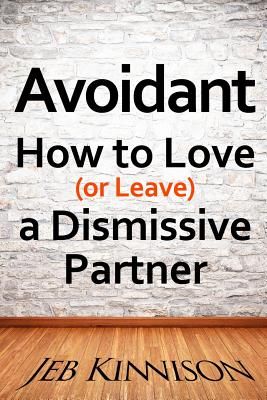
Avoidant: How to Love (or Leave) a Dismissive Partner
AVOIDANT
出版社:
出版日期:
2014/10/01
765
此為POD隨需印刷,是出版社高階列印輸出作品後逐本裝訂成冊,印刷及裝訂與傳統印刷品質不同,版權合法不影響閱讀。需等待21個工作天(不含例假日),建議和其他商品分開下單。
查詢門市庫存
內容簡介
Jeb Kinnison's previous book on finding a good partner by understanding attachment types (Bad Boyfriends: Using Attachment Theory to Avoid Mr. (or Ms.) Wrong and Make You a Better Partner) brought lots of readers to JebKinnison.com, where the most asked-about topic was how to deal with avoidant lovers and spouses. There are many readers in troubled marriages now who are looking for help, as well as people already invested in a relationship short of marriage who'd like help deciding if they should stick with it. People in relationships with Avoidants struggle with their lack of responsiveness and inability to tolerate real intimacy. Relationships between an Avoidant and a partner of another attachment type are the largest group of unhappy relationships, and people who love their partners and who may have started families and had children with an Avoidant will work very hard to try to make their relationships work better, out of love for their partner and children as well as their own happiness. The Avoidants in these relationships are more than likely unhappy with the situation as well-retreating into their shells and feeling harassed for being asked to respond with positive feeling when they have little to give. The other reason why so many people are looking for help on this topic is that it is an almost impossible problem. Couples counsellors rarely have the time or knowledge to work with an Avoidant and will often advise the spouse to give up on a Dismissive, especially, whose lack of responsiveness looks like cruelty or contempt (and sometimes it is ) Yet there is some hope-though it may take years and require educating the Avoidant on the patterns of good couples communication, if both partners want to change their patterns toward more secure and satisfying models, it can be done. How can you tell if your partner is avoidant? Does your partner: -Seem not to care how you feel? -Frequently fail to respond to direct questions or text messages? -Accuse you of being too needy or codependent? -Talk of some past lover as ideal and compare you to them? -Act coldly toward your children and the needy? -Remind you that he or she would be fine without you? -Withhold sex or affection as punishment? If that sounds familiar, then your partner is likely avoidant. At about 25% of the population, Avoidants have shorter, more troubled relationships, and tend to divorce more frequently and divorce again if remarried. What can be done? Individual therapy for the motivated Avoidant can move their default attachment style toward security, and to the extent that problems have been made worse by an overly clingy and demanding anxious-preoccupied partner, therapy can help there, as well. Partners who read and absorb the lessons of these books will have a head start on noticing and restraining themselves when they are slipping into an unsatisfying communications pattern, and an intellectual understanding of the bad patterns is a step toward unlearning them. Not all difficult Avoidants can be reformed; that depends on both partners, the depth of their problems, and their motivation and ability to change over time. But many troubled marriages and relationships can be greatly improved, and the people in them can learn to be happier, with even modest improvements in understanding how they can best communicate support for each other. For those reading who have not read Bad Boyfriends or are less familiar with attachment types, a beefed-up section on attachment theory and attachment types from Bad Boyfriends is included. Regular readers of JebKinnison.com will find edited versions of some relevant material previously posted there.
作者介紹
I grew up in the Midwest, child of a schizophrenic father and a hardworking single mother. At 12, I was deemed brilliant but uncontrollable, and I was sent to a private psychiatric hospital, where I was grilled about my sexual fantasies (which, not surprisingly, made me acutely uncomfortable). But this experience had me spending a lot of time with psychologists and psychiatric residents, which got me interested in the topic. I studied computer and cognitive science at MIT, and wrote programs modeling the behavior of simulated stock traders and the population dynamics of economic agents. Later I did supercomputer work at a think tank that developed parts of the early Internet (where the engineer who decided on '@' as the separator for email addresses worked down the hall.) Since then I have had several careers-real estate, financial advising, and counselling. In attachment terms, in high school I was behind in social development (this was not surprising since my mother worked all day and my father was AWOL) and had to learn about people to catch up. So I started my 20s mildly anxious-preoccupied, had two lengthy but imperfect relationships, and finally matured into a more secure type. Now married and definitely secure. I recently visited the Mormon genealogical web site, which shows me as a descendant of Eleanor of Aquitaine, Edward I Plantagenet (King of England!), William the Conqueror (who you might remember from such historical events as the Norman Conquest of 1066), and Rollo the Viking. It appears that my ancestors in between lost track of their money, lands, and power, so I was brought up in "reduced circumstances." Visit my web site for more: rail guns, Nazi scientists, the wreck of the Edmund Fitzgerald, the 1980s AI bubble, and current research in relationships, attachment types, diet, and health.
規格
誠品貨碼 /
ISBN13 / 9780991663668
ISBN10 /
EAN貨碼 / 9780991663668
裝訂 / P:平裝
頁數 / 228
語言 / 3:英文
級別 / N:無
尺寸 / 22.9X15.2X1.3CM
重量(g) / 340.2
退貨說明
退貨須知:
- 依照消費者保護法的規定,您享有商品貨到次日起七天猶豫期(含例假日)的權益(請注意!猶豫期非試用期),辦理退貨之商品必須是全新狀態(不得有刮傷、破損、受潮)且需完整(包含全部商品、配件、原廠內外包裝、贈品及所有附隨文件或資料的完整性等)。
- 請您以送貨廠商使用之包裝紙箱將退貨商品包裝妥當,若原紙箱已遺失,請另使用其他紙箱包覆於商品原廠包裝之外,切勿直接於原廠包裝上黏貼紙張或書寫文字。若原廠包裝損毀將可能被認定為已逾越檢查商品之必要程度,本公司得依毀損程度扣除回復原狀必要費用(整新費)後退費;請您先確認商品正確、外觀可接受,再行拆封,以免影響您的權利;若為產品瑕疵,本公司接受退貨。
依「通訊交易解除權合理例外情事適用準則」,下列商品不適用七日猶豫期,除產品本身有瑕疵外,不接受退貨:
- 易於腐敗、保存期限較短或解約時即將逾期。(如:生鮮蔬果、乳製品、冷凍冷藏食材、蛋糕)
- 依消費者要求所為之客製化給付。(如:客製印章、鋼筆刻字)
- 報紙、期刊或雜誌。
- 經消費者拆封之影音商品或電腦軟體。
- 非以有形媒介提供之數位內容或一經提供即為完成之線上服務,經消費者事先同意始提供。(如:電子書)
- 已拆封之個人衛生用品。(如:內衣褲、襪類、褲襪、刮鬍刀、除毛刀等貼身用品)
- 國際航空客運服務。
若您退貨時有下列情形,可能被認定已逾越檢查商品之必要程度而須負擔為回復原狀必要費用(整新費),或影響您的退貨權利,請您在拆封前決定是否要退貨:
- 以數位或電磁紀錄形式儲存或著作權相關之商品(包含但不限於CD、VCD、DVD、電腦軟體等) 包裝已拆封者(除運送用之包裝以外)。
- 耗材(包含但不限於墨水匣、碳粉匣、紙張、筆類墨水、清潔劑補充包等)之商品包裝已拆封者(除運送用之包裝以外)。
- 衣飾鞋類/寢具/織品(包含但不限於衣褲、鞋子、襪子、泳裝、床單、被套、填充玩具)或之商品缺件(含購買商品、附件、內外包裝、贈品等)或經剪標或下水或商品有不可回復之髒污或磨損痕跡。
- 食品、美容/保養用品、內衣褲等消耗性或個人衛生用品、商品銷售頁面上特別載明之商品已拆封者(除運送用之包裝外一切包裝、包括但不限於瓶蓋、封口、封膜等接觸商品內容之包裝部分)或已非全新狀態(外觀有刮傷、破損、受潮等)與包裝不完整(缺少商品、附件、原廠外盒、保護袋、配件紙箱、保麗龍、隨貨文件、贈品等)。
- 家電、3C、畫作、電子閱讀器等商品,除商品本身有瑕疵外,退回之商品已拆封(除運送用之包裝外一切包裝、包括但不限於封膜等接觸商品內容之包裝部分、移除封條、拆除吊牌、拆除貼膠或標籤等情形)或已非全新狀態(外觀有刮傷、破損、受潮等)與包裝不完整(缺少商品、附件、原廠外盒、保護袋、配件紙箱、保麗龍、隨貨文件、贈品等)。
- 退貨程序請參閱【客服專區→常見問題→誠品線上退貨退款】之說明。
付款/配送