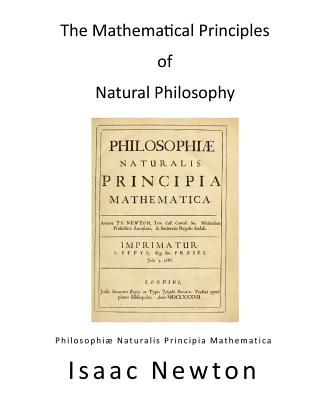
Principia

Principia

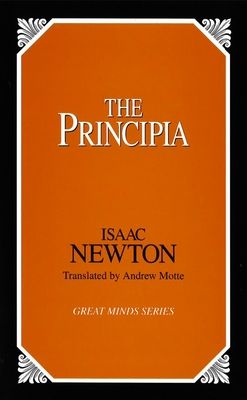
PRINCIPIA

出版日期:
1995/05/31
775
訂單自國外空運,約14-21個工作天(不含例假日)到貨後依序出貨。為縮短等待,建議將此商品和其他商品分開下單。
查詢門市庫存

內容簡介

Sir Isaac Newton's Principia Mathematica (Mathematical Principles) is considered to be among the finest scientific works ever published. His grand unifying idea of gravitation, with effects extending throughout the solar system, explains by one principle such diverse phenomena as the tides, the precession of the equinoxes, and the irregularities of the moon's motion. Newton's brilliant and revolutionary contributions to science explained the workings of a large part of inanimate nature mathematically and suggested that the remainder might be understood in a similar fashion. By taking known facts, forming a theory that explained them in mathematical terms, deducing consequences from the theory, and comparing the results with observed and experimental facts, Newton united, for the first time, the explication of physical phenomena with the means of prediction. By beginning with the physical axioms of the laws of motion and gravitation, he converted physics from a mere science of explanation into a general mathematical system.

展開看更多

作者介紹

ISAAC NEWTON was born in Woolsthorpe, Lincolnshire, Eng-land, on December 25, 1642. His father having died before his birth and his mother having remarried, Newton was sent to live with his maternal grandmother in the neighboring town of Grantham, where he attended school. An inattentive student, Newton nonetheless showed a great aptitude for making mechani-cal contrivances such as windmills and water clocks. While at school, Newton boarded with an apothecary, who may have imparted to the youngster a lifelong love of chemical experiments.

In 1656, following the death of her second husband, Newton's mother removed him from school and brought him back to Woolsthorpe with the idea of making her son a farmer. Newton's teacher at Grantham, recognizing the boy's talents, prevailed upon her to allow Newton to prepare for entrance to Cambridge University. He entered Trinity College, Cambridge, in 1661, under the tutelage of Isaac Barrow, Lucasian Professor of Mathematics, and took his degree four years later.

Between 1665 and 1667, Newton made great strides in his method of "fluxions" (an early form of differential calculus) and began work on gravitation. It was also at this time that Newton inaugurated his studies on the nature of light: he demonstrated that differences in color resulted from differences in refrangibility, i.e., the ability of a ray of light to bend when passed through a refracting medium. In 1667, Newton returned to Cambridge from Woolsthorpe (where he had gone to escape the plague); two years later he succeeded Barrow as Lucasian Professor. In 1672 Newton was elected to the Royal Society.

Newton's great work, Philosophiae naturalis principia mathematica, or The Mathematical Principles of Natural Philoso-phy (1687), grew out of his ongoing investigations into gravitation and planetary motion. Written over a period of only eighteen months, this book was immediately hailed as a masterpiece: it demonstrated how the law of gravitation could explain diverse phenomena, ranging from the tides to the irregularities of the moon's motion, and made possible a mathematical principle, unrealized up to that time, of the workings of a dynamic universe. Although Newton's system needed to be revised in the twentieth century in view of the theory of relativity and quantum mechanics, it remains valid for systems of ordinary dimensions, involving velocities that do not approach the speed of light.

Newton's contributions to science brought him fame and financial security: in addition to his professorship at Cambridge, Newton served for two years as a member of the Convention Parliament following the overthrow of King James II during the "Glorious Revolution" of 1688. In 1696 Newton was ap-pointed warden, and later master, of the mint, a lucrative position he held until his death. In 1704 he was made president of the Royal Society, and in 1705 he received a knighthood from Queen Anne. While a member of Parliament, Newton came into contact with such luminaries as the philosopher John Locke and the diarist Samuel Pepys.

Newton's life was not without bitterness, however: a pro-tracted controversy raged over whether Newton or Gottfried Wilhelm von Leibniz had been first in the invention of calculus, which strained scientific relations between England and the Continent. And, despite the Principia's enthusiastic reception, Newton's system would not be fully accepted among scientists and in university teaching until after his death.

Following his retirement from Cambridge in 1701, Newton prepared revised editions of the Principia (1713, 1726) and pub-lished his second great treatise, the Opticks, in 1704. He died in Kensington, England, on March 20, 1727.

規格

誠品貨碼 /
ISBN13 / 9780879759803
ISBN10 /
EAN貨碼 / 9780879759803
裝訂 / P:平裝
頁數 / 472
語言 / 3:英文
級別 / N:無
尺寸 / 21.5X14.1X2.5CM
重量(g) / 539.8

退貨說明

退貨須知:

  1. 依照消費者保護法的規定,您享有商品貨到次日起七天猶豫期(含例假日)的權益(請注意!猶豫期非試用期),辦理退貨之商品必須是全新狀態(不得有刮傷、破損、受潮)且需完整(包含全部商品、配件、原廠內外包裝、贈品及所有附隨文件或資料的完整性等)。
  2. 請您以送貨廠商使用之包裝紙箱將退貨商品包裝妥當,若原紙箱已遺失,請另使用其他紙箱包覆於商品原廠包裝之外,切勿直接於原廠包裝上黏貼紙張或書寫文字。若原廠包裝損毀將可能被認定為已逾越檢查商品之必要程度,本公司得依毀損程度扣除回復原狀必要費用(整新費)後退費;請您先確認商品正確、外觀可接受,再行拆封,以免影響您的權利;若為產品瑕疵,本公司接受退貨。

依「通訊交易解除權合理例外情事適用準則」,下列商品不適用七日猶豫期,除產品本身有瑕疵外,不接受退貨:

  1. 易於腐敗、保存期限較短或解約時即將逾期。(如:生鮮蔬果、乳製品、冷凍冷藏食材、蛋糕)
  2. 依消費者要求所為之客製化給付。(如:客製印章、鋼筆刻字)
  3. 報紙、期刊或雜誌。
  4. 經消費者拆封之影音商品或電腦軟體。
  5. 非以有形媒介提供之數位內容或一經提供即為完成之線上服務,經消費者事先同意始提供。(如:電子書)
  6. 已拆封之個人衛生用品。(如:內衣褲、襪類、褲襪、刮鬍刀、除毛刀等貼身用品)
  7. 國際航空客運服務。

若您退貨時有下列情形,可能被認定已逾越檢查商品之必要程度而須負擔為回復原狀必要費用(整新費),或影響您的退貨權利,請您在拆封前決定是否要退貨:

  1. 以數位或電磁紀錄形式儲存或著作權相關之商品(包含但不限於CD、VCD、DVD、電腦軟體等) 包裝已拆封者(除運送用之包裝以外)。
  2. 耗材(包含但不限於墨水匣、碳粉匣、紙張、筆類墨水、清潔劑補充包等)之商品包裝已拆封者(除運送用之包裝以外)。
  3. 衣飾鞋類/寢具/織品(包含但不限於衣褲、鞋子、襪子、泳裝、床單、被套、填充玩具)或之商品缺件(含購買商品、附件、內外包裝、贈品等)或經剪標或下水或商品有不可回復之髒污或磨損痕跡。
  4. 食品、美容/保養用品、內衣褲等消耗性或個人衛生用品、商品銷售頁面上特別載明之商品已拆封者(除運送用之包裝外一切包裝、包括但不限於瓶蓋、封口、封膜等接觸商品內容之包裝部分)或已非全新狀態(外觀有刮傷、破損、受潮等)與包裝不完整(缺少商品、附件、原廠外盒、保護袋、配件紙箱、保麗龍、隨貨文件、贈品等)。
  5. 家電、3C、畫作、電子閱讀器等商品,除商品本身有瑕疵外,退回之商品已拆封(除運送用之包裝外一切包裝、包括但不限於封膜等接觸商品內容之包裝部分、移除封條、拆除吊牌、拆除貼膠或標籤等情形)或已非全新狀態(外觀有刮傷、破損、受潮等)與包裝不完整(缺少商品、附件、原廠外盒、保護袋、配件紙箱、保麗龍、隨貨文件、贈品等)。
  6. 退貨程序請參閱【客服專區→常見問題→誠品線上退貨退款】之說明。
付款/配送

作者相關書籍