防詐3要訣:不聽信、不操作、掛斷電話




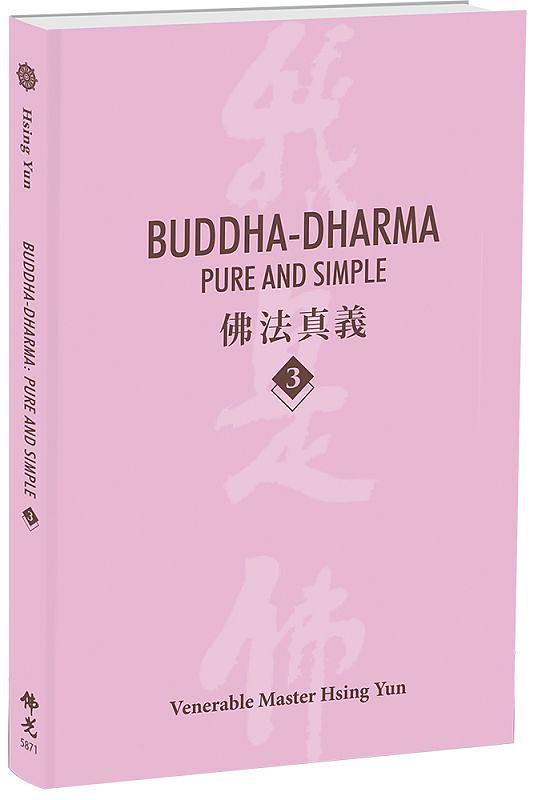
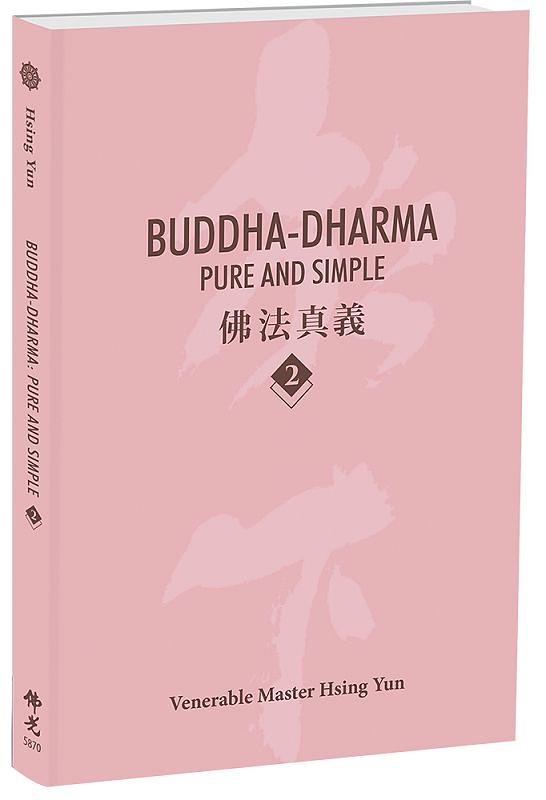
Buddha-Dharma Pure and Simple 佛法真義 4
A 21st Century Guide to Buddhist Teachings
出版社:
出版日期:
2021/11/24
79
250197
查詢門市庫存
In today's Buddhist sphere, numerous claims have been made on what the Buddha has taught.
內容簡介
In today’s Buddhist sphere, numerous claims have been made on what the Buddha has taught. However, were these teachings truly spoken by the Buddha? The Buddha-Dharma: Pure and Simple series is an exploration of over 300 topics, where Venerable Master Hsing Yun clarifies the Buddha’s teachings in a way that is accessible and relevant to modern readers. Erroneous Buddhist views should be corrected, the true meaning of the Buddha must be preserved to hold true to the original intents of the Buddha.
All Buddhist practice begins with right view, for it is the compass that points toward the true path of cultivation. This fourth installment continues laying the groundwork of this foundation by addressing age-old misconceptions. Covering a wide range of social issues from the perspective of the Buddha-Dharma, Venerable Master offers readers a practical but profound approach to Buddhist practice in daily life.
All Buddhist practice begins with right view, for it is the compass that points toward the true path of cultivation. This fourth installment continues laying the groundwork of this foundation by addressing age-old misconceptions. Covering a wide range of social issues from the perspective of the Buddha-Dharma, Venerable Master offers readers a practical but profound approach to Buddhist practice in daily life.
產品目錄
About Venerable Master Hsing Yun
Translator’s Introduction
Preface
1. Heaven, Earth, Human
2. Oneness and Coexistence
3. The Beauty in Enjoyment
4. A Temple is Like a Gas Station
5. Reciprocal Donation
6. Keeping Money in the Hands of Devotees
7. Recording the History of Devotees
8. Crisis Awareness
9. Half-and-Half
10. Three Parts Guidance, Seven Parts Friendship
11. Ten Sramanera Precepts
12. Eight Garudharmas
13. Relics
14. Eighteen Arhats
15. Kim Gyo-gak
16. Eight Groups of Heavenly Beings
17. Underground Palaces
18. Significance of the Registration Book in Amitabha Sutra
19. Can Plants Become Buddhas?
20. Will Hell Be Emptied?
21. Is it the Age of Declining Dharma When Lay Buddhists Propagate the Dharma?
22. Mahayana Buddhism is Not Spoken By the Buddha
23. Types of Faith
24. People of Different Faiths—Each with Their Own Father
25. Who is the God of Wealth?
26. Recognizing Mazu
27. Legend of the White Snake
28. Dispel What is Wrong and Reveal What is Right
29. To Whom the Chants Are Offered?
30. Profound Discussion and Practical Actions
31. Fortune-Telling Sticks and Dharma Words
32. Buddhism and Politics
33. Environmental and Spiritual Preservation
34. Life-Releasing or Life Ending
35. The Act and the Intention of Killing
36. Prajna and Wisdom
37. Organ Donation
38. Hospice Care
39. Gender Equality
40. The Importance of Equality
41. New Ways of Dharma Propagation
42. Do What is in Accordance with the Buddha
43. Global Citizen
44. Each and Every Buddha Walks on the Same Path
作者介紹
Venerable Master Hsing Yun
About Venerable Master Hsing Yun
Venerable Master Hsing Yun was born in Jiangsu Province, China in 1927. He studied at various renowned Buddhist institutions such as Qixia Vinaya College and Jiaoshan Buddhist College.
Soon after his arrival in Taiwan in 1949, he became the chief editor of Human Life, a Buddhist magazine. In 1952, his efforts in establishing Buddhist Chanting Association strengthened the foundation for his subsequent endeavors in the promotion of the Dharma. Venerable Master founded Fo Guang Shan Monastery in 1967, with the primary goal of promoting Humanistic Buddhism through Buddhist education, culture, charity, and propagation of the Dharma. Since then, over two hundred branch temples have been established in major cities around the world. He has also set up art galleries, libraries, publishing houses, bookstores, mobile clinics, Buddhist colleges, and universities including: University of the West, Fo Guang University, Nanhua University, Nan Tien Institute, and Guang Ming College. In 1977, the Fo Guang Tripitaka Editorial Board was formed to compile the Fo Guang Buddhist Canon and the Fo Guang Dictionary of Buddhism. Many other works on Buddhism have also been published.
Venerable Master Hsing Yun has dedicated his life to propagating Humanistic Buddhism. As a global citizen, he continues to foster “joy and harmony,” “oneness and coexistence,” “respect and tolerance,” and “equality and peace” throughout the world. When he founded the Buddha’s Light International Association in 1991 and was elected president of its world headquarters, he was closer to realizing the ideal of having “the Buddha’s light shining throughout the three thousand realms, and the Dharma water flowing across the five continents.”
規格
誠品貨碼 / 2682101637002
ISBN13 / 9789574575961
ISBN10 / 9574575969
EAN貨碼 / 9789574575961
頁數 / 200
裝訂 / P:平裝
語言 / 3:英文
尺寸 / 21X14X1CM
級別 / N:無
退貨說明
退貨須知:
- 依照消費者保護法的規定,您享有商品貨到次日起七天猶豫期(含例假日)的權益(請注意!猶豫期非試用期),辦理退貨之商品必須是全新狀態(不得有刮傷、破損、受潮)且需完整(包含全部商品、配件、原廠內外包裝、贈品及所有附隨文件或資料的完整性等)。
- 請您以送貨廠商使用之包裝紙箱將退貨商品包裝妥當,若原紙箱已遺失,請另使用其他紙箱包覆於商品原廠包裝之外,切勿直接於原廠包裝上黏貼紙張或書寫文字。若原廠包裝損毀將可能被認定為已逾越檢查商品之必要程度,本公司得依毀損程度扣除回復原狀必要費用(整新費)後退費;請您先確認商品正確、外觀可接受,再行拆封,以免影響您的權利;若為產品瑕疵,本公司接受退貨。
依「通訊交易解除權合理例外情事適用準則」,下列商品不適用七日猶豫期,除產品本身有瑕疵外,不接受退貨:
- 易於腐敗、保存期限較短或解約時即將逾期。(如:生鮮蔬果、乳製品、冷凍冷藏食材、蛋糕)
- 依消費者要求所為之客製化給付。(如:客製印章、鋼筆刻字)
- 報紙、期刊或雜誌。
- 經消費者拆封之影音商品或電腦軟體。
- 非以有形媒介提供之數位內容或一經提供即為完成之線上服務,經消費者事先同意始提供。(如:電子書)
- 已拆封之個人衛生用品。(如:內衣褲、襪類、褲襪、刮鬍刀、除毛刀等貼身用品)
- 國際航空客運服務。
若您退貨時有下列情形,可能被認定已逾越檢查商品之必要程度而須負擔為回復原狀必要費用(整新費),或影響您的退貨權利,請您在拆封前決定是否要退貨:
- 以數位或電磁紀錄形式儲存或著作權相關之商品(包含但不限於CD、VCD、DVD、電腦軟體等) 包裝已拆封者(除運送用之包裝以外)。
- 耗材(包含但不限於墨水匣、碳粉匣、紙張、筆類墨水、清潔劑補充包等)之商品包裝已拆封者(除運送用之包裝以外)。
- 衣飾鞋類/寢具/織品(包含但不限於衣褲、鞋子、襪子、泳裝、床單、被套、填充玩具)或之商品缺件(含購買商品、附件、內外包裝、贈品等)或經剪標或下水或商品有不可回復之髒污或磨損痕跡。
- 食品、美容/保養用品、內衣褲等消耗性或個人衛生用品、商品銷售頁面上特別載明之商品已拆封者(除運送用之包裝外一切包裝、包括但不限於瓶蓋、封口、封膜等接觸商品內容之包裝部分)或已非全新狀態(外觀有刮傷、破損、受潮等)與包裝不完整(缺少商品、附件、原廠外盒、保護袋、配件紙箱、保麗龍、隨貨文件、贈品等)。
- 家電、3C、畫作、電子閱讀器等商品,除商品本身有瑕疵外,退回之商品已拆封(除運送用之包裝外一切包裝、包括但不限於封膜等接觸商品內容之包裝部分、移除封條、拆除吊牌、拆除貼膠或標籤等情形)或已非全新狀態(外觀有刮傷、破損、受潮等)與包裝不完整(缺少商品、附件、原廠外盒、保護袋、配件紙箱、保麗龍、隨貨文件、贈品等)。
- 退貨程序請參閱【客服專區→常見問題→誠品線上退貨退款】之說明。
付款/配送