防詐3要訣:不聽信、不操作、掛斷電話



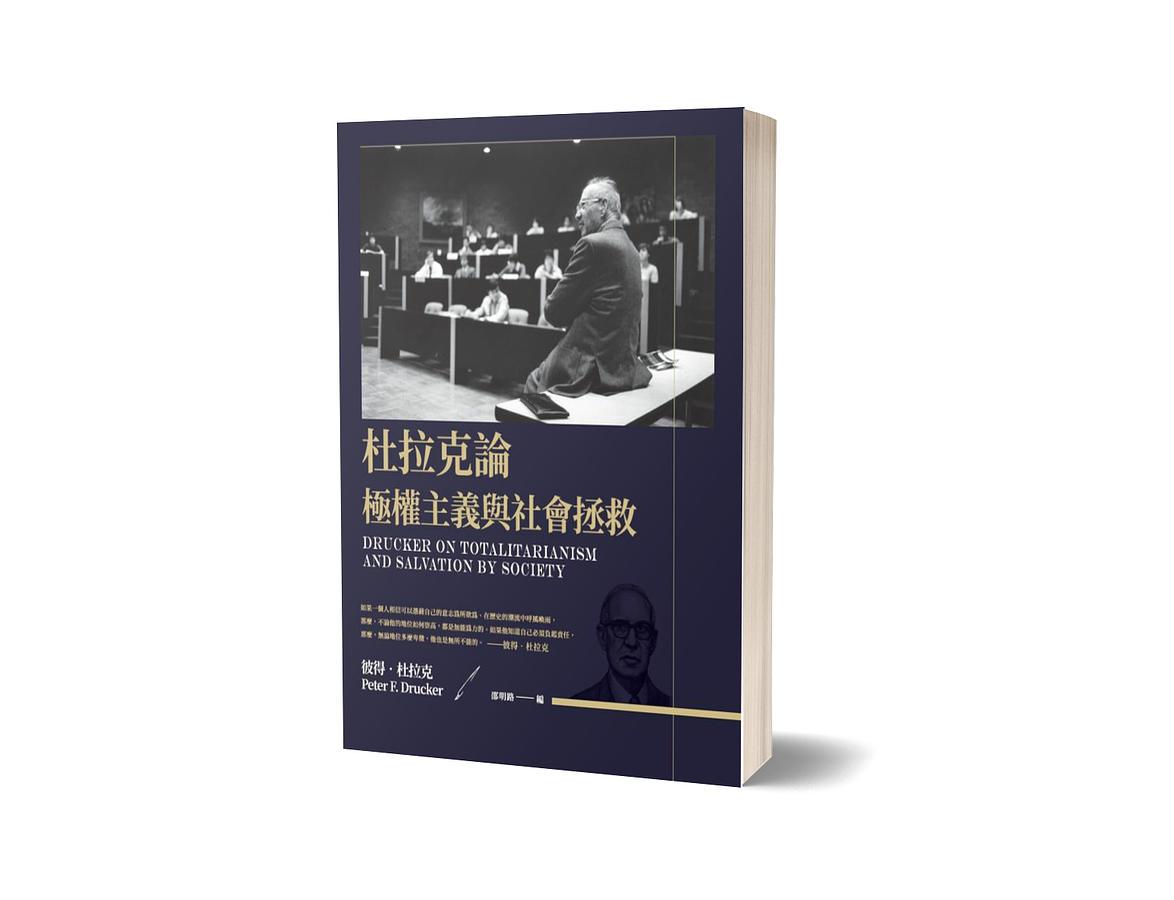
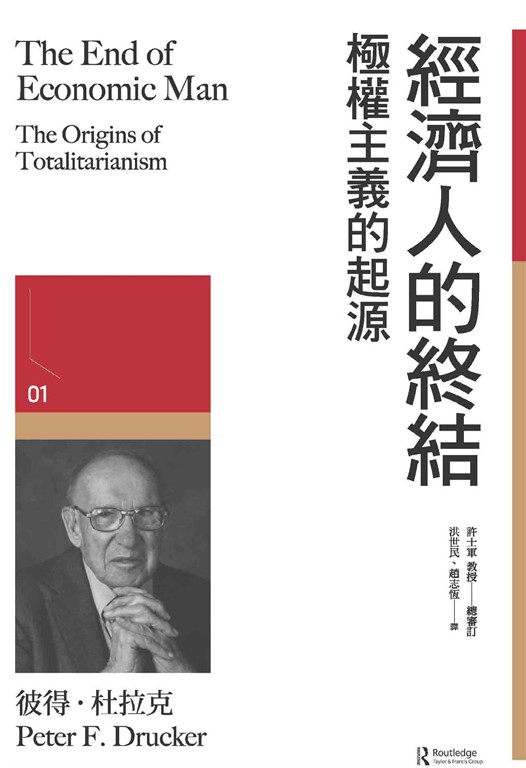
Drucker on Totalitarianism and Salvation by Society
杜拉克論極權主義與社會拯救
出版社:
出版日期:
2021/10/05
9
360324
查詢門市庫存
PREFACE
My father’s escape from—and opposition to—totalitarianism dominated much of his writing.
My father’s escape from—and opposition to—totalitarianism dominated much of his writing.
內容簡介
It permeated his beliefs about the empowerment of individuals, and the moral responsibility of organizations
to empower the individuals within their sphere.
This collection emphasizes the principles of human choice, dignity; self-worth; and society’s role to achieve these ends, within a fair and equitable system.
It was based on this shared belief system that my father and Ming Lo Shao developed a warm friendship—a friendship nurtured and maintained, with mutual respect, for many years until my father’s passing in 2005.
This collection demonstrates the timeliness of my father’s writings, and their applicability to some of the critical situations facing our world today, almost 90 years after they were first penned.
The Drucker family thanks Ming Lo Shao for his work in creating this anthology, and for his dedication to keeping Drucker’s writings alive and relevant for a new generation.
Joan Drucker Winstein
Denver, Colorado, USA
August, 2020
TO OUR READERS
I have long wanted to compile a volume that brings together Peter Drucker’s discourses on totalitarianism and salvation by society to make them easily accessible to readers. Now the work has finally been completed.
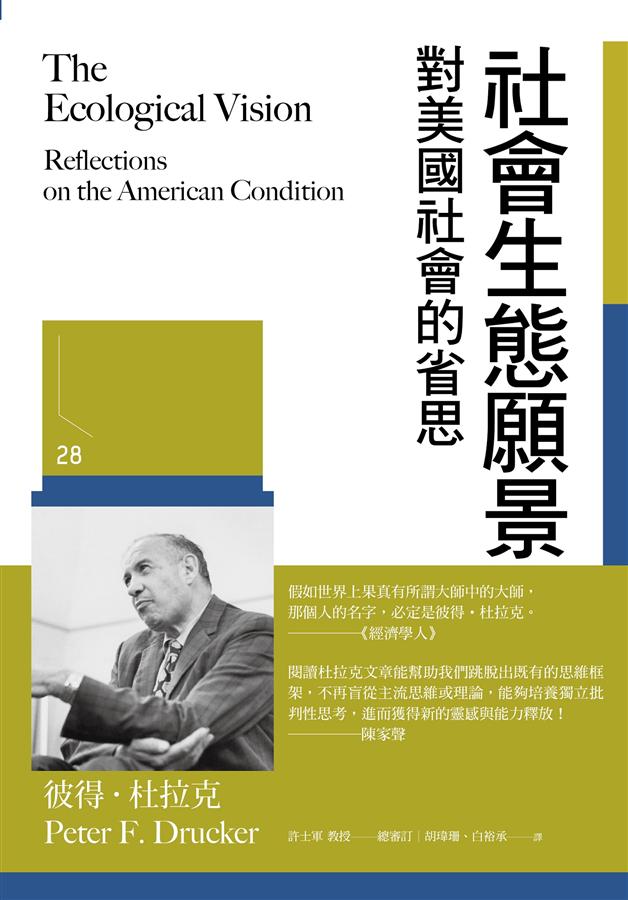
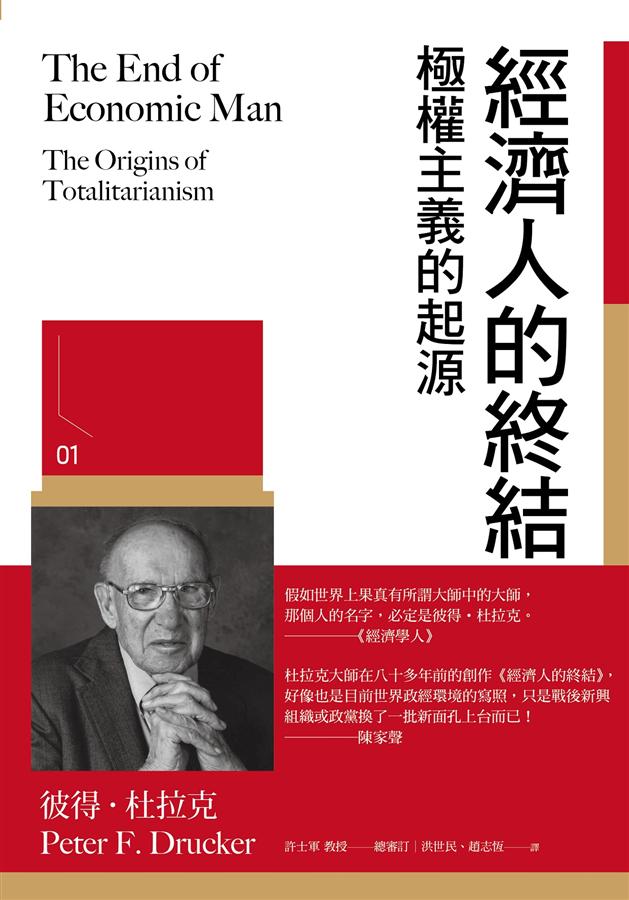
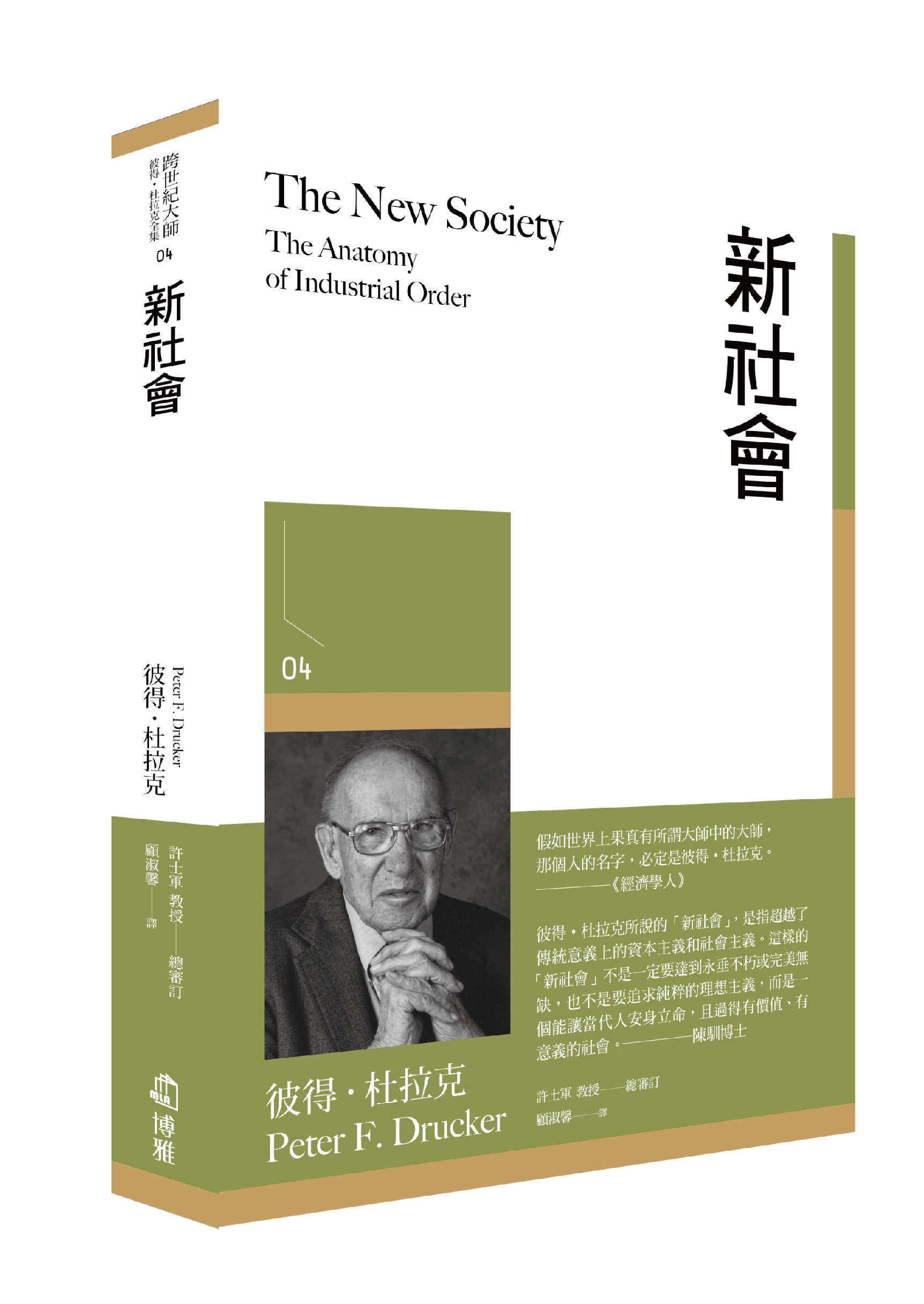
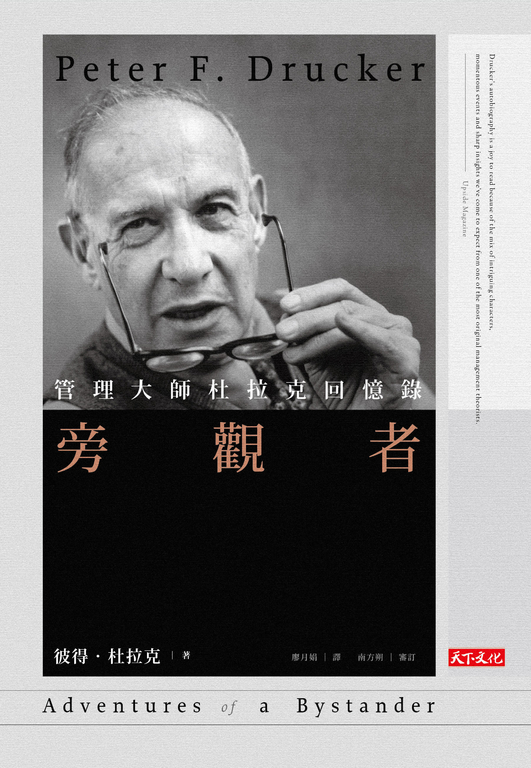
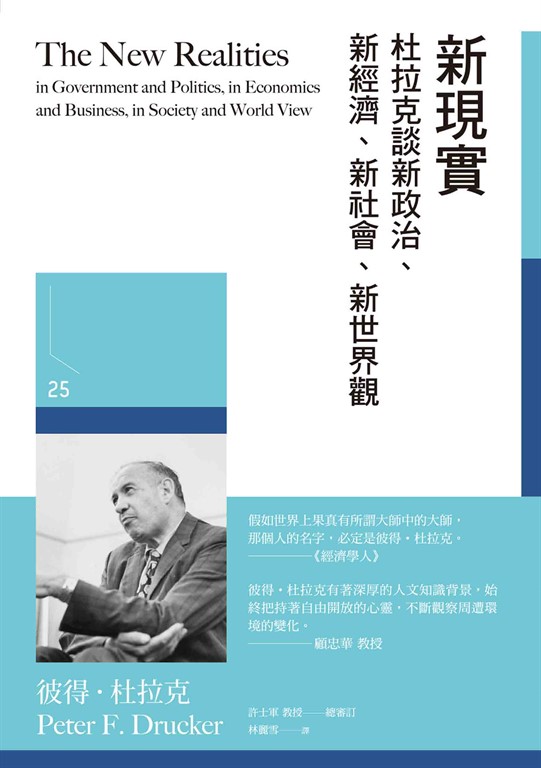
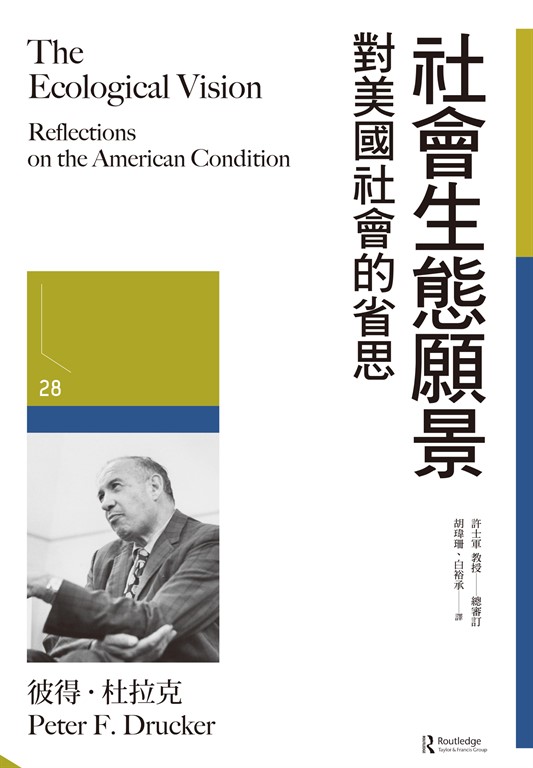
The book is comprised of selections from five of Peter Drucker’s works, The End of Economic Man, The Ecological Vision, Landmarks of Tomorrow, Adventures of a Bystander, and A Functioning Society. My job was to sort the content into nine chapters, draw up titles, and write related introductions
to the chapters. Drucker’s reflections on and critiques of totalitarianism run through most of his works, but they are more focused and systematic in the five books mentioned above. Known as “the father of modern management”, Peter Drucker had a lifelong hatred of totalitarianism. He studied management because he felt that only the effective management of pluralistic social organizations—including non-profit organizations, industrial and commercial enterprises, and government agencies—could provide options or alternatives to resist totalitarian rule.
Totalitarianism is an ugly phenomenon in human society and politics, and it is also a terrifying disease. It has caused more suffering to humankind than any other tyranny in history. What it seeks is to fully and thoroughly manipulate and control every individual, both in body and mind, turning humans not only into animals but also into machines and tools as well. Totalitarianism aims for absolute power, but no one except the Creator has such power. Hence, it manifests as a state of absurdity and madness in which “the movement (persecution) is everything, yet there is no purpose.” By its nature, totalitarianism cannot tolerate the existence of even a tiny bit of humanity. The Nazis’ “final solution” (genocide), the mass murder of Jews, is its logical result. Today, highly developed new technologies are also providing imaginative physical and psychological methods of manipulation, giving those with totalitarian ambitions the means to carry out a “final solution,” the extinction of unmankind (the extinction of human nature; that is, essentially exterminating the human species.)
Totalitarianism is the result of the failure of “salvation by society”.
History has repeatedly proven that any perfect, or nearly perfect society that claims to have no conflict, no class differences, complete fairness, justice, benevolence, and harmony, is a utopia. However, using society to eliminate evil in human nature, to save human beings from depravity, and transform them into perfect people, is merely a naïve fantasy. Marxism is the most recent, most rigorous, and most alluring social rescue plan but also the utmost failure at “salvation by society”. Today, political parties and nations still under the banner of Marxist communism or socialism have essentially sunken into totalitarianism.
From the perspective of philosophy, “Salvation by society” belongs to the category of absolute rationalism. It originates from human beings’ pride and conceit, is the notion that people can grasp absolute truth and become the master of everything in the world, including their own destiny.
Tracing their respective roots in different fields of knowledge, people regard their discoveries as the only correctness. They develop various “isms,” including progressivism, scientism, economic utilitarianism, rational liberalism, nationalism or ethnocentrism, and socialism and communism.
These doctrines may be impeccable logically, and some are emotionally moving. But they all have an a priori hypothesis that cannot be empirically proven or falsified—that is, human beings can be absolutely rational and can comprehend absolute truth.
Now we finally know this priori hypothesis is wrong, not because of logic’s merits or demerits, but because it simply doesn’t work in real life. So, where is the way out? Peter Drucker suggested that we return to spiritual values and faith: to experience and recognize there is a higher authority beyond society and above human beings. That authority has already planted compassion and justice in human’s hearts, what we usually call “conscience.” If humans indeed have a purely rational nature, conscience is its master. With conscience derived from faith, rationality can perform its beneficial functions. Like the conservatism’s counterrevolutionary movement that took place in the United States and Great Britain more than two hundred years ago, it shines with the glory of true freedom and genuine rationality: Those movements were constructive, not
destructive; they appealed to the love, faith, and humility of Christ. Based on religious conviction, they firmly rejected human’s absolute rationality, or irrational absolutism, and were solemnly committed to human dignity.
Peter Drucker inherited the tradition of the conservatism’s counterrevolution in the United States and Great Britain. Inspired by observing social and political realities in the United States, he formed a social concept that differs from a social rescue plan (salvation by society): lesser
evils instead of greater good. Although imperfect, it would create a less painful and tolerable society. Such a society should have the following characteristics:
1. It would replace solipsistic “isms” with an open and tolerant attitude.
2. It would replace centralized and uniform structures with diversified social organization and decentralized power centers.
3. It would replace revolutionary dogma with experimental, gradual improvement and review from time to time.
4. It would replace the rigid social relationship that mutually exclude and negate between individual and the whole, or between the different parts of the society, with the principle of mutual
dependence and mutual benefit to establish a dynamic equilibrium between the individuals and society, freedom and order.
Such a society would not follow a preset scientific design, nor would it need to rely on charismatic leaders or supermen. It would not be perfect, but it would be better and achievable.
It should be emphasized that Drucker’s openness, tolerance, diversity, and eclecticism are not without a bottom line. The bottom line is that he will never tolerate any form of totalitarian autocracy. Drucker noted that human beings have two essential qualities that other creatures don’t
have—knowledge and power. These attributes can neither be removed nor avoided, and their aims and uses must be regulated and restricted. He was wary of sovereign states and modern governments. He believed that regardless of whether they adopted a democratic system or an autocratic system, they were essentially the same but only different in extent, to which they infringed on individual rights and freedoms. Therefore, within every sovereign state and modern government, there exists a gene for the growth of totalitarianism. When any nation abuses its knowledge and power to violate human rights, the international community must restrict or even deprive it of its sovereignty.
However, Drucker believed that thus far, the United States may be the only country that has never entirely accepted the concept and system of a sovereign state. Therefore, as the leader of the free world and developed countries in the West, the United States is best suited to be the first to serve as a model for global actions to resist totalitarianism. Constructive frontiers of work are more important and decisive than confrontations in the military sphere. Such frontiers are not found in the East, where totalitarianism is firmly rooted and far-reaching, but in the free world, especially in the West, where the U.S. has an advantage. These “West” frontiers are:
• the educated society;
• the world economy of dynamic development;
• the new political concepts and institutions needed in this pluralist age, internationally, nationally and locally; and civilizations that can take the place of the East that has vanished.
Ultimately, when the “West” constructive endeavors bring forth the tolerable new society that Ducker envisioned, restoring confidence in freedom and equality, totalitarianism will evaporate just as the sun rises and the dew will naturally be disappeared, losing its deceptive magic.
For those who are not free today, who unfortunately live under totalitarian rule or in totalitarian revolutionary movements, Drucker offers advice on how to deal with the environment based on his personal experiences in Europe as a teenager. The first is what not to do. Power has the potential for absolute and comprehensive control, and human nature is weak, unable to withstand the threats and temptations of power, let alone face the opening of “Pandora’sBox”—totalitarianism.
to empower the individuals within their sphere.
This collection emphasizes the principles of human choice, dignity; self-worth; and society’s role to achieve these ends, within a fair and equitable system.
It was based on this shared belief system that my father and Ming Lo Shao developed a warm friendship—a friendship nurtured and maintained, with mutual respect, for many years until my father’s passing in 2005.
This collection demonstrates the timeliness of my father’s writings, and their applicability to some of the critical situations facing our world today, almost 90 years after they were first penned.
The Drucker family thanks Ming Lo Shao for his work in creating this anthology, and for his dedication to keeping Drucker’s writings alive and relevant for a new generation.
Joan Drucker Winstein
Denver, Colorado, USA
August, 2020
TO OUR READERS
I have long wanted to compile a volume that brings together Peter Drucker’s discourses on totalitarianism and salvation by society to make them easily accessible to readers. Now the work has finally been completed.
The book is comprised of selections from five of Peter Drucker’s works, The End of Economic Man, The Ecological Vision, Landmarks of Tomorrow, Adventures of a Bystander, and A Functioning Society. My job was to sort the content into nine chapters, draw up titles, and write related introductions
to the chapters. Drucker’s reflections on and critiques of totalitarianism run through most of his works, but they are more focused and systematic in the five books mentioned above. Known as “the father of modern management”, Peter Drucker had a lifelong hatred of totalitarianism. He studied management because he felt that only the effective management of pluralistic social organizations—including non-profit organizations, industrial and commercial enterprises, and government agencies—could provide options or alternatives to resist totalitarian rule.
Totalitarianism is an ugly phenomenon in human society and politics, and it is also a terrifying disease. It has caused more suffering to humankind than any other tyranny in history. What it seeks is to fully and thoroughly manipulate and control every individual, both in body and mind, turning humans not only into animals but also into machines and tools as well. Totalitarianism aims for absolute power, but no one except the Creator has such power. Hence, it manifests as a state of absurdity and madness in which “the movement (persecution) is everything, yet there is no purpose.” By its nature, totalitarianism cannot tolerate the existence of even a tiny bit of humanity. The Nazis’ “final solution” (genocide), the mass murder of Jews, is its logical result. Today, highly developed new technologies are also providing imaginative physical and psychological methods of manipulation, giving those with totalitarian ambitions the means to carry out a “final solution,” the extinction of unmankind (the extinction of human nature; that is, essentially exterminating the human species.)
Totalitarianism is the result of the failure of “salvation by society”.
History has repeatedly proven that any perfect, or nearly perfect society that claims to have no conflict, no class differences, complete fairness, justice, benevolence, and harmony, is a utopia. However, using society to eliminate evil in human nature, to save human beings from depravity, and transform them into perfect people, is merely a naïve fantasy. Marxism is the most recent, most rigorous, and most alluring social rescue plan but also the utmost failure at “salvation by society”. Today, political parties and nations still under the banner of Marxist communism or socialism have essentially sunken into totalitarianism.
From the perspective of philosophy, “Salvation by society” belongs to the category of absolute rationalism. It originates from human beings’ pride and conceit, is the notion that people can grasp absolute truth and become the master of everything in the world, including their own destiny.
Tracing their respective roots in different fields of knowledge, people regard their discoveries as the only correctness. They develop various “isms,” including progressivism, scientism, economic utilitarianism, rational liberalism, nationalism or ethnocentrism, and socialism and communism.
These doctrines may be impeccable logically, and some are emotionally moving. But they all have an a priori hypothesis that cannot be empirically proven or falsified—that is, human beings can be absolutely rational and can comprehend absolute truth.
Now we finally know this priori hypothesis is wrong, not because of logic’s merits or demerits, but because it simply doesn’t work in real life. So, where is the way out? Peter Drucker suggested that we return to spiritual values and faith: to experience and recognize there is a higher authority beyond society and above human beings. That authority has already planted compassion and justice in human’s hearts, what we usually call “conscience.” If humans indeed have a purely rational nature, conscience is its master. With conscience derived from faith, rationality can perform its beneficial functions. Like the conservatism’s counterrevolutionary movement that took place in the United States and Great Britain more than two hundred years ago, it shines with the glory of true freedom and genuine rationality: Those movements were constructive, not
destructive; they appealed to the love, faith, and humility of Christ. Based on religious conviction, they firmly rejected human’s absolute rationality, or irrational absolutism, and were solemnly committed to human dignity.
Peter Drucker inherited the tradition of the conservatism’s counterrevolution in the United States and Great Britain. Inspired by observing social and political realities in the United States, he formed a social concept that differs from a social rescue plan (salvation by society): lesser
evils instead of greater good. Although imperfect, it would create a less painful and tolerable society. Such a society should have the following characteristics:
1. It would replace solipsistic “isms” with an open and tolerant attitude.
2. It would replace centralized and uniform structures with diversified social organization and decentralized power centers.
3. It would replace revolutionary dogma with experimental, gradual improvement and review from time to time.
4. It would replace the rigid social relationship that mutually exclude and negate between individual and the whole, or between the different parts of the society, with the principle of mutual
dependence and mutual benefit to establish a dynamic equilibrium between the individuals and society, freedom and order.
Such a society would not follow a preset scientific design, nor would it need to rely on charismatic leaders or supermen. It would not be perfect, but it would be better and achievable.
It should be emphasized that Drucker’s openness, tolerance, diversity, and eclecticism are not without a bottom line. The bottom line is that he will never tolerate any form of totalitarian autocracy. Drucker noted that human beings have two essential qualities that other creatures don’t
have—knowledge and power. These attributes can neither be removed nor avoided, and their aims and uses must be regulated and restricted. He was wary of sovereign states and modern governments. He believed that regardless of whether they adopted a democratic system or an autocratic system, they were essentially the same but only different in extent, to which they infringed on individual rights and freedoms. Therefore, within every sovereign state and modern government, there exists a gene for the growth of totalitarianism. When any nation abuses its knowledge and power to violate human rights, the international community must restrict or even deprive it of its sovereignty.
However, Drucker believed that thus far, the United States may be the only country that has never entirely accepted the concept and system of a sovereign state. Therefore, as the leader of the free world and developed countries in the West, the United States is best suited to be the first to serve as a model for global actions to resist totalitarianism. Constructive frontiers of work are more important and decisive than confrontations in the military sphere. Such frontiers are not found in the East, where totalitarianism is firmly rooted and far-reaching, but in the free world, especially in the West, where the U.S. has an advantage. These “West” frontiers are:
• the educated society;
• the world economy of dynamic development;
• the new political concepts and institutions needed in this pluralist age, internationally, nationally and locally; and civilizations that can take the place of the East that has vanished.
Ultimately, when the “West” constructive endeavors bring forth the tolerable new society that Ducker envisioned, restoring confidence in freedom and equality, totalitarianism will evaporate just as the sun rises and the dew will naturally be disappeared, losing its deceptive magic.
For those who are not free today, who unfortunately live under totalitarian rule or in totalitarian revolutionary movements, Drucker offers advice on how to deal with the environment based on his personal experiences in Europe as a teenager. The first is what not to do. Power has the potential for absolute and comprehensive control, and human nature is weak, unable to withstand the threats and temptations of power, let alone face the opening of “Pandora’sBox”—totalitarianism.
產品目錄
CONTENTS
ACKNOWLEDGEMENTS
PREFACE
PREFACE
TO OUR READERS
FOREWORD ON BEHALF OF THE AUTHOR
CHAPTER ONE
The Morbid Phenomena of Totalitarian Countries
Introduction
1 The Totalitarian Economic System and the “Noneconomic Society”
2 By Justifying Personal Sacrifice to Deny the Meaning of Life and Society
3 Create Enemies and Incite Hatred Between Classes, Races, and Nations
4 Control the Entire Country and Society by One Top-to-bottom Totalitarian Organization
5 Mystifying Leader, Creating an Atmosphere of Personal Worship
6 Encourage Informers and Undermine Traditional Ethical Values
CHAPTER TWO
The Origins and Essence of Totalitarianism from the Prospective of Society and Politics
Introduction
1 The Total Failure of Marxism Had Been a Main Reason for the Europe’s Masses to Supported Totalitarianism
2 Why Can Totalitarianism Win the Support of the Masses?
3 No Revolutionary Leader Can Oppose the Inner Dynamic of the Revolution or Impose Measures That Go Against Public Opinion
CHAPTER THREE
Totalitarianism Inevitably be Replaced by a New Noneconomic Society Based on Individual Freedom and Equality
Introduction
CHAPTER FOUR
The Origins and Essence of Totalitarianism from the Perspective of Rationality and Faith
Introduction
1 From Rousseau to Hitler
2 Why Society Is Not Enough: Introduction to The Unfashionable Kierkegaard
3 The Unfashionable Kierkegaard
CHAPTER FIVE
The Origins and Essence of Totalitarianism from the Perspective of Technology Progress
Introduction
Abstraction Part One of The Human Situation Today
CHAPTER SIX
Criticism of Marxism
Introduction
1 How Did Marxist “Political Economics” Be Debunked?
2 Marxism’s Failure
CHAPTER SEVEN
Do We Want “Salvation by Society” or a Society That Is Not Perfect but Tolerable?
Introduction
1 No More Salvation by Society
2 A Society that May Be the Best We Can Possibly Hope For
CHAPTER EIGHT
The Free World’s “West” Strategy to Resist Totalitarianism
Introduction
1 “The Work to Be Done”—The Overview of the “West” Strategy
2 Discussion on the Frontiers of “West” Strategy
CHAPTER NINE
How Should Individuals Deal with the Threat and Temptation of Totalitarianism?
Introduction
1 The Maverick Young Drucker
2 The Monster and the Lamb
3 Abstraction Part Two of The Human Situation Today
ACKNOWLEDGEMENTS
PREFACE
PREFACE
TO OUR READERS
FOREWORD ON BEHALF OF THE AUTHOR
CHAPTER ONE
The Morbid Phenomena of Totalitarian Countries
Introduction
1 The Totalitarian Economic System and the “Noneconomic Society”
2 By Justifying Personal Sacrifice to Deny the Meaning of Life and Society
3 Create Enemies and Incite Hatred Between Classes, Races, and Nations
4 Control the Entire Country and Society by One Top-to-bottom Totalitarian Organization
5 Mystifying Leader, Creating an Atmosphere of Personal Worship
6 Encourage Informers and Undermine Traditional Ethical Values
CHAPTER TWO
The Origins and Essence of Totalitarianism from the Prospective of Society and Politics
Introduction
1 The Total Failure of Marxism Had Been a Main Reason for the Europe’s Masses to Supported Totalitarianism
2 Why Can Totalitarianism Win the Support of the Masses?
3 No Revolutionary Leader Can Oppose the Inner Dynamic of the Revolution or Impose Measures That Go Against Public Opinion
CHAPTER THREE
Totalitarianism Inevitably be Replaced by a New Noneconomic Society Based on Individual Freedom and Equality
Introduction
CHAPTER FOUR
The Origins and Essence of Totalitarianism from the Perspective of Rationality and Faith
Introduction
1 From Rousseau to Hitler
2 Why Society Is Not Enough: Introduction to The Unfashionable Kierkegaard
3 The Unfashionable Kierkegaard
CHAPTER FIVE
The Origins and Essence of Totalitarianism from the Perspective of Technology Progress
Introduction
Abstraction Part One of The Human Situation Today
CHAPTER SIX
Criticism of Marxism
Introduction
1 How Did Marxist “Political Economics” Be Debunked?
2 Marxism’s Failure
CHAPTER SEVEN
Do We Want “Salvation by Society” or a Society That Is Not Perfect but Tolerable?
Introduction
1 No More Salvation by Society
2 A Society that May Be the Best We Can Possibly Hope For
CHAPTER EIGHT
The Free World’s “West” Strategy to Resist Totalitarianism
Introduction
1 “The Work to Be Done”—The Overview of the “West” Strategy
2 Discussion on the Frontiers of “West” Strategy
CHAPTER NINE
How Should Individuals Deal with the Threat and Temptation of Totalitarianism?
Introduction
1 The Maverick Young Drucker
2 The Monster and the Lamb
3 Abstraction Part Two of The Human Situation Today
作者介紹
Peter F. Drucker
FOREWORD ON BEHALF OF THE AUTHOR
If the author of this book, Peter Drucker, were still alive, faced with the reality of the current rifts in American politics and society, I believe he would warn and advise us all, particularly the young and enthusiastic among us, with the following words from the preface of The End of Economic Man, reprinted in 1969:
But can we still be sure? Or are there not signs around us that totalitarianism may re-infest us, may indeed overwhelm us again? The problems of our times are very different from those of the ’twenties and ’thirties, and so are our realities. But some of our reactions to these problems are ominously reminiscent of the “despair of the masses” that plunged Europe into Hitler’s
totalitarianism and into World War II. In their behavior some groups—they racists, white and black, but also some of the student “activists” on the so-called Left—are frighteningly
reminiscent of Hitler’s stormtroopers—in their refusal to grant any rights, free speech for instance, to anyone else; in their use of character assassination; in their joy in destruction and vandalism.
In their rhetoric these groups are odiously similar to Hitler’s speeches and so is the dreary nihilism of their prophets to hatred from Mao to Marcus. But above all, these groups on the “Right” as well as on the “Left,” like the totalitarians of the generation ago, believe that to say “no” is a positive policy; that to have compassion is to be weak; and that to manipulate idealism for the pursuit of power is to be “idealistic.” They have not learned the one great lesson of our recent past: hatred is no answer to despair.
Understanding of the dynamics of the totalitarianism of yesterday may help us better to understand today and to prevent a recurrence of yesterday. It may, I hope above all, help young people today to turn their idealism, their genuine distress over the horrors of this world, and their desire for a better and braver tomorrow into constructive action for, rather than into totalitarian nihilism as their predecessors did thirty years ago. For at the end of this road there could only be another Hitler and another “ultimate solution” with its gas chambers and extermination camps.
Those words not only embody the book’s practical significance today but also the historical importance it will have in the future.
Editor
November 2, 2020, American Presidential Election Eve
Los Angeles, USA
FOREWORD ON BEHALF OF THE AUTHOR
If the author of this book, Peter Drucker, were still alive, faced with the reality of the current rifts in American politics and society, I believe he would warn and advise us all, particularly the young and enthusiastic among us, with the following words from the preface of The End of Economic Man, reprinted in 1969:
But can we still be sure? Or are there not signs around us that totalitarianism may re-infest us, may indeed overwhelm us again? The problems of our times are very different from those of the ’twenties and ’thirties, and so are our realities. But some of our reactions to these problems are ominously reminiscent of the “despair of the masses” that plunged Europe into Hitler’s
totalitarianism and into World War II. In their behavior some groups—they racists, white and black, but also some of the student “activists” on the so-called Left—are frighteningly
reminiscent of Hitler’s stormtroopers—in their refusal to grant any rights, free speech for instance, to anyone else; in their use of character assassination; in their joy in destruction and vandalism.
In their rhetoric these groups are odiously similar to Hitler’s speeches and so is the dreary nihilism of their prophets to hatred from Mao to Marcus. But above all, these groups on the “Right” as well as on the “Left,” like the totalitarians of the generation ago, believe that to say “no” is a positive policy; that to have compassion is to be weak; and that to manipulate idealism for the pursuit of power is to be “idealistic.” They have not learned the one great lesson of our recent past: hatred is no answer to despair.
Understanding of the dynamics of the totalitarianism of yesterday may help us better to understand today and to prevent a recurrence of yesterday. It may, I hope above all, help young people today to turn their idealism, their genuine distress over the horrors of this world, and their desire for a better and braver tomorrow into constructive action for, rather than into totalitarian nihilism as their predecessors did thirty years ago. For at the end of this road there could only be another Hitler and another “ultimate solution” with its gas chambers and extermination camps.
Those words not only embody the book’s practical significance today but also the historical importance it will have in the future.
Editor
November 2, 2020, American Presidential Election Eve
Los Angeles, USA
規格
誠品貨碼 / 2682077503004
ISBN13 / 9786269506446
ISBN10 / 6269506441
EAN貨碼 / 9786269506446
頁數 / 296
開數 / 25K
裝訂 / S:軟精裝
語言 / 3:英文
尺寸 / 21X15X1CM
級別 / N:無
退貨說明
退貨須知:
- 依照消費者保護法的規定,您享有商品貨到次日起七天猶豫期(含例假日)的權益(請注意!猶豫期非試用期),辦理退貨之商品必須是全新狀態(不得有刮傷、破損、受潮)且需完整(包含全部商品、配件、原廠內外包裝、贈品及所有附隨文件或資料的完整性等)。
- 請您以送貨廠商使用之包裝紙箱將退貨商品包裝妥當,若原紙箱已遺失,請另使用其他紙箱包覆於商品原廠包裝之外,切勿直接於原廠包裝上黏貼紙張或書寫文字。若原廠包裝損毀將可能被認定為已逾越檢查商品之必要程度,本公司得依毀損程度扣除回復原狀必要費用(整新費)後退費;請您先確認商品正確、外觀可接受,再行拆封,以免影響您的權利;若為產品瑕疵,本公司接受退貨。
依「通訊交易解除權合理例外情事適用準則」,下列商品不適用七日猶豫期,除產品本身有瑕疵外,不接受退貨:
- 易於腐敗、保存期限較短或解約時即將逾期。(如:生鮮蔬果、乳製品、冷凍冷藏食材、蛋糕)
- 依消費者要求所為之客製化給付。(如:客製印章、鋼筆刻字)
- 報紙、期刊或雜誌。
- 經消費者拆封之影音商品或電腦軟體。
- 非以有形媒介提供之數位內容或一經提供即為完成之線上服務,經消費者事先同意始提供。(如:電子書)
- 已拆封之個人衛生用品。(如:內衣褲、襪類、褲襪、刮鬍刀、除毛刀等貼身用品)
- 國際航空客運服務。
若您退貨時有下列情形,可能被認定已逾越檢查商品之必要程度而須負擔為回復原狀必要費用(整新費),或影響您的退貨權利,請您在拆封前決定是否要退貨:
- 以數位或電磁紀錄形式儲存或著作權相關之商品(包含但不限於CD、VCD、DVD、電腦軟體等) 包裝已拆封者(除運送用之包裝以外)。
- 耗材(包含但不限於墨水匣、碳粉匣、紙張、筆類墨水、清潔劑補充包等)之商品包裝已拆封者(除運送用之包裝以外)。
- 衣飾鞋類/寢具/織品(包含但不限於衣褲、鞋子、襪子、泳裝、床單、被套、填充玩具)或之商品缺件(含購買商品、附件、內外包裝、贈品等)或經剪標或下水或商品有不可回復之髒污或磨損痕跡。
- 食品、美容/保養用品、內衣褲等消耗性或個人衛生用品、商品銷售頁面上特別載明之商品已拆封者(除運送用之包裝外一切包裝、包括但不限於瓶蓋、封口、封膜等接觸商品內容之包裝部分)或已非全新狀態(外觀有刮傷、破損、受潮等)與包裝不完整(缺少商品、附件、原廠外盒、保護袋、配件紙箱、保麗龍、隨貨文件、贈品等)。
- 家電、3C、畫作、電子閱讀器等商品,除商品本身有瑕疵外,退回之商品已拆封(除運送用之包裝外一切包裝、包括但不限於封膜等接觸商品內容之包裝部分、移除封條、拆除吊牌、拆除貼膠或標籤等情形)或已非全新狀態(外觀有刮傷、破損、受潮等)與包裝不完整(缺少商品、附件、原廠外盒、保護袋、配件紙箱、保麗龍、隨貨文件、贈品等)。
- 退貨程序請參閱【客服專區→常見問題→誠品線上退貨退款】之說明。
付款/配送