內容簡介
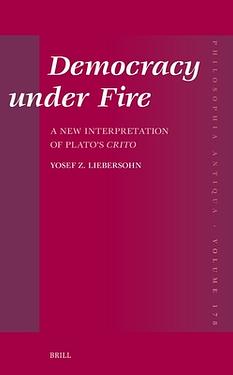
內容簡介 This book argues that Plato's Crito is a fundamental critique of democracy, presenting Crito as the representative democratic citizen. Initially appearing good, decent and law-abiding, but ultimately revealed as bad, indecent and a lawbreaker, harmful to the polis. Through the dialogue's three-stage structure--revelation, rectification, and refutation--Socrates exposes in Crito a fatal democratic flaw. This the author calls the "Measure for Measure argument" the social legitimation of lawbreaking in pursuit of private interest, conceived as unconsciously repaying injustice with injustice. Democratic citizens are generally law-abiding, yet violate the law whenever private interests are at stake, justifying this by subconsciously claiming "the State did me an injustice". Plato's solution to securing obedience lies not in the Laws' speech, but in internalizing that breaking the law harms one's own soul.
作者介紹
作者介紹 Yosef Z. Liebersohn, Ph.D. (2002), is Professor of History and Philosophy at Bar-Ilan University. He has published monographs and articles on Plato, rhetoric, Seneca and Epicurus, including The Dispute Concerning Rhetoric in Hellenistic Thought (2010) and Who is afraid of the Rhetor; An Analysis and Exegesis of Socrates-Gorgias' Conversation in Plato's Gorgias (2014).