內容簡介
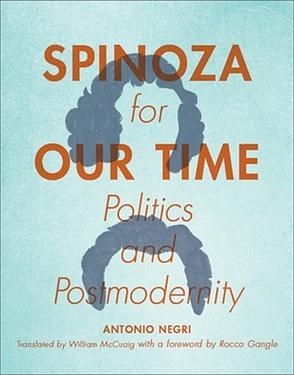
內容簡介 Antonio Negri, one of the world's leading scholars on Baruch Spinoza (1632-1677) and his contemporary legacy, offers a straightforward explanation of the philosopher's elaborate arguments and a persuasive case for his ongoing relevance. Responding to a resurgent interest in Spinoza's thought and its potential application to contemporary global issues, Negri demonstrates the thinker's special value to politics, philosophy, and related disciplines. Negri's work is both a return to and an advancement of his initial affirmation of Spinozian thought in The Savage Anomaly. He further defends his understanding of the philosopher as a proto-postmodernist, or a thinker who is just now, with the advent of the postmodern, becoming contemporary. Negri also connects Spinoza's theories to recent trends in political philosophy, particularly the reengagement with Carl Schmitt's "political theology," and the history of philosophy, including the argument that Spinoza belongs to a "radical enlightenment." By positioning Spinoza as a contemporary revolutionary intellectual, Negri addresses and effectively challenges twentieth-century critiques of the thinker waged by Jacques Derrida, Alain Badiou, and Giorgio Agamben.
作者介紹
作者介紹 Antonio Negri (1933-2023) was a world-renowned theorist who taught political philosophy at the University of Padua, the University of Vincennes, and College Internationale de Philosophie. His books include Factory of Strategy: Thirty-Three Lessons on Lenin (Columbia, 2014). With Michael Hardt, he coauthored the best-selling trilogy, Empire, Multitude, and Commonwealth. William McCuaig is the translator of many books by Gianni Vattimo, including A Farewell to Truth (Columbia, 2011). Rocco Gangle is professor of philosophy at Endicott College.