內容簡介
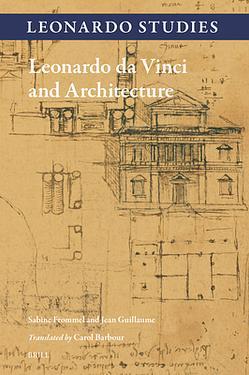
內容簡介 Found scattered among his numerous manuscripts, Leonardo's studies on architecture were conceived during an artistic journey of close to fifty years while their author was in the service of the most prestigious patrons. Dealing with churches, ephemeral monuments, urban reconstruction, fortifications, palaces and villas, and painted architecture--mostly ideal in nature--they are part of the architectural evolution of the late quattrocento and early cinquecento. Leonardo's drawings assimilate the ideas of the pioneers of Renaissance architecture and focus on particular aspects, such as interventions on existing structures, classical orders, staircases, and decoration. Leonardo's analysis sheds light on dialogues with Bramante, Francesco di Giorgio, Giuliano da Sangallo, Michelangelo, Baldassare Peruzzi and Antonio da Sangallo the Younger and allows us to better understand whether his contributions were innovative, or singular interpretations of the achievements of his time. This is an augmented translation of Leonardo e l'architettura (Modena: Franco Cosimo Panini, 2019).
作者介紹
作者介紹 Sabine Frommel is the chair of Renaissance art history at the École Pratique des Hautes Études-PSL (Paris, Sciences et Lettres University), since 2003. Her research addresses the great architects of the Italian Renaissance, evolution of typologies, architectural languages, and migratory processes in Europe. Jean Guillaume was professor emeritus of Renaissance art history at the Sorbonne in Paris. His research focused on Renaissance architecture in France and Italy, particularly in relation to French chateaux. Recently he was working on a monograph on the Louvre and the Tuilleries in the sixteenth century.