內容簡介
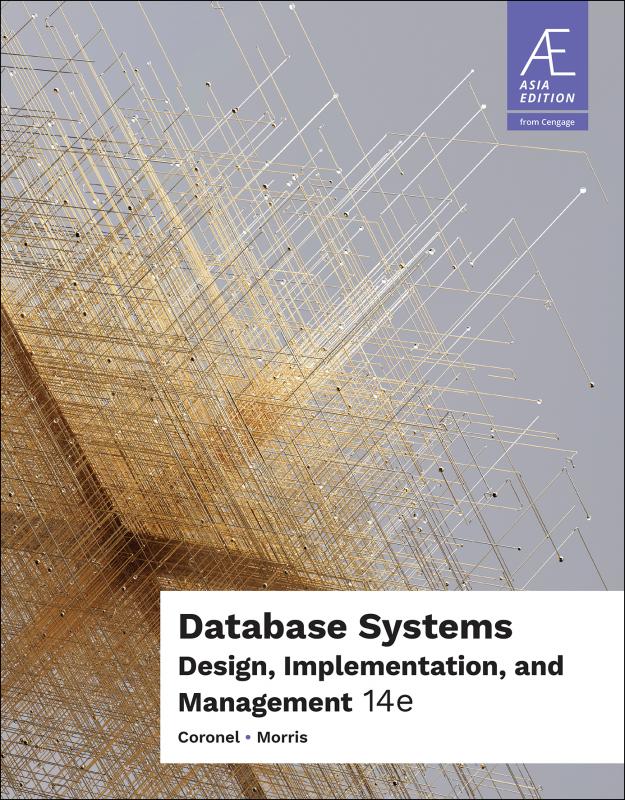
內容簡介 Database skills are among the most in-demand IT skills. With its practical, accessible approach, Coronel Morris' market-leading DATABASE SYSTEMS: DESIGN, IMPLEMENTATION, & MANAGEMENT, 14th edition, equips you with a solid foundation in database design and implementation for today's market. The authors blend foundational theory, the latest real-world practices and the skills employers want. Straightforward writing and vivid illustrations make even complex concepts easy to understand. You'll learn the key to successful database implementation as you study how to properly design databases that fit within the larger strategic data environment. Expanded coverage includes big data analytics, NoSQL and data visualization technologies. In addition, the MindTap digital platform gives you real-world, hands-on practice to help you prepare for a successful career in database design and management.What's NewRobust teaching and learning support provides time-saving resources and online tools. PowerPoint® presentation slides, MS Access databases, Oracle®, MySQL™ and SQL Server scripts, test banks, interactive digital exercises, flashcards and other study tools help maximize student success. In addition, the comprehensive Instructor's Manual includes all end-of-chapter solutions, suggested discussion material and other resources to help you maximize your class prep time.Clear presentation balances theory and practice. The authors' straightforward, easy-to-understand writing style blends foundational theory with the latest practices and applications and an emphasis on key hands-on skills.Through MindTap's digital lab assignments, students write SQL code in an interactive environment and receive real-time feedback on their work. Module Quizzes, Problems and Use It activities help students apply what they're learning to real-world scenarios. Database for Life assignments keep students current on what's trending, and Concept Video Clips explain and illustrate database system terms and concepts. At the end of the course students can explore the Career Connection unit, which includes videos on potential career paths in the database field and a career reflection assignment.Auto-graded MySQL labs and homework questions confirm students’ understanding of key concepts and terms, while advanced assignments enable learners to practice database design concepts.Enhanced coverage addresses today's most used database systems, giving students a broad understanding of database design and programming across a range of DBMS products, including Oracle®, MySQL™, SQL Server and Microsoft® Access.Clear presentation balances theory and practice. The authors' straightforward, easy-to-understand writing style blends foundational theory with the latest practices and applications and an emphasis on key hands-on skills.A more hands-on focus on big data tools and NoSQL databases equips students with the skills employers want. Immersed in leading edge database concepts, students become familiar with emerging tools such as big data analytics.Enabling students to work with multiple databases in various formats, this edition provides opportunities for readers to gain experience using all of today's most commonly used database systems, including Microsoft® Access, Microsoft® SQL Server, MySQL™ and Oracle® databases.Module Quizzes, Problems and Use It activities help students apply what they're learning to real-world scenarios. Database for Life assignments keep students current on what's trending, and Concept Video Clips explain and illustrate database system terms and concepts. At the end of the course students can explore the Career Connection unit, which includes videos on potential career paths in the database field and a career reflection assignment.Expanded coverage of SQL eliminates the need for supplemental programming books. Reorganized coverage focuses first on data retrieval since this is the most central SQL programming skill for entry-level database positions.Engaging visuals clarify concepts. Full-color, detailed illustrations, tables and diagrams enhance student comprehension of even the most complex concepts.
作者介紹
作者介紹 Carlos Coronel is currently the Lab Director for the College of Business Computer Labs at Middle Tennessee State University. He has more than 29 years of experience in various fields as a Database Administrator, Network Administrator, Web Manager, and Technology Specialist. He has taught courses in Web development, database design and development, and data communications at the undergraduate and graduate levels.Steven Morris completed his Bachelor of Science and Ph.D. from Auburn University. He has taught Database Design and Development, Database Programming with Advanced SQL and PL SQL, Systems Analysis and Design, and Principles of MIS at Middle Tennessee State University. Steven has published many articles, and currently serves on the review boards of several journals.
產品目錄
產品目錄 Part I: DATABASE CONCEPTS1. Database Systems2. Data ModelsPart II: DESIGN CONCEPTS3. The Relational Database Model4. Entity Relationship (ER) Modeling5. Advanced Data Modeling6. Normalization of Database TablesPart III: ADVANCED DESIGN AND IMPLEMENTATION7. Introduction to Structured Query Language (SQL)8. Advanced SQL9. Database DesignPart IV: ADVANCED DATABASE CONCEPTS10. Transaction Management and Concurrency Control11. Database Performance Tuning and Query Optimization12. Distributed Database Management Systems13. Business Intelligence and Data Warehouses14. Big Data Analytics and NoSQLPart V: DATABASES AND THE INTERNET15. Database Connectivity and Web TechnologiesPart VI: DATABASE ADMINISTRATION16. Database Administration and SecurityONLINE APPENDICESAppendix Aa: Designing Databases with Lucicharts: A TutorialAppendix Ab: Designing Databases with Visio: A TutorialAppendix B: The University Lab: Conceptual DesignAppendix C: The University Lab: Conceptual Design Verification, Logical Design, and ImplementationAppendix D: Converting the ER Model into a Database StructureAppendix E: Comparison of ER Model NotationsAppendix F: Client Server SystemsAppendix G: Object-Oriented DatabasesAppendix H: Unified Modeling Language (UML)Appendix I: Databases in Electronic CommerceAppendix J: Web Database Development with ColdFusionAppendix K: The Hierarchical Database ModelAppendix L: The Network Database ModelAppendix M: Microsoft Access TutorialAppendix N: Creating a New Database Using Oracle 12cAppendix O: Data Warehouse Implementation FactorsAppendix P: Working with MongoDBAppendix Q: Working with Neo4j