防詐3要訣:不聽信、不操作、掛斷電話


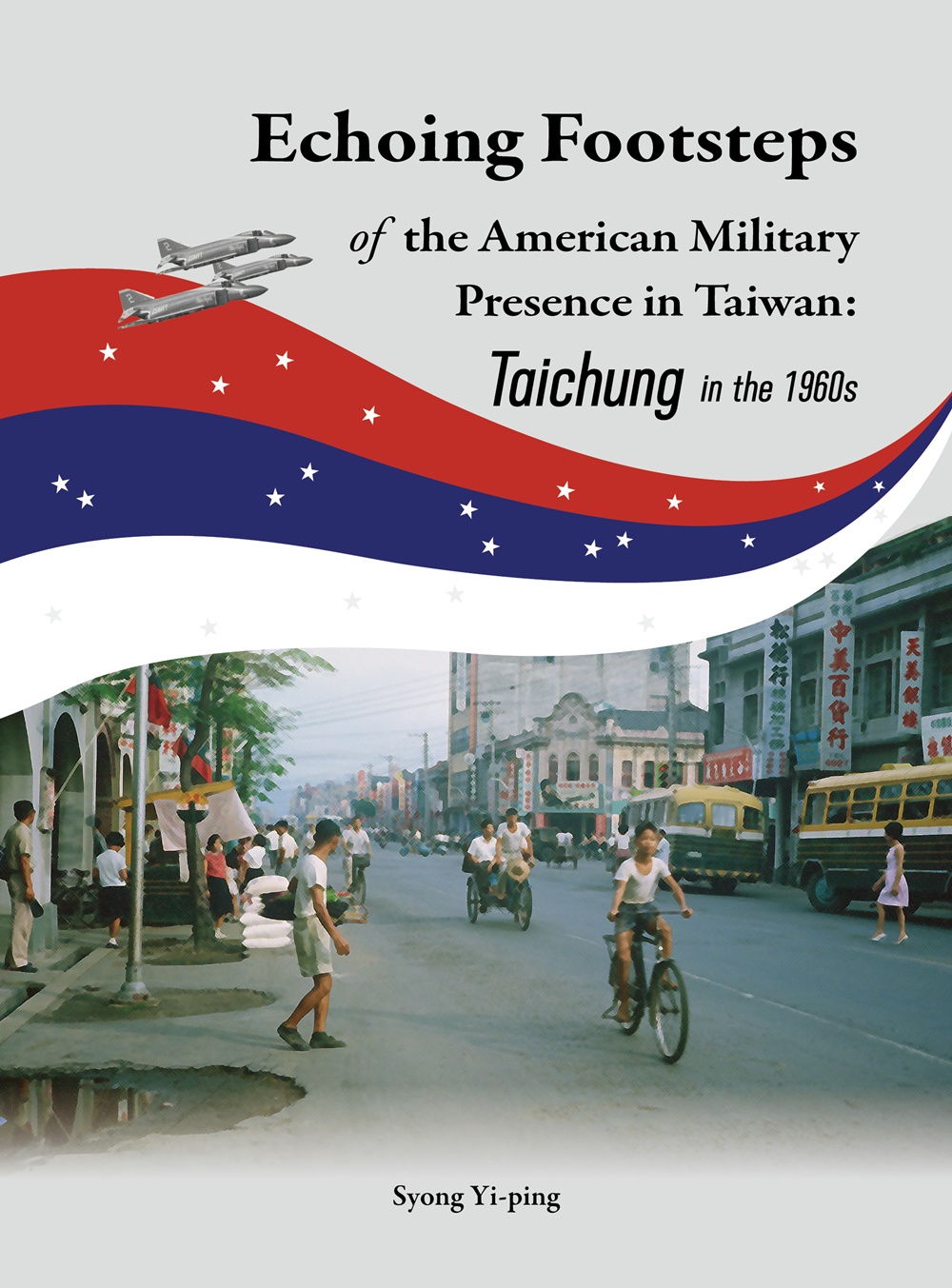
Echoing Footsteps of the American Military Presence in Taiwan (電子書)
數量
95
293278
此商品享ShopBack 0.5%回饋;不適用於誠品分潤計劃、美安等現金回饋機制
This groundbreaking book takes readers on a journey through Taichung’s West District and beyond during the 1950s to 1970s, uncovering the deep yet oft
內容簡介
This groundbreaking book takes readers on a journey through Taichung’s West District and beyond during the 1950s to 1970s, uncovering the deep yet often overlooked impact of the U.S. military presence on Taiwan’s urban, cultural, and social transformation.
The story begins in 1950, when the Korean War made Taiwan a key U.S. outpost in Asia. With the establishment of the Military Assistance Advisory Group (MAAG) in 1951 and the expansion of Kokan Airport into Ching Chuan Kang (CCK) Air Base, Taichung became home to one of America’s largest airbases in the region. This massive project—known as the Yangmingshan Project—displaced thousands of local residents, who called the forced relocation soo-khai (“evacuation”). What began as a “city of tents,” as U.S. pilot John Kmetz described in 1965, soon became “Little America.”
From the 1960s onward, American families settled in Taichung, bringing architecture, lifestyle, and culture that reshaped the city. U.S. military quarters in Xinbei and Tuku Villages featured chimneys and lawns reminiscent of American suburbs. Local residents soon imitated these “A-tok-á houses,” symbols of prosperity and modernity. Street names like Meicun (“American Village”) and Zhongmei (“Chinese-American”) still echo that era.
American influence extended to food. Liu’s Bakery, which served U.S. soldiers, created “Apple Bread” and “Rose Pie,” combining Western techniques with Taiwanese ingredients. These innovations helped modernize Taiwan’s baking industry.
The U.S. presence also transformed entertainment. From 1965, over 210,000 U.S. troops on Rest and Recuperation from Vietnam visited Taiwan, fueling a boom in hotels, bars, and clubs along Wuquan and Daya Roads—Taichung’s “American entertainment district.” The CCK Club became a legendary training ground for musicians such as Rich Huang, Masa Yhou, Su Rui, and Tracy Huang, whose experiences later shaped Taiwan’s pop music scene.
Meanwhile, the United States Information Service (USIS) office in Taichung acted as a “window to the world.” Its library, cultural programs, and Shiy De-jinn’s Cultural Exchange mural symbolized the new artistic and intellectual currents entering Taiwan during Martial Law. Scholars like Chi Pang-yuan drew inspiration from its English materials to introduce American literature and democratic thought to Taiwanese classrooms.
Yet the American presence also carried complex human stories. Relationships between U.S. soldiers and Taiwanese women led to Amerasian children, some facing prejudice but later supported by organizations like the Pearl S. Buck Foundation. Figures such as Tony Wang, Cheng Chih-lung, and Tammy Darshana Lichtenberg embody these intertwined histories.
The U.S. withdrawal in the 1970s, following diplomatic shifts such as Nixon’s visit to China, left many Taichung residents uncertain. However, traces of the American era persisted: local chefs opened Western-style diners, and musicians from CCK clubs transitioned into the Mandopop industry, bringing with them international experience and professionalism.
Today, Taichung continues to preserve and reinterpret this shared past. The Dayang Oil Depot has been reborn as a recreation park; the General Sun Li-jen Memorial Hall, once an American-style residence, recalls the ambiance of “Model Village”; and the American Footprint Museum within the CCK Air Base displays photos, uniforms, and memorabilia donated by veterans. Though the museum is not always open, its digital exhibitions keep these memories alive.
Through rich documentation and vivid storytelling, “Echoing Footsteps of the American Military Presence in Taiwan” reveals how American influence once permeated Taichung’s architecture, cuisine, art, and identity. By tracing these echoes—visible in buildings, recipes, and songs—Syong Yi-ping restores a vital, complex chapter of Taiwan’s modern history and highlights the enduring connections between global encounters and local transformation.
產品目錄
Foreword by the Mayor of Taichung
Recommendation
Foreword
Prologue: Model Village
1. Ching Chuan Kang Air Base: The Unbreakable Bonds Between the US Army and Taichung
2. Dayang Oil Depot: The Vietnam War and Taichung
3. US Emigrant Village: American Life in Taichung
4. United States Information Service (USIS): Catalyst for Modern Art on the Streets of Taichung
5. Wuquan Road: American Soldiers, Bargirls, and Amerasian Children
6. CCK Club: The Forefront of “Hot Music”
7. American Footprint Museum: Memories of the US Military in Taichung
Epilogue: Life in Taichung in the 1960s Under the Influence of the US Military
Afterword
Historical Milestones
作者介紹
作者|Syong Yi-ping, born Syong Hsin-yuan, obtained an MA in Taiwan literature from National Taiwan University. He began publishing literary works during his undergraduate years. While in graduate school, he self-published several books and tried his hand at non-fiction writing. He has since been the recipient of numerous literary awards, including the Lin Rung San Literature Award and the UDN Literary Award. In 2020, his book Welcome to Taiwan, Rock Music earned him a nomination for the Taiwan Literature Golden Award.
譯者|Ng Meixin is currently a PhD candidate at the Graduate Institute of Translation and Interpretation, National Taiwan Normal University. Born and bred in Singapore, she wields her bilingualism as both a passion and a profession, working in education and translation. She shares her home with three furkids and one human child, all of whom believe they are the boss.
譯者|Ng Meixin is currently a PhD candidate at the Graduate Institute of Translation and Interpretation, National Taiwan Normal University. Born and bred in Singapore, she wields her bilingualism as both a passion and a profession, working in education and translation. She shares her home with three furkids and one human child, all of whom believe they are the boss.
規格
誠品貨碼 / 2683017378003
ISBN13 / 9786267584903
ISBN10 /
EAN貨碼 /
頁數 / 278
語言 / 1:中文/繁體
級別 / N:無
檔案格式 / EPUB流式(22MB)
檔案匯出格式 / EPUB 提供 Adobe DRM
TTS朗讀 / EPUB提供TTS朗讀
退貨說明
退貨須知:
- 依照消費者保護法的規定,您享有商品貨到次日起七天猶豫期(含例假日)的權益(請注意!猶豫期非試用期),辦理退貨之商品必須是全新狀態(不得有刮傷、破損、受潮)且需完整(包含全部商品、配件、原廠內外包裝、贈品及所有附隨文件或資料的完整性等)。
- 請您以送貨廠商使用之包裝紙箱將退貨商品包裝妥當,若原紙箱已遺失,請另使用其他紙箱包覆於商品原廠包裝之外,切勿直接於原廠包裝上黏貼紙張或書寫文字。若原廠包裝損毀將可能被認定為已逾越檢查商品之必要程度,本公司得依毀損程度扣除回復原狀必要費用(整新費)後退費;請您先確認商品正確、外觀可接受,再行拆封,以免影響您的權利;若為產品瑕疵,本公司接受退貨。
依「通訊交易解除權合理例外情事適用準則」,下列商品不適用七日猶豫期,除產品本身有瑕疵外,不接受退貨:
- 易於腐敗、保存期限較短或解約時即將逾期。(如:生鮮蔬果、乳製品、冷凍冷藏食材、蛋糕)
- 依消費者要求所為之客製化給付。(如:客製印章、鋼筆刻字)
- 報紙、期刊或雜誌。
- 經消費者拆封之影音商品或電腦軟體。
- 非以有形媒介提供之數位內容或一經提供即為完成之線上服務,經消費者事先同意始提供。(如:電子書)
- 已拆封之個人衛生用品。(如:內衣褲、襪類、褲襪、刮鬍刀、除毛刀等貼身用品)
- 國際航空客運服務。
若您退貨時有下列情形,可能被認定已逾越檢查商品之必要程度而須負擔為回復原狀必要費用(整新費),或影響您的退貨權利,請您在拆封前決定是否要退貨:
- 以數位或電磁紀錄形式儲存或著作權相關之商品(包含但不限於CD、VCD、DVD、電腦軟體等) 包裝已拆封者(除運送用之包裝以外)。
- 耗材(包含但不限於墨水匣、碳粉匣、紙張、筆類墨水、清潔劑補充包等)之商品包裝已拆封者(除運送用之包裝以外)。
- 衣飾鞋類/寢具/織品(包含但不限於衣褲、鞋子、襪子、泳裝、床單、被套、填充玩具)或之商品缺件(含購買商品、附件、內外包裝、贈品等)或經剪標或下水或商品有不可回復之髒污或磨損痕跡。
- 食品、美容/保養用品、內衣褲等消耗性或個人衛生用品、商品銷售頁面上特別載明之商品已拆封者(除運送用之包裝外一切包裝、包括但不限於瓶蓋、封口、封膜等接觸商品內容之包裝部分)或已非全新狀態(外觀有刮傷、破損、受潮等)與包裝不完整(缺少商品、附件、原廠外盒、保護袋、配件紙箱、保麗龍、隨貨文件、贈品等)。
- 家電、3C、畫作、電子閱讀器等商品,除商品本身有瑕疵外,退回之商品已拆封(除運送用之包裝外一切包裝、包括但不限於封膜等接觸商品內容之包裝部分、移除封條、拆除吊牌、拆除貼膠或標籤等情形)或已非全新狀態(外觀有刮傷、破損、受潮等)與包裝不完整(缺少商品、附件、原廠外盒、保護袋、配件紙箱、保麗龍、隨貨文件、贈品等)。
- 退貨程序請參閱【客服專區→常見問題→誠品線上退貨退款】之說明。
付款/配送