How to Draw What You See
| 作者 | Rudy de Reyna |
|---|---|
| 出版社 | Ingram International Inc |
| 商品描述 | How to Draw What You See:The35thanniversaryeditionoftheclassichow-tobookthathashelpedmillionsofartistslearntodraw.Whenitwasoriginallypublishedin1970,HowtoDrawW |
| 作者 | Rudy de Reyna |
|---|---|
| 出版社 | Ingram International Inc |
| 商品描述 | How to Draw What You See:The35thanniversaryeditionoftheclassichow-tobookthathashelpedmillionsofartistslearntodraw.Whenitwasoriginallypublishedin1970,HowtoDrawW |
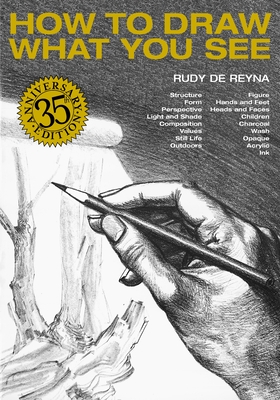
內容簡介 The 35th anniversary edition of the classic how-to book that has helped millions of artists learn to draw. When it was originally published in 1970, How to Draw What You See zoomed to the top of Watson-Guptill's best-seller list--and it has remained there ever since. "I believe that you must be able to draw things as you see them--realistically," wrote Rudy de Reyna in his introduction. Today, generations of artists have learned to draw what they see, to truly capture the world around them, using de Reyna's methods. How to Draw What You See shows artists how to recognize the basic shape of an object--cube, cylinder, cone, or sphere--and use that shape to draw the object, no matter how much detail it contains.
作者介紹 Rudy de Reyna is the author of many Watson-Guptill classics, including Magic Realist Drawing Techniques.
| 書名 / | How to Draw What You See |
|---|---|
| 作者 / | Rudy de Reyna |
| 簡介 / | How to Draw What You See:The35thanniversaryeditionoftheclassichow-tobookthathashelpedmillionsofartistslearntodraw.Whenitwasoriginallypublishedin1970,HowtoDrawW |
| 出版社 / | Ingram International Inc |
| ISBN13 / | 9780823023752 |
| ISBN10 / | |
| EAN / | 9780823023752 |
| 誠品26碼 / | |
| 重量(g) / | 476.3 |
| 頁數 / | 178 |
| 語言 / | 3:英文 |
| 級別 / | N:無 |
| 尺寸 / | 25.1X17.5X1.8CM |
| 裝訂 / | P:平裝 |
最佳賣點 : This classic volume is based on a simple premise: by learning to recognize the basic shape of an object--cube, cylinder, cone, and sphere--one can draw it, no matter how much detail it contains. After lessons on drawing objects in the four basic shapes, the author demonstrates how these shapes apply to still lifes, outdoor scenes, and people. 200 illustrations.
最佳賣點 : This classic volume is based on a simple premise: by learning to recognize the basic shape of an object--cube, cylinder, cone, and sphere--one can draw it, no matter how much detail it contains. After lessons on drawing objects in the four basic shapes, the author demonstrates how these shapes apply to still lifes, outdoor scenes, and people. 200 illustrations.