Architecture without Architects: A Short Introduction to Non-pedigreed Architecture
| 作者 | Bernard Rudofsky |
|---|---|
| 出版社 | 恩楷股份有限公司 |
| 商品描述 | 沒有建築師的建築: 簡明非正統建築導論:一本歷久彌新的經典著作在《沒有建築師的建築:簡明非正統建築導論》中,伯納德•魯道夫斯基衝破了統禦我們建築歷史感知的狹隘學術 |
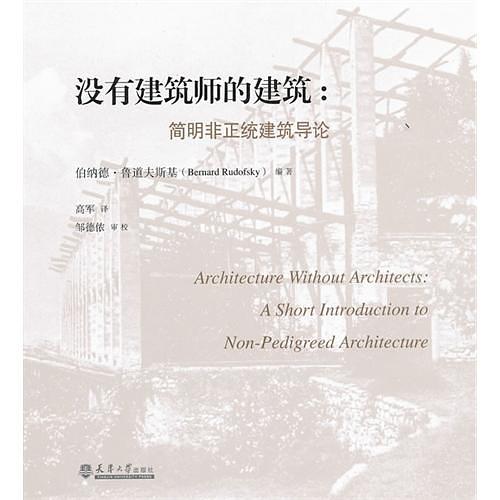
| 作者 | Bernard Rudofsky |
|---|---|
| 出版社 | 恩楷股份有限公司 |
| 商品描述 | 沒有建築師的建築: 簡明非正統建築導論:一本歷久彌新的經典著作在《沒有建築師的建築:簡明非正統建築導論》中,伯納德•魯道夫斯基衝破了統禦我們建築歷史感知的狹隘學術 |
內容簡介 一本歷久彌新的經典著作 在《沒有建築師的建築:簡明非正統建築導論》中,伯納德•魯道夫斯基衝破了統禦我們建築歷史感知的狹隘學術苑囿,討論了作為普遍存在的建築藝術現象。通過排除那些會干擾我們考察完整建築“全景”的地理與社會偏見,他向我們展現了一個迄今無人知曉、也無從發現的世界一瞥--可容納十萬觀眾的美洲史前劇院區域、供數百萬人居住的地下城鎮和鄉村(囊括學校、辦公場所和工廠加以完善),他將這些令人 意想不到的奇觀揭示在世人眼前。簡而言之,《沒有建築師的建築》向讀者介紹了公共建築--並非為少數精英或專家發明,而是由具有共同文化傳統的人群集體根據群體經驗,自發的而且是持續活動創造形成的。 “原始”建築之美往往在無意之間被人忽略遺失,但是直到今天我們才認識到:“原始”建築這種藝術形式是將人類智慧運用於人類獨有的各種生活方式中時應運而生的。確實,魯道夫斯基博士把沒有經過正規訓練的建造者們的設計哲學與實踐知識看作是去發掘已陷於混亂城市重圍之中的工業時代人類靈感的源泉。他認為,由此而衍生的建築智慧超越了經濟與美學方面的思考,觸及了更加艱難並且日益令人煩惱的課題--我們如何生存而且可以繼續生存下去;如何在狹義與廣義兩種層面上,維持與鄰里之間的和諧共處。 作為一位建築師、工程師和藝術評論家,伯納德•魯道夫斯基博士是一位多產作家,其中包括《沒有建築師的建築》、《人民的街道》(Streets for People)、《不時髦的人體》(The Unfashionable Human Body)、《偉大的建造者》(The Prodigious Builders)等書,他善於從非傳統的嶄新視角探討那些我們耳熟能詳的事物現象。
作者介紹 ■作者簡介伯納德.魯道夫斯基Bernard Rudofsky (April 19 1905 - March 12, 1988)[1] was an Moravian-born American writer, architect, collector, teacher, designer, and social historian.Rudofsky earned a doctorate in architecture in Austria before working in Germany, Italy, and a dozen other countries. He temporarily settled in Brazil in the 1930s and opened an architectural practice there, building several notable residences in São Paulo. An entry in a 1941 design competition brought an invitation from MOMA to tour the US; in the wake of Pearl Harbor, as an Austrian native, he was given the option of staying in the US. He remained based in New York City until his death, although he continued to travel (sometimes for years at a stretch). Rudofsky variously taught at Yale, MIT, Cooper-Hewitt, Waseda University in Tokyo, and the Royal Academy of Fine Arts in Copenhagen. He was a Ford, Fulbright and Guggenheim Fellow.Rudofsky was most influential for organizing a series of controversial MOMA exhibits in the 1940s, 1950s and 1960s. He is best remembered today for a number of urbane books that still provide relevant design insight that is concealed in entertaining, subversive sarcasm. His interests ranged from vernacular architecture to Japanese toilets and sandal design. Taken together, his written work constitutes a sustained argument for humane and sensible design.For instance, Now I Lay Me Down to Eat is an entertaining tour of historical and cultural alternatives to the design problems of everyday life—dining, sleeping, sitting, cleansing, and bathing—and was ""neither meant to spread dangerous heresies nor to undermine our birthright to make the worst of possible choices. Rather, it demonstrates by means of random examples that life can be less dull than we make it."" By contrasting current western design solutions with earlier practices, he makes our current ""solutions"" look open to improvement, if not outright ridiculous and arbitrary. For instance, he asks why the standard American-style toilet is effectively a septic humidifier, and why American-style bathtubs are impossible for adults to lie down in and are as a matter of routine permanently fixed two or three feet away from a septic humidifier.In 1944 Rudofsky and his wife Berta were invited to Black Mountain College for two weeks. Bernard gave two lectures on the sad state of clothing design, calling contemporary dress ""anachronistic, irrational, impractical and harmful"" and literally unsuitable. One of his lectures was called ""How Can People Expect to Have Good Architecture When They Wear Such Clothes?"". Berta was convinced to organize an impromptu course on sandalmaking. Berta was invited back the following year, and their successful venture Bernardo Sandals was organized in 1947 and still thrives.From Wikipedia, the free encyclopediahttp: en.wikipedia.org wiki Bernard_Rudofsky高軍Bernard Rudofsky
產品目錄 致謝 序言 插圖說明 圓形露天劇場 死者的居所 奧德克的大墓地 潘塔里卡的穴居之城 穴居生活 地下住所,地上良田 自然建築師 減法建築 場地的選擇 高處的城堡 義大利山城 塑造山城 多貢的崖居 水上建築 遊牧建築 原始的形式 建築的模擬 城鎮結構 單元式建築 經典的鄉土特色 設防的場所 家族規模的堡壘 構築堡壘的斯萬尼蒂亞村莊 騎樓 廊道 半覆蓋的街道 涼廊 半宗教建築 穀倉 小容量穀倉 儲藏塔樓 儲藏堡壘 積肥倉 沒有工程師的工程 樁上住屋 骨架建築 信德省海德拉巴的空調 天文建築 象徵性的鄉土建築 無裝飾的城堡 茅草結構 鄉土建築中的木料 圍欄 農村建築 編織的宮殿 可移動的建築 植物性房頂 原始的拱屋頂 帆形拱屋頂 泥瓦匠與建築師 鄉土建築的精湛技藝 簡單樸素的與豐富多彩的女像柱 圖片來源
| 書名 / | 沒有建築師的建築: 簡明非正統建築導論 |
|---|---|
| 作者 / | Bernard Rudofsky |
| 簡介 / | 沒有建築師的建築: 簡明非正統建築導論:一本歷久彌新的經典著作在《沒有建築師的建築:簡明非正統建築導論》中,伯納德•魯道夫斯基衝破了統禦我們建築歷史感知的狹隘學術 |
| 出版社 / | 恩楷股份有限公司 |
| ISBN13 / | 9787561841846 |
| ISBN10 / | 7561841841 |
| EAN / | 9787561841846 |
| 誠品26碼 / | 2680693139003 |
| 頁數 / | 128 |
| 注音版 / | 否 |
| 裝訂 / | P:平裝 |
| 語言 / | 2:中文 簡體 |
| 尺寸 / | 23.5X23X1CM |
| 級別 / | N:無 |